
Site view
Timeline
Every dated card across The Insect Archive, arranged chronologically. Dates are inferred from each card's summary.
Era
1750s
4 cards

1758· Lepidoptera
Hyalophora cecropia
Hyalophora cecropia, the cecropia moth, is North America's largest native moth. It is a member of the family Saturniidae, or giant silk moths. Females have been documented with a wingspan of five to seven inches or more. These moths can be found predominantly across eastern North America, with occurrences as far west as Washington and north into the majority of Canadian provinces. Cecropia moth larvae are most commonly found on maple trees, but they have also been found on cherry and birch trees, among many others. The species was first described by Carl Linnaeus in his 1758 10th edition of Systema Naturae.

1758· Lepidoptera
Vanessa atalanta
Vanessa atalanta, the red admiral or, previously, the red admirable, is a well-characterized, medium-sized butterfly with black wings, red bands, and white spots. It has a wingspan of about 2 inches (5 cm). It was first described by Carl Linnaeus in his 1758 10th edition of Systema Naturae. The red admiral is widely distributed across temperate regions of North Africa, North America, Europe, Asia, and the Caribbean. It resides in warmer areas, but migrates north in spring and sometimes again in autumn. Typically found in moist woodlands, the red admiral caterpillar's primary host plant is the stinging nettle ; it can also be found on the false nettle. The adult butterfly drinks from flowering plants like Buddleja and overripe fruit. Red admirals are territorial; females will only mate with males that hold territory. Males with superior flight abilities are more likely to successfully court females. It is known as an unusually calm butterfly, often allowing observation at a very close distance before flying away, also landing on and using humans as perches.
1758· Lepidoptera
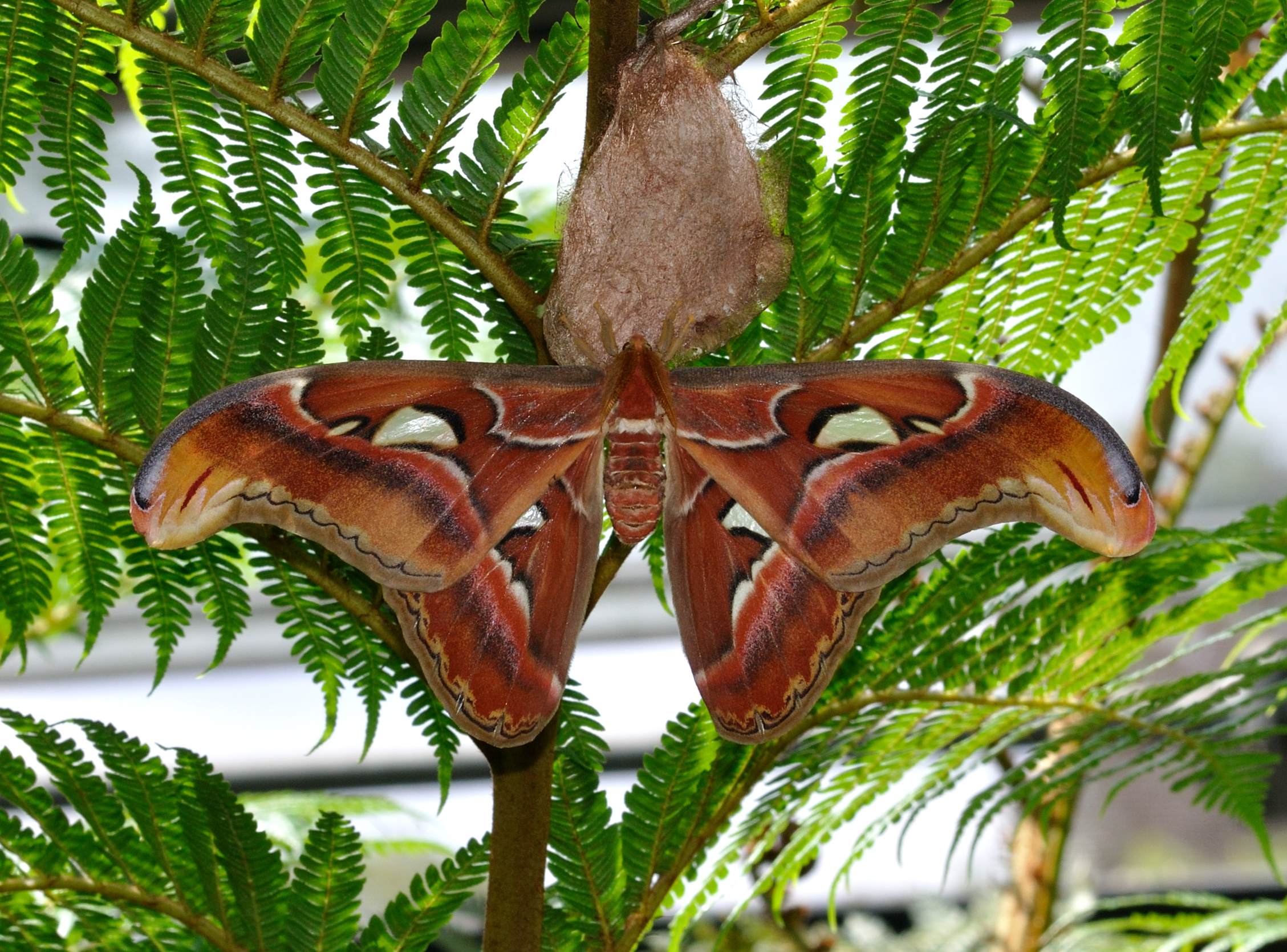
Attacus atlas
Attacus atlas, the Atlas moth, is a large saturniid moth endemic to the forests of Asia. The species was described by Carl Linnaeus in his 1758 10th edition of Systema Naturae.

1758· Lepidoptera
Acherontia atropos
Acherontia atropos, the African death's-head hawkmoth, is the most widely recognized of three species within the genus Acherontia. It is most commonly identified by the vaguely skull-shaped pattern adorning the thorax, the characteristic from which its common and scientific names are derived. The species was first given its scientific name by Carl Linnaeus in his 1758 10th edition of Systema Naturae.
Era
1770s
2 cards

1773· Lepidoptera
Eacles imperialis
Eacles imperialis, the imperial moth, is a member of the family Saturniidae and subfamily Ceratocampinae. It is found mainly in the East of South America and North America, from the center of Argentina to south Canada. The species was first described by Dru Drury in 1773.

1776· Lepidoptera
Antheraea polyphemus
Antheraea polyphemus, the Polyphemus moth, is a North American member of the family Saturniidae, the giant silk moths. It is a tan-colored moth, with an average wingspan of 15 cm (6 in). The most noticeable feature of the moth is the large, purplish eyespot on each hindwing; its name is from the Greek myth of the cyclops Polyphemus. The species, first described by Pieter Cramer in 1776, is widespread in continental North America, with local populations found throughout subarctic Canada and in all of the United States except Arizona and Nevada.
Era
1790s
3 cards

1797· Lepidoptera
Pyrrharctia isabella
Pyrrharctia isabella, the Isabella tiger moth, whose larval form is called the banded woolly bear, woolly bear, or woolly worm, occurs in the United States and throughout Canada. It was first formally named by James Edward Smith in 1797.

1798· Odonata
Pantala flavescens
Pantala flavescens, the globe skimmer, globe wanderer or wandering glider, is a wide-ranging dragonfly of the family Libellulidae. This species and Pantala hymenaea, the "spot-winged glider", are the only members of the genus Pantala. It was first described by Johan Christian Fabricius in 1798. It is considered to be the most widespread dragonfly on the planet, with good populations on every continent except Antarctica, although rare in Europe. Globe skimmers make an annual multigenerational journey of some 18,000 km ; to complete the migration, individual globe skimmers fly more than 6,000 km ; one of the farthest known migrations of all insect species.

1798· Phasmatodea
Phyllium
Phyllium is a genus of stick insects belonging to the Phylliidae described in 1798, and is their type genus. Despite numerous generic splits, it remains the most species-rich genus of the leaf insects. Phyllium species are found ranging from Malaysia through Indonesia and the Philippines as far as New Britain.


Era
2010s
3 cards

2010· Hemiptera
Brown marmorated stink bug
The brown marmorated stink bug is an insect in the family Pentatomidae, native to China, Japan, Korea, and other Asian regions. In September 1998, it was collected in Allentown, Pennsylvania, where it is believed to have been accidentally introduced. The nymphs and adults of the brown marmorated stink bug feed on over 100 species of plants, including many agricultural crops, and by 2010–11 had become a season-long pest in orchards in the Eastern United States. In 2010, in the Mid-Atlantic United States, $37 million in apple crops were lost, and some stone fruit growers lost more than 90% of their crops. Since the 2010s, the bug has spread to countries such as Georgia and Turkey and caused extensive damage to hazelnut production. It is now established in many parts of North America and has recently become established in Europe and South America.

2014· Neuroptera
Hemerobiiformia
The Hemerobiiformia are a suborder of insects in the order Neuroptera that include most of the lacewings, antlions and their allies. The phylogeny of the Neuroptera was explored in 2014 using mitochondrial DNA sequences. The results indicate that the traditional Hemerobiiformia are paraphyletic, meaning that not all the members of the clade are considered to belong to it, in particular since it would include all the Myrmeleontiformia, with which the Hemerobiiformia were traditionally contrasted. The Osmyloidea, usually included in Hemerobiiformia, actually seem to represent a more ancient lineage basal to Hemerobiiformia as well as Myrmeleontiformia. The broken-up group is shown in the cladogram:

2019· Hymenoptera
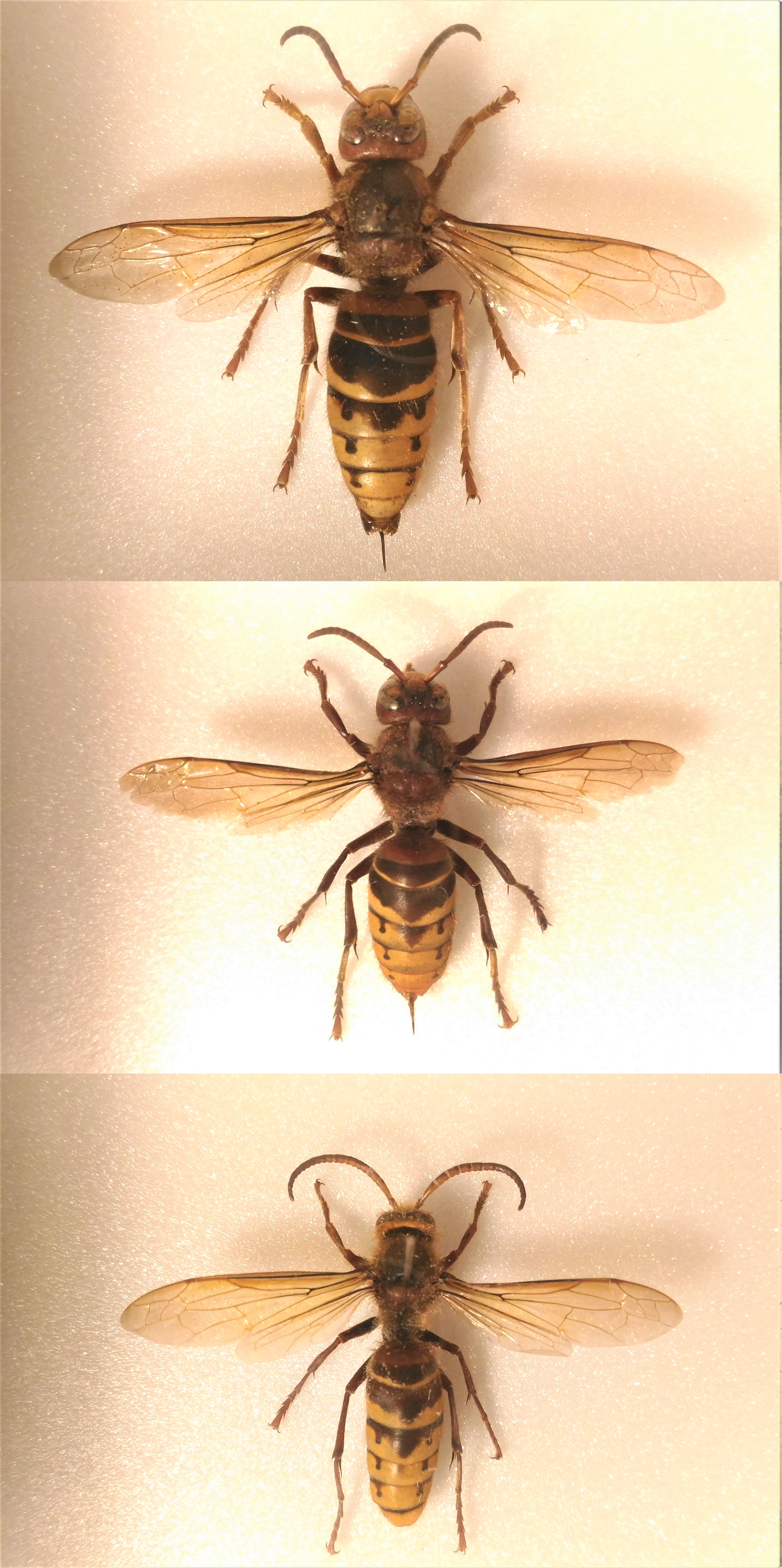
Asian giant hornet
The Asian giant hornet, also known as the northern giant hornet, is the world's largest hornet. It is native to temperate and tropical East Asia, South Asia, mainland Southeast Asia, and parts of the Russian Far East. It was also briefly found in the Pacific Northwest of North America from late 2019 but was eradicated by December 2024.
