Built on Open Archives with cards from Wikipedia.Make your own website →
Site view
Timeline
Every dated card across The Led Zeppelin Archive, arranged chronologically. Dates are inferred from each card's summary.
Era
1940s
3 cards

1946· Members
John Paul Jones (musician)
John Paul Jones (born John Baldwin; 3 January 1946) is an English musician, multi-instrumentalist and record producer who was the bassist and keyboardist for the English rock band Led Zeppelin between 1968 and 1980. He was a session musician and arranger prior to the point when he formed the band with Jimmy Page in 1968 (having previously collaborated with Page on other recording sessions). Jones developed a solo career after drummer John Bonham died and Led Zeppelin disbanded in 1980. He has collaborated with musicians in a variety of genres, including the supergroup Them Crooked Vultures with Dave Grohl, Josh Homme, and Alain Johannes.

1948· Members
Robert Plant
Robert Anthony Plant (born 20 August 1948) is an English singer and songwriter. He was the lead singer and lyricist of the rock band Led Zeppelin from its founding in 1968 until their break-up in 1980. Since then, he has had a successful solo career, sometimes collaborating with other artists such as Alison Krauss. Regarded by many as one of the greatest singers in rock music, he is known for his flamboyant persona, raw stage performances and his powerful, wide-ranging voice.

1948· Members
John Bonham
John Henry Bonham (31 May 1948 – 25 September 1980) was an English musician who was the drummer of the rock band Led Zeppelin. Noted for his speed, power, fast single-footed kick drumming, distinctive sound, and feel for groove, he is regarded as one of the greatest and most influential drummers in history.
Bonham was born in 1948 in Redditch, Worcestershire, and took up drums at age 5, receiving a snare drum at age 10 and a full drum set at age 15. He played with multiple local bands both at school and following school, eventually playing in two different bands with Robert Plant.
Era
1960s
7 cards
1962· Signature Songs
Whole Lotta Love
"Whole Lotta Love" is a song by the English rock band Led Zeppelin. It is the opening track on the band's second album, Led Zeppelin II, and was released as a single in 1969 in several countries; as with other Led Zeppelin songs, no single was released in the United Kingdom. In the United States, it became their first hit and was certified gold. Parts of the song's lyrics were adapted from Willie Dixon's "You Need Love", recorded by Muddy Waters in 1962; originally uncredited to Dixon, a lawsuit in 1985 was settled with a payment to Dixon and credit on subsequent releases.

1964· If You Like Led Zeppelin
The Who
The Who are an English rock band formed in London in 1964. Their classic lineup (1964–1978) consisted of lead vocalist Roger Daltrey, guitarist Pete Townshend, bassist John Entwistle, and drummer Keith Moon. Considered one of the most influential rock bands of the 20th century, their contributions to rock music include the development of the Marshall stack, large public address systems, the use of synthesisers, Entwistle's and Moon's influential playing styles, Townshend's feedback and power chord guitar technique, and the development of the rock opera. They are cited as an influence by many bands, particularly those in the hard rock, punk, power pop and mod genres.

1968· The Band
Led Zeppelin
Led Zeppelin were an English rock band formed in London in 1968. The band comprised vocalist Robert Plant, guitarist Jimmy Page, bass-guitarist and keyboardist John Paul Jones and drummer John Bonham. Their combination of a heavy electric-guitar sound with elements of blues and folk music popularised album-oriented rock and stadium rock and established them as the progenitor of hard rock and heavy metal. They are amongst the best-selling music artists of all time, with an estimated 200 to 300 million records sold worldwide.
1968· If You Like Led Zeppelin
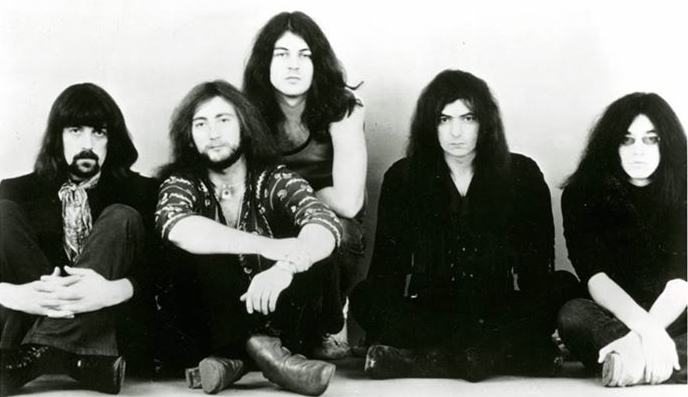
Deep Purple
Deep Purple are a British rock band formed in London in 1968. They are considered to be among the pioneers of heavy metal and modern hard rock, although their musical style has varied throughout their career. Originally formed as a psychedelic rock and progressive rock band, they shifted to a heavier sound with their 1970 album Deep Purple in Rock. Deep Purple have been referred to as being part of the "unholy trinity of British hard rock and heavy metal in the early to mid-'70s", alongside Led Zeppelin and Black Sabbath.
1968· If You Like Led Zeppelin
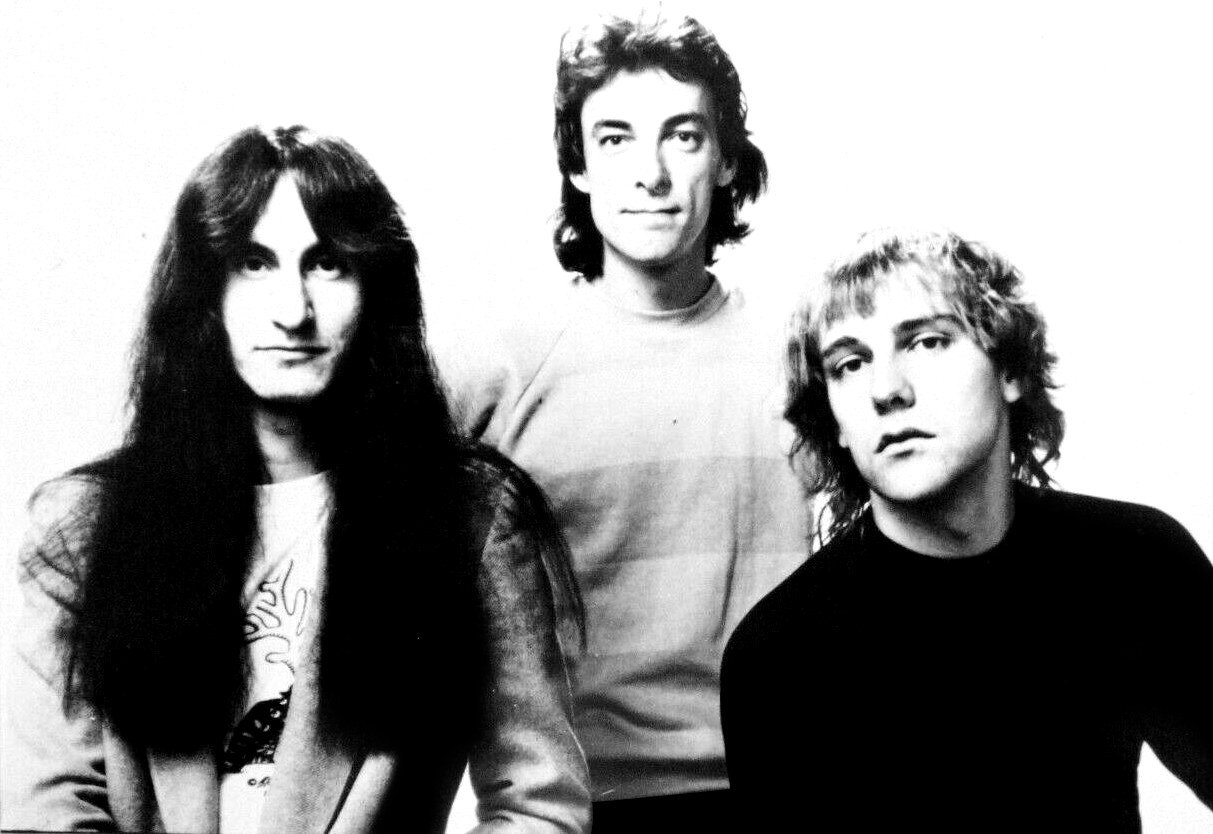
Rush (band)
Rush is a Canadian rock band, formed in Toronto in 1968. The band's original line-up included guitarist Alex Lifeson, drummer John Rutsey, and bassist and vocalist Jeff Jones, whom Geddy Lee replaced shortly after its formation. Rush went through a few line-up changes over the next six years, before arriving at its classic power trio line-up with the addition of Neil Peart in July 1974, replacing Rutsey four months after the release of their self-titled debut album. The line-up of Lifeson, Lee, and Peart remained stable for the remainder of the band's initial run until 2015, after which Peart retired from music. Lifeson later confirmed in 2018 that the band had disbanded, citing Peart's health as a contributing factor. Lifeson and Lee continued to occasionally work together in the years following Peart's death in 2020. Lifeson and Lee announced a 2026–2027 reunion tour as Rush in October 2025, with Anika Nilles filling in for Peart, and Loren Gold as the band's keyboardist.
1968· If You Like Led Zeppelin
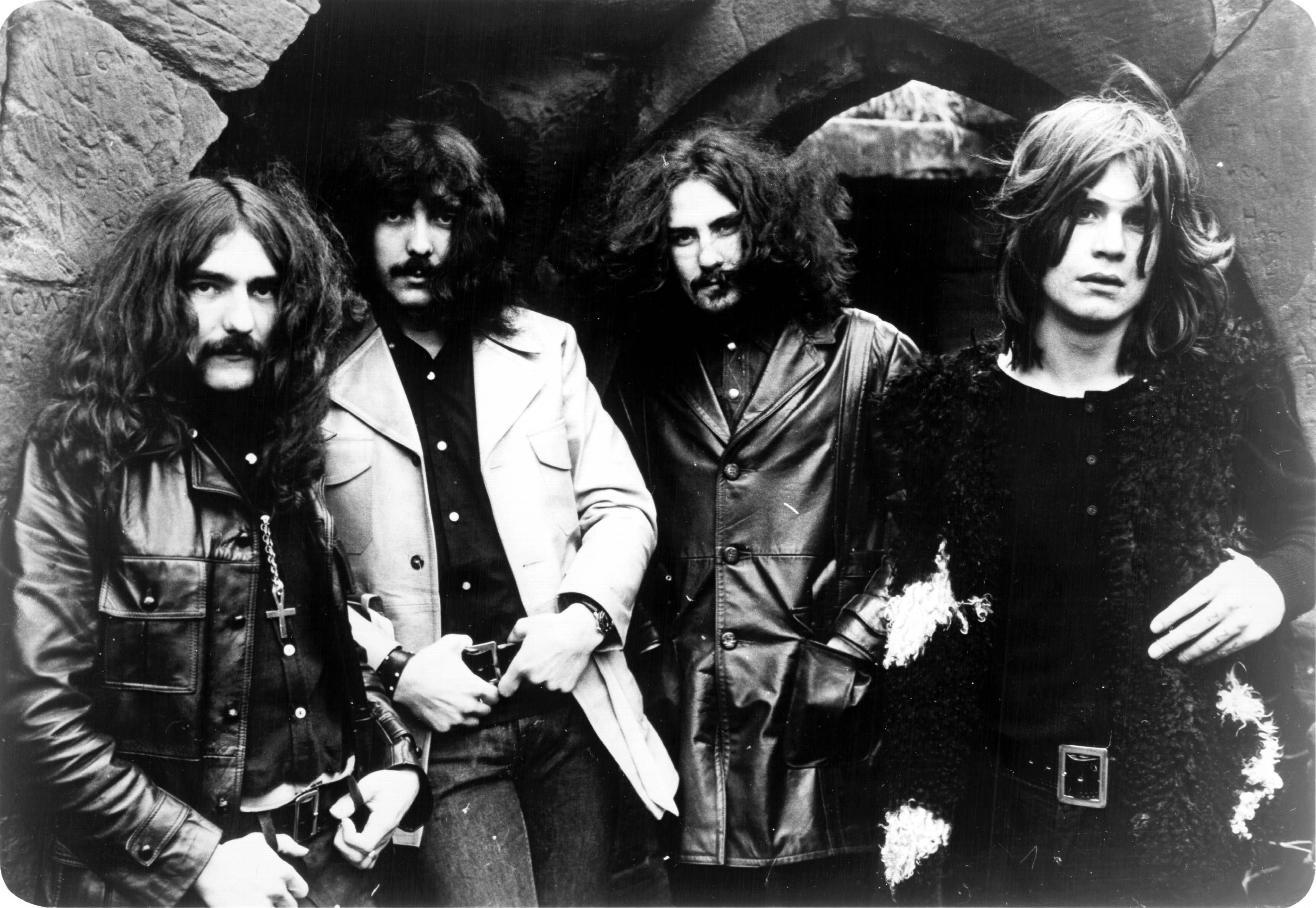
Black Sabbath
Black Sabbath were an English heavy metal band formed in Birmingham in 1968 by guitarist Tony Iommi, drummer Bill Ward, bassist Geezer Butler and vocalist Ozzy Osbourne. After adopting the Black Sabbath name in 1969, they distinguished themselves through occult themes with horror-inspired lyrics and down-tuned guitars. Their first three albums, Black Sabbath, Paranoid, and Master of Reality (1971), were commercially successful, and are cited as pioneering albums in the development of heavy metal. Subsequent albums Vol. 4 (1972), Sabbath Bloody Sabbath (1973), Sabotage (1975), Technical Ecstasy (1976), and Never Say Die! (1978) saw the band explore more experimental and progressive styles.
1969· Studio Albums
Led Zeppelin II
Led Zeppelin II is the second studio album by the English rock band Led Zeppelin, released on 22 October 1969 in the United States and on 31 October 1969 in the United Kingdom by Atlantic Records. Recording sessions for the album took place at several locations in both the United Kingdom and North America from January to August 1969. The album's production was credited to the band's lead guitarist and songwriter Jimmy Page, and it was also Led Zeppelin's first album on which Eddie Kramer served as engineer.
Era
1970s
9 cards
1970· Studio Albums
Led Zeppelin III
Led Zeppelin III is the third studio album by the English rock band Led Zeppelin, released on 5 October 1970. It was recorded in three locations. Much of the work was done at Headley Grange, a country house, using the Rolling Stones Mobile Studio. Additional sessions were held at Island Studios and Olympic Studios in London. As with the prior album, the band eschewed the use of guest musicians, with all music performed by band members Robert Plant (vocals), Jimmy Page (guitars), John Paul Jones, and John Bonham (drums). The range of instruments played by the band was greatly enhanced on this album, with Jones especially emerging as a talented multi-instrumentalist, playing a wide range of keyboard and stringed instruments, including various synthesizers, mandolin and double bass, in addition to his usual bass guitar. As with prior albums, Page served as producer on the album, with mixing done by Andy Johns and Terry Manning.
1970· Signature Songs
Immigrant Song
"Immigrant Song" is a song by the English rock band Led Zeppelin. Built upon a riff, it alludes to Norse mythology, with singer Robert Plant's howling vocals mentioning war-making and Valhalla. The song was included on their 1970 album Led Zeppelin III and released as a single. Several live recordings have also been issued on various Led Zeppelin albums. Other artists have recorded renditions of the song or performed it live.

1971· Studio Albums
Led Zeppelin IV
The untitled fourth studio album by the English rock band Led Zeppelin, commonly known as Led Zeppelin IV, was released on 8 November 1971, by Atlantic Records. It was produced by the band's guitarist, Jimmy Page, and recorded between December 1970 and February 1971, mostly in the country house Headley Grange. The album contains one of the band's best-known recordings, the eight-minute-long "Stairway to Heaven".

1971· Signature Songs
Stairway to Heaven
"Stairway to Heaven" is a song by the English rock band Led Zeppelin, released on 8 November 1971 on the band's untitled fourth studio album, by Atlantic Records. Composed by the band's guitarist Jimmy Page with lyrics written by lead singer Robert Plant, it is widely regarded as one of the greatest rock songs of all time.
1971· Signature Songs
Rock and Roll (Led Zeppelin song)
"Rock and Roll" is a song by the English rock band Led Zeppelin, released as the second track on their fourth studio album in 1971. The song contains a guest performance by original Rolling Stones' pianist and co-founder Ian Stewart.
1974· Studio Albums
Physical Graffiti
Physical Graffiti is the sixth studio album by the English rock band Led Zeppelin. Released as a double album on 24 February 1975 in the United States and on 28 February 1975 in the United Kingdom, it was the group's first album to be released under their new label, Swan Song Records. The band wrote and recorded eight new songs for the album in early 1974 at Headley Grange, a country house in Hampshire, which gave them ample time to improvise arrangements and experiment with recording. The total playing time covered just under three sides of an LP, so they decided to expand it into a double album by including seven previously unreleased tracks from the sessions for the band's earlier albums Led Zeppelin III (1970), Led Zeppelin IV (1971) and Houses of the Holy (1973). The album covered a range of styles including hard rock, progressive rock, rock 'n' roll and folk. The album was then mixed over summer 1974 and planned for an end-of-year release; however, its release was delayed because the Peter Corriston-designed die-cut album cover proved difficult to manufacture.
1975· Studio Albums
Houses of the Holy
Houses of the Holy is the fifth studio album by the English rock band Led Zeppelin, released on 28 March 1973 in the United States and on 30 March 1973 in the United Kingdom by Atlantic Records. The album benefited from two band members installing studios at home, which allowed them to develop more sophisticated songs and arrangements and expand their musical style. Several songs subsequently became fixtures in the group's live set, including "The Song Remains the Same", "The Rain Song" and "No Quarter". Other material recorded at the sessions, including the title track, was shelved and released on the later albums Physical Graffiti (1975) and Coda (1982). All instruments and vocals were provided by the band members Robert Plant (vocals), Jimmy Page (guitar), John Paul Jones, and John Bonham (drums). The album was produced by Page and mixed by Eddie Kramer. The cover was the first for the band to be designed by Hipgnosis and was based on a photograph taken at Giant's Causeway in Northern Ireland.
1975· Signature Songs
Kashmir (song)
"Kashmir" is a song by the English rock band Led Zeppelin. Featured on their sixth studio album Physical Graffiti (1975), it was written by Jimmy Page and Robert Plant with contributions from John Bonham over a period of three years with lyrics dating back to 1973. John Paul Jones was late arriving to the studio for the recording sessions, so he did not receive a writer's credit.
1978· Studio Albums
In Through the Out Door
In Through the Out Door is the eighth studio album by the English rock band Led Zeppelin. It was recorded in three weeks in November and December 1978 at ABBA's Polar Studios in Stockholm, Sweden, and released by Led Zeppelin's label Swan Song Records on 22 August 1979 in the US and 24 August 1979 in the UK.
