
Site view
Timeline
Every dated card across The Queen Archive, arranged chronologically. Dates are inferred from each card's summary.

Era
1970s
8 cards

1970· The Band
Queen (band)
Queen are a British rock band formed in London in 1970 by Freddie Mercury, Brian May, and Roger Taylor, later joined by John Deacon (bass). Their earliest works were influenced by progressive rock, hard rock and heavy metal, but the band gradually ventured into more conventional and radio-friendly works by incorporating further styles, such as arena rock and pop rock.
1973· Studio Albums
Queen (Queen album)
Queen is the debut studio album by the British rock band Queen. Released on 13 July 1973 by EMI Records in the UK and on 4 September 1973 by Elektra Records in the US, it was recorded at Trident Studios and De Lane Lea Music Centre, London, with production by Roy Thomas Baker, John Anthony and the band members themselves.
1974· Studio Albums
Sheer Heart Attack
Sheer Heart Attack is the third studio album by the British rock band Queen, released on 8 November 1974 by EMI Records in the United Kingdom and by Elektra Records in the United States. Departing from the progressive themes featured on their first two albums, the album featured more pop-centric and conventional rock tracks and marked a step towards the "classic" Queen sound. It was produced by the band and Roy Thomas Baker, and launched Queen to mainstream popularity in the UK and throughout the world.
1974· Studio Albums
Queen II
Queen II is the second studio album by the British rock band Queen. It was released on 8 March 1974 by EMI Records in the UK and on 9 April 1974 by Elektra Records in the US. It was recorded at Trident Studios and Langham 1 Studios, London, in August 1973 with co-producers Roy Thomas Baker and Robin Geoffrey Cable, and engineered by Mike Stone. It is significant for being the first album to contain many elements of the band's signature sound of multi-layered overdubs, vocal harmonies, and varied musical styles.
1975· Studio Albums
A Night at the Opera (Queen album)
A Night at the Opera is the fourth studio album by the British rock band Queen, released on 28 November 1975, by EMI Records in the United Kingdom and Elektra Records in the United States. Produced by Roy Thomas Baker and Queen, it was reportedly the most expensive album ever recorded at the time of its release.
1976· Studio Albums
A Day at the Races (album)
A Day at the Races is the fifth studio album by the British rock band Queen, released on 10 December 1976 by EMI Records in the United Kingdom and by Elektra Records in the United States. Recorded at The Manor, Sarm East, and Wessex Sound Studios in England, it was the band's first completely self-produced album, and the first completed without the involvement of producer Roy Thomas Baker; engineering duties were handled by Mike Stone. It serves as a companion to Queen's previous album, A Night at the Opera, with both taking their names from Marx Brothers films and having similar packaging and eclectic musical themes.
1977· Studio Albums
News of the World (album)
News of the World is the sixth studio album by the British rock band Queen, released on 28 October 1977 by EMI Records in the United Kingdom and by Elektra Records in the United States. News of the World was the band's second album to be recorded at Sarm and Wessex Sound Studios in London, and engineered by Mike Stone, and was co-produced by the band and Stone.
1978· Studio Albums
Jazz (Queen album)
Jazz is the seventh studio album by the British rock band Queen. It was co-produced by Roy Thomas Baker, and was released on 10 November 1978 by EMI Records in the United Kingdom and by Elektra Records in the United States. The album artwork was suggested by Roger Taylor, who had seen a similar design painted on the Berlin Wall. The album's varying musical styles were alternately praised and criticised. It reached number two in the UK Albums Chart and number six on the US Billboard Top LPs & Tape chart.
Era
1990s
2 cards
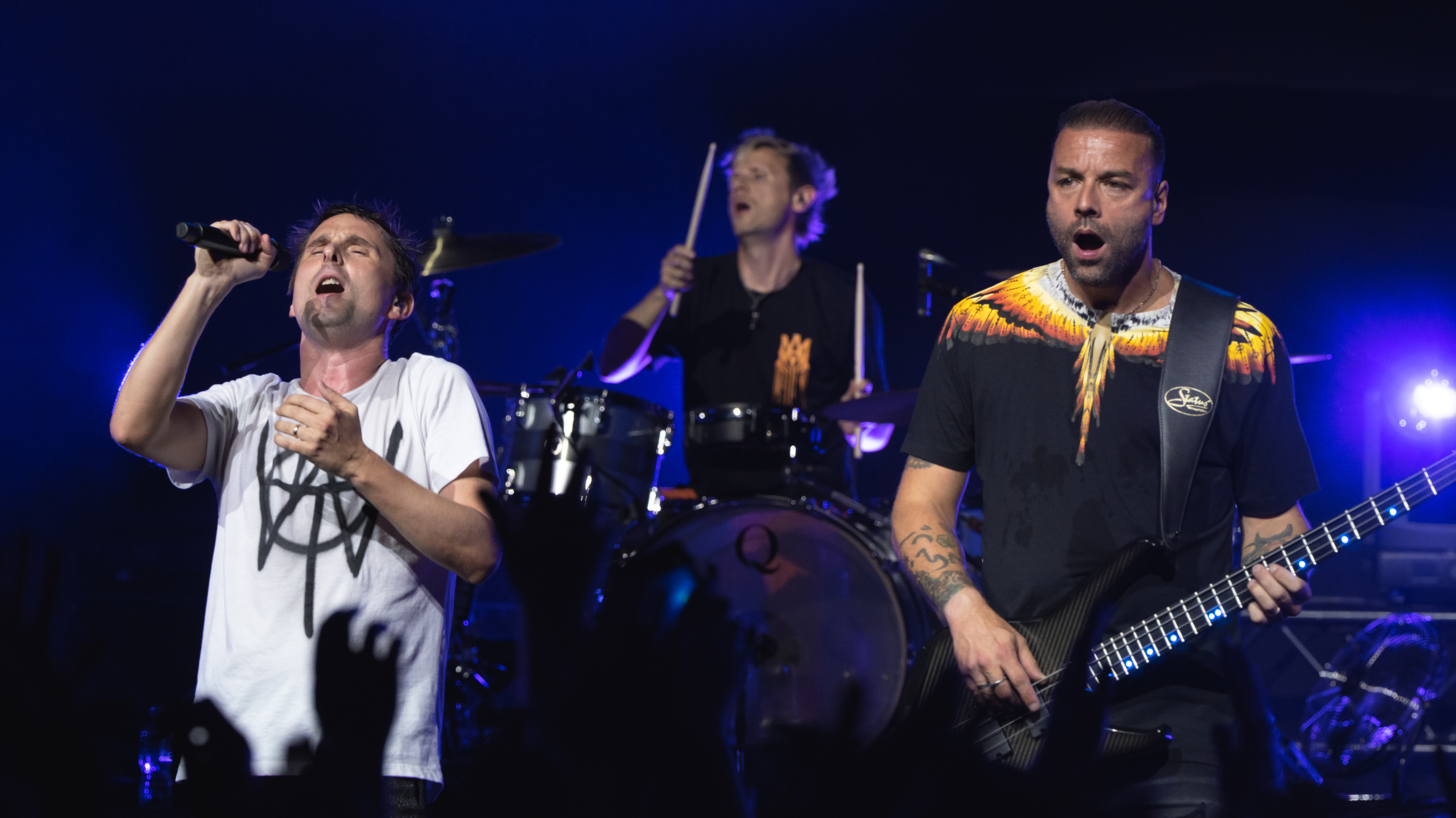
1994· If You Like Queen
Muse (band)
Muse are an English rock band from Teignmouth, Devon, formed in 1994. The band consists of Matt Bellamy (lead vocals, guitar, keyboards), Chris Wolstenholme (bass guitar, backing vocals), and Dominic Howard (drums, percussion).
Muse released their debut album, Showbiz, in 1999, showcasing Bellamy's falsetto and a melancholic alternative rock style. Their second album, Origin of Symmetry (2001), incorporated wider instrumentation and romantic classical influences and earned them a reputation for energetic live performances.
1995· Studio Albums
Made in Heaven
Made in Heaven is the fifteenth and final studio album by the British rock band Queen, released on 6 November 1995 by Parlophone Records in the United Kingdom and by Hollywood Records in the United States. It is the final studio album to be released under the name "Queen" and it was the band's first and only album released solely under the name "Queen" after the death of lead vocalist Freddie Mercury in November 1991. Following Mercury's death, guitarist Brian May, drummer Roger Taylor, and bass guitarist John Deacon worked with vocal and piano parts that Mercury recorded before his death, adding new instrumentation to the recordings. Both stages of recording, before and after Mercury's death, were completed at the band's studio in Montreux, Switzerland.

