
Site view
Timeline
Every dated card across Physicists Archive, arranged chronologically. Dates are inferred from each card's summary.


Era
1920s
2 cards

1921· Modern
Albert Einstein
Albert Einstein was a German-born theoretical physicist best known for developing the known theory of relativity. Einstein also made important contributions to quantum theory. His mass–energy equivalence formula E = mc2, which arises from special relativity, has been called "the world's most famous equation". He received the 1921 Nobel Prize in Physics for "his services to theoretical physics, and especially for his discovery of the law of the photoelectric effect".
1922· Modern
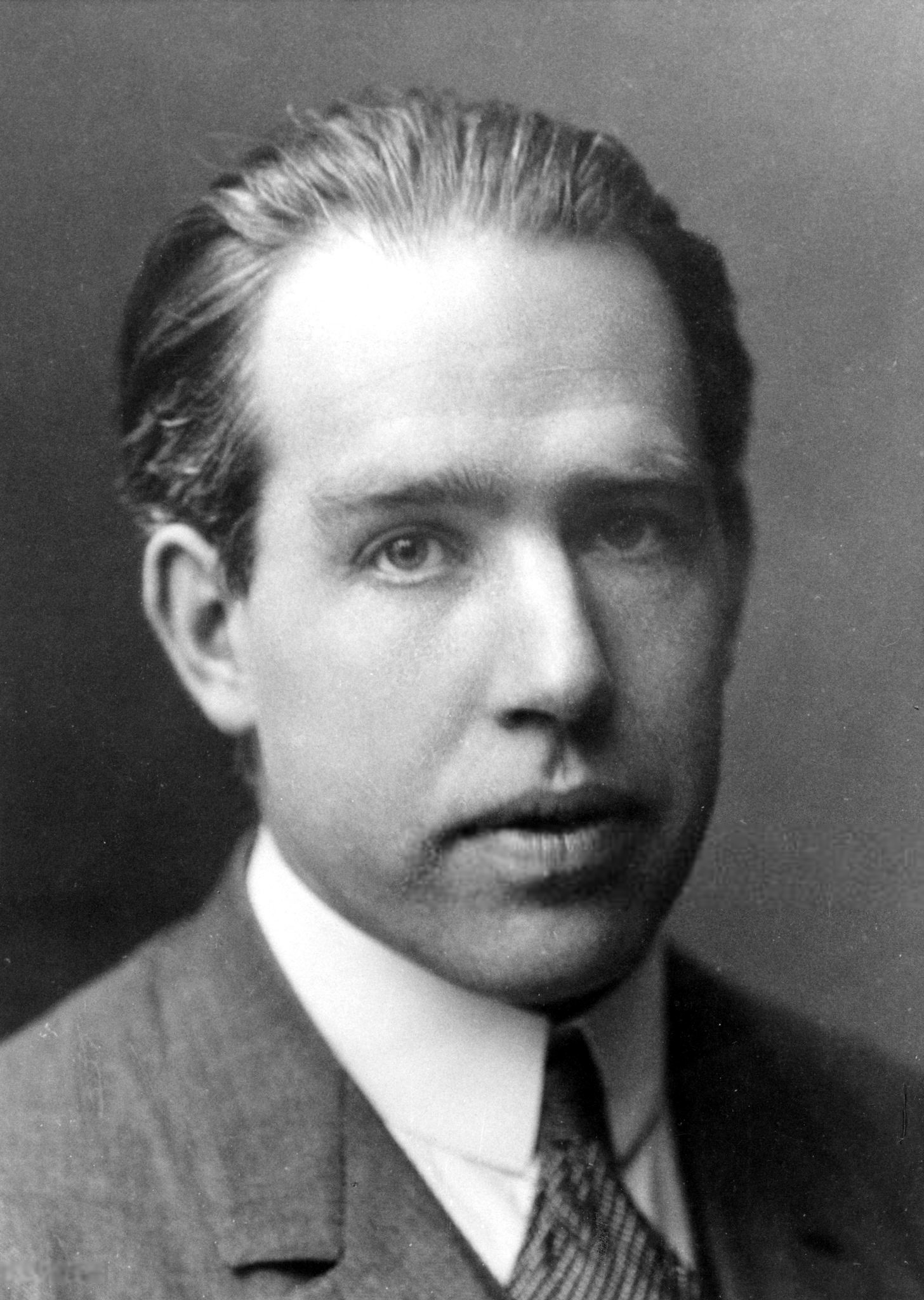
Niels Bohr
Niels Henrik David Bohr was a Danish theoretical physicist who made foundational contributions to understanding atomic structure and quantum theory, for which he received the Nobel Prize in Physics in 1922. He was also a philosopher and a promoter of scientific research.
Era
1930s
2 cards

1932· Modern
Paul Dirac
Paul Adrien Maurice Dirac was a British theoretical physicist who is considered to be one of the founders of quantum mechanics. Dirac laid the foundations for both quantum electrodynamics and quantum field theory, coining the former term. He was Lucasian Professor of Mathematics at the University of Cambridge from 1932 to 1969, and a professor of physics at Florida State University from 1970 to 1984. Dirac shared the 1933 Nobel Prize in Physics with Erwin Schrödinger "for the discovery of new productive forms of atomic theory."

1935· Modern
Erwin Schrödinger
Erwin Rudolf Josef Alexander Schrödinger, sometimes written as Schroedinger or Schrodinger, was an Austrian theoretical physicist who developed fundamental results in quantum theory. In particular, he is recognized for devising the Schrödinger equation, an equation that provides a way to calculate the wave function of a system and how it changes dynamically in time. He coined the term "quantum entanglement" in 1935. Schrödinger shared the 1933 Nobel Prize in Physics with Paul Dirac "for the discovery of new productive forms of atomic theory".