
Site view
Timeline
Every dated card across Nobel Laureates, arranged chronologically. Dates are inferred from each card's summary.


Era
1920s
2 cards

1921· Science
Albert Einstein
Albert Einstein was a German-born theoretical physicist best known for developing the known theory of relativity. Einstein also made important contributions to quantum theory. His mass–energy equivalence formula E = mc2, which arises from special relativity, has been called "the world's most famous equation". He received the 1921 Nobel Prize in Physics for "his services to theoretical physics, and especially for his discovery of the law of the photoelectric effect".

1927· Science
Barbara McClintock
Barbara McClintock was an American scientist and cytogeneticist who was awarded the 1983 Nobel Prize in Physiology or Medicine. McClintock received her PhD in botany from Cornell University in 1927. There, she started her career as the leader of the development of maize cytogenetics, the focus of her research for the rest of her life. From the late 1920s, McClintock studied chromosomes and how they change during reproduction in maize. She developed the technique for visualizing maize chromosomes and used microscopic analysis to demonstrate many fundamental genetic ideas. One of those ideas was the notion of genetic recombination by crossing-over during meiosis—a mechanism by which chromosomes exchange information. She demonstrated the role of the telomere and centromere, regions of the chromosome that are important in the conservation of genetic information. She was recognized as among the best in the field, awarded prestigious fellowships, and elected a member of the National Academy of Sciences in 1944.
Era
1950s
3 cards
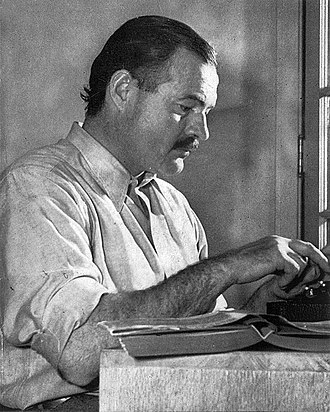
1954· Literature
Ernest Hemingway
Ernest Miller Hemingway was an American novelist, short-story writer, and journalist. Known for an economical, understated style that influenced later 20th-century writers, he has been romanticized for his adventurous lifestyle and outspoken, blunt public image. Some of his seven novels, six short-story collections and two non-fiction works have become classics of American literature, and he was awarded the 1954 Nobel Prize in Literature.

1954· Science
Linus Pauling
Linus Carl Pauling was an American chemist and peace activist. He published more than 1,200 papers and books, of which about 850 dealt with scientific topics. Scientific American called him one of the 20 greatest scientists of all time. For his scientific work, Pauling was awarded the Nobel Prize in Chemistry in 1954. For his peace activism, he was awarded the Nobel Peace Prize in 1962. He is one of five people to have won more than one Nobel Prize. Of these, he is the only person to have been awarded two unshared Nobel Prizes, and one of two people to be awarded Nobel Prizes in different fields, the other being Marie Curie.
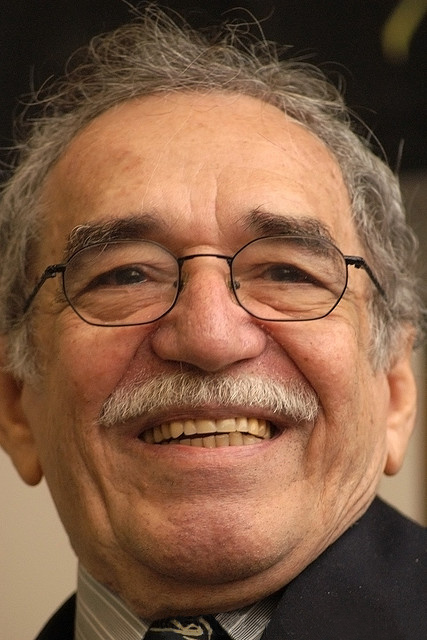
1958· Literature
Gabriel García Márquez
Gabriel José García Márquez was a Colombian writer and journalist, known affectionately as Gabo or Gabito throughout Latin America. Considered one of the most significant authors of the 20th century, particularly in the Spanish language, he was awarded the 1972 Neustadt International Prize for Literature and the 1982 Nobel Prize in Literature. He pursued a self-directed education that resulted in leaving law school for a career in journalism. From early on he showed no inhibitions in his criticism of Colombian and foreign politics. In 1958, he married Mercedes Barcha Pardo; they had two sons, Rodrigo and Gonzalo.
Era
1960s
3 cards

1960· Literature
Kazuo Ishiguro
Sir Kazuo Ishiguro (Japanese: 石黒 一雄, Hepburn: Ishiguro Kazuo; ; born 8 November 1954) is a Japanese-British novelist, screenwriter, musician, and short-story writer. He is one of the most critically acclaimed contemporary fiction authors writing in English, having been awarded several major literary prizes, including the 2017 Nobel Prize in Literature. In its citation, the Swedish Academy described Ishiguro as a writer "who, in novels of great emotional force, has uncovered the abyss beneath our illusory sense of connection with the world".
Ishiguro was born in Nagasaki, Japan, and moved to Britain in 1960 with his parents when he was five.
1965· Science
Richard Feynman
Richard Phillips Feynman was an American theoretical physicist. He shared the 1965 Nobel Prize in Physics with Julian Schwinger and Shin'ichirō Tomonaga "for their fundamental work in quantum electrodynamics (QED), with deep-ploughing consequences for the physics of elementary particles".
He is also known for his work in the path integral formulation of quantum mechanics, the theory of the physics of the superfluidity of supercooled liquid helium, and the parton model. Feynman developed a pictorial representation scheme for the mathematical expressions describing the behavior of subatomic part
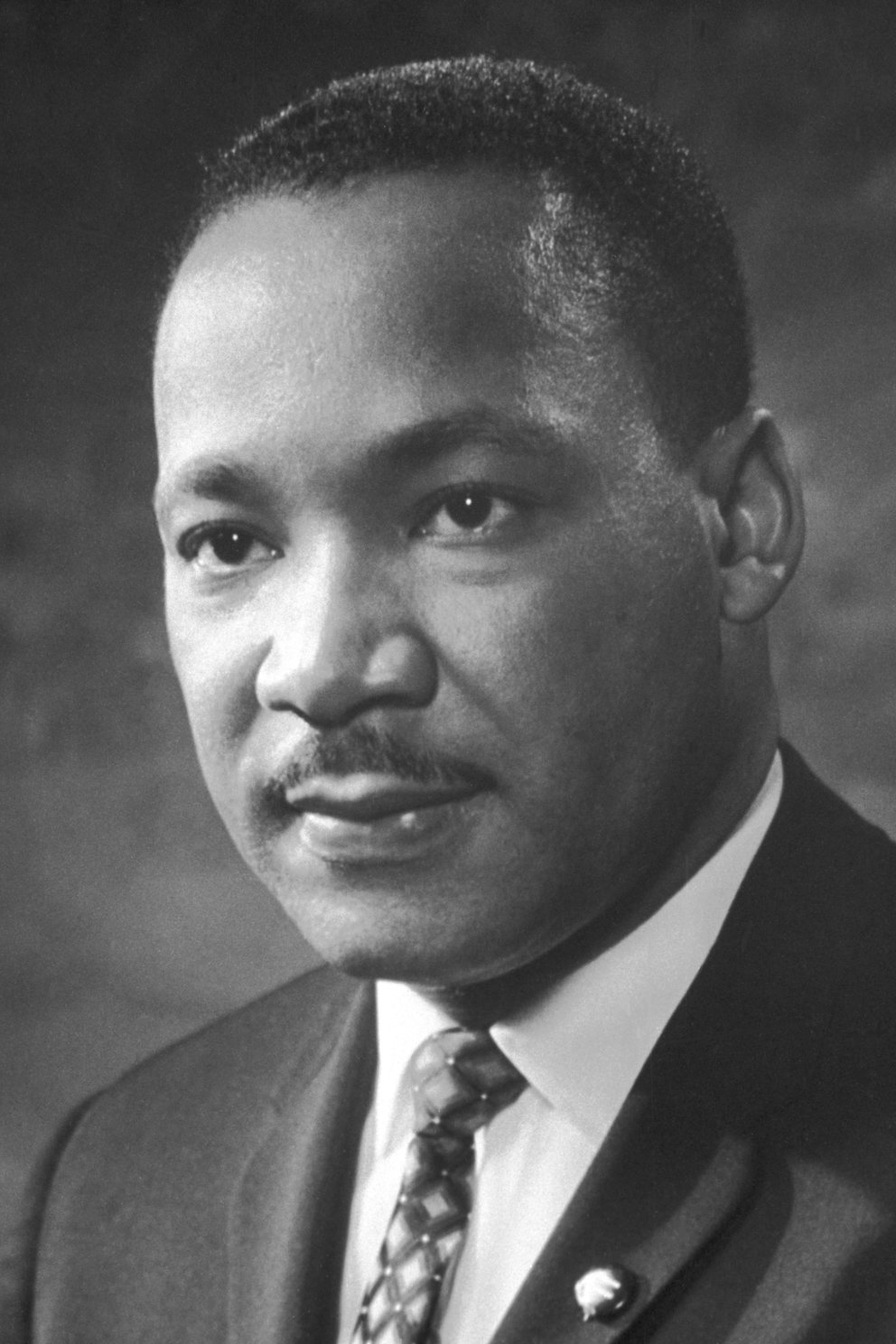
1968· Peace
Martin Luther King Jr.
Martin Luther King Jr. was an American civil rights activist and Baptist minister who was a prominent leader of the civil rights movement from 1955 until his assassination in 1968. He advanced civil rights for people of color in the United States through the use of nonviolent resistance and civil disobedience against Jim Crow laws and other forms of legalized discrimination, which most commonly affected African Americans.
Era
1990s
2 cards

1993· Literature
Toni Morrison
Chloe Anthony Wofford "Toni" Morrison was an American novelist and editor. She was awarded the Nobel Prize in Literature in 1993. Her first novel, The Bluest Eye, was published in 1970. The critically acclaimed Song of Solomon (1977) brought her national attention and won the National Book Critics Circle Award. In 1988, Morrison won the Pulitzer Prize for Beloved (1987).

1994· Peace
Nelson Mandela
Nelson Rolihlahla Mandela was a South African anti-apartheid activist, statesman, and revolutionary who was the first president of South Africa from 1994 to 1999. He was the country's first Black head of state and the first elected in a fully representative democratic election. His administration focused on dismantling the legacy of apartheid by fostering racial reconciliation, a national peace accord and eventual multiracial democracy. Ideologically an African nationalist and socialist, he served as the president of the African National Congress (ANC) party from 1991 to 1997.
