
Site view
Timeline
Every dated card across The Nintendo & Pokémon Archive, arranged chronologically. Dates are inferred from each card's summary.
Era
1980s
17 cards

1980· Consoles
Game & Watch
Game & Watch is a series of handheld electronic games developed by Nintendo. Designed by Gunpei Yokoi, the first game, Ball was released in 1980 and the original production run of the devices continued until 1991. The name Game & Watch reflects their dual functionality: a single game paired with a digital clock on a segmented liquid-crystal display (LCD) screen. The Game & Watch series proved a monumental success, selling a total of 43.4 million units globally, marking Nintendo's first major worldwide success with electronic games.
1981· Mario Universe
Donkey Kong (1981 video game)
Donkey Kong is a 1981 platform game developed and published by Nintendo for arcades. As Mario, the player runs and jumps on platforms and climbs ladders to ascend a construction site in New York City and rescue Pauline from the giant gorilla Donkey Kong. It is the first game in the Donkey Kong series and Mario's first appearance in a video game.

1983· Consoles
Nintendo Entertainment System
The Nintendo Entertainment System (NES) is a home video game console developed and marketed by Nintendo. It was released as the Family Computer (Famicom) in Japan on July 15, 1983, and as the NES in test markets in the United States on October 18, 1985, followed by a nationwide launch on September 27, 1986. The NES was distributed in Europe, Australia, and parts of Asia throughout the 1980s. It was Nintendo's first programmable home console, succeeding the Color TV-Game line of dedicated consoles, and primarily competed with Sega's Master System in the third generation of video game consoles.

1984· Designers & Composers
Koji Kondo
Koji Kondo is a Japanese composer and senior executive at the video game company Nintendo. He is best known for his contributions for the Super Mario and The Legend of Zelda series, with his Super Mario Bros. theme being the first piece of music from a video game included in the American National Recording Registry. Kondo was hired by Nintendo in 1984 as its first dedicated composer and is currently a Senior Officer at its Entertainment Planning & Development division.

1984· Designers & Composers
Takashi Tezuka
Takashi Tezuka , nicknamed Ten Ten, is a Japanese video game designer and gaming company executive. Since 1984, he has directed, produced, or supervised development of numerous games released by Nintendo. He is currently the executive officer of their board of directors, and senior officer of their Entertainment Planning & Development division. He is set to retire from his position on the company's board on June 26, 2026.
1985· Mario Universe
Super Mario Bros.
Super Mario Bros. is a 1985 platform game developed and published by Nintendo for the Nintendo Entertainment System (NES). Directed and produced by Shigeru Miyamoto, it is the successor to the 1983 arcade game Mario Bros. and the first game in the Super Mario series. Players control Mario, or his brother Luigi in the multiplayer mode, to traverse the Mushroom Kingdom to rescue Princess Toadstool from King Koopa. They traverse side-scrolling stages while avoiding hazards such as enemies and pits and collecting power-ups such as the Super Mushroom, Fire Flower, and Starman.
1985· Mario Universe
Princess Peach
Princess Peach is a character in Nintendo's Mario franchise. She was created by Shigeru Miyamoto and introduced in the 1985 original Super Mario Bros. game as Princess Toadstool. She is the princess regnant and head of state of the Mushroom Kingdom, where she resides in her castle along with Toads. Since her debut, she has appeared in the majority of Mario video games as the main female character and the romantic interest of Mario.

1986· Designers & Composers
Kensuke Tanabe
Kensuke Tanabe is a Japanese former video game producer and designer who has worked for Nintendo since 1986.
1986· The Legend of Zelda
Princess Zelda
Princess Zelda is a character in Nintendo's The Legend of Zelda video game series. She was created by Shigeru Miyamoto for the original 1986 game The Legend of Zelda. As one of the central characters in the series, she has appeared in the majority of the games in various incarnations. Zelda is the elf-like Hylian princess of the kingdom of Hyrule, an associate of the series protagonist Link, and bearer of the Triforce of Wisdom.
1986· The Legend of Zelda
The Legend of Zelda (video game)
The Legend of Zelda is a 1986 action-adventure game developed and published by Nintendo for the Family Computer Disk System. It is the first game in the Legend of Zelda series. It is set in the fantasy land of Hyrule and centers on an elf-like boy named Link, who aims to collect the eight fragments of the Triforce of Wisdom to rescue Princess Zelda from Ganon. The player controls Link from a top-down perspective and navigates the overworld and dungeons, collecting weapons, defeating enemies and uncovering secrets. It was designed and directed by Shigeru Miyamoto and Takashi Tezuka, being in development alongside Super Mario Bros. that released the previous year.
1986· The Legend of Zelda
Ganon
Ganon is a character and the main antagonist of Nintendo's The Legend of Zelda video game series and franchise, as well as the final boss in many Zelda titles. In his humanoid Gerudo form, he is known as Ganondorf. A massive and malevolent porcine monster, Ganon first appeared in the original The Legend of Zelda game in 1986, while his alter ego, Ganondorf, was introduced in A Link to the Past and made a physical appearance in Ocarina of Time. He has since appeared in the majority of the games in the series in various forms. He is the archenemy of the protagonist Link and Princess Zelda of Hyrule and originally the leader of the Gerudo, a race of humanoid desert nomads before becoming the ruler of his demon army.
1986· The Legend of Zelda
Link (The Legend of Zelda)
Link is a character and the protagonist of Nintendo's video game franchise The Legend of Zelda. He was created by Japanese video game designer Shigeru Miyamoto. Link was introduced as the hero of the original The Legend of Zelda video game in 1986 and has appeared in a total of 21 entries in the series, as well as a number of spin-offs. Common elements in the series include Link travelling through Hyrule whilst exploring dungeons, battling creatures, and solving puzzles until he eventually defeats the series' primary antagonist, Ganon, and saves Princess Zelda.
1986· Other Franchises
Samus Aran
Samus Aran is the protagonist of the video game series Metroid by Nintendo. She was created by the Japanese video game designer Makoto Kano and introduced in the first Metroid (1986) for the Nintendo Entertainment System.
1987· The Legend of Zelda
Zelda II: The Adventure of Link
Zelda II: The Adventure of Link is a 1987 action role-playing game developed and published by Nintendo. It is the second installment in the Legend of Zelda series, and was released in Japan for the Famicom Disk System on January 14, 1987, less than a year after the Japanese release and seven months before the North American release of the original The Legend of Zelda. Zelda II was released in North America and the PAL region for the Nintendo Entertainment System in late 1988, almost two years after its initial release in Japan.
The Adventure of Link is a direct sequel to the original The Legend of Zelda, again involving the protagonist Link, on a quest to save Princess Zelda, who has fallen under a sleeping spell.
1988· Mario Universe
Super Mario Bros. 3
Super Mario Bros. 3 is a 1988 platform game developed and published by Nintendo for the Nintendo Entertainment System (NES). It was released in Japan on October 23, 1988, in North America on February 12, 1990, and in Europe on August 29, 1991. It was developed by Nintendo Entertainment Analysis and Development, led by Shigeru Miyamoto and Takashi Tezuka.

1989· Consoles
Game Boy
The Game Boy is a handheld game console developed and marketed by Nintendo. It was released in Japan on April 21, 1989, in North America on July 31, 1989, and in Europe on September 28, 1990. Nintendo's first handheld to use ROM cartridges, it succeeded the Game & Watch line of handheld electronic games and competed with Sega's Game Gear, Atari's Lynx, and NEC's TurboExpress in the fourth generation of video game consoles.
1989· Other Franchises
Mother (video game series)
Mother is a video game series that consists of three role-playing video games: Mother (1989), known as EarthBound Beginnings outside Japan, for the Family Computer; Mother 2 (1994), known as EarthBound outside Japan, for the Super Nintendo Entertainment System; and Mother 3 (2006) for the Game Boy Advance.
Era
1990s
29 cards

1990· Consoles
Super Nintendo Entertainment System
The Super Nintendo Entertainment System is a home video game console developed and marketed by Nintendo. It was released as the Super Famicom in Japan on November 21, 1990, as the Super NES in North America on August 23, 1991, and internationally throughout 1992. It was Nintendo's second programmable home console, following the Nintendo Entertainment System (NES). A fourth-generation console, the SNES primarily competed with the Sega Genesis in the console war, a fierce battle for market share in the United States and Europe.
1990· Mario Universe
Yoshi
Yoshi is a fictional character who appears in video games published by Nintendo. He was designed by Shigefumi Hino and first appeared in Super Mario World (1990) for the Super Nintendo Entertainment System as a rideable companion for Mario and Luigi. The character belongs to a species of dinosaur-like creatures, also called Yoshis, which are commonly depicted in different colors and are known for using their long tongues to eat enemies and produce eggs.
1990· Mario Universe
Super Mario World
Super Mario World is a 1990 platform game developed and published by Nintendo for the Super Nintendo Entertainment System (SNES). It was released in Japan in 1990, in North America in 1991 and PAL territories in 1992. The player controls Mario on his quest to save Princess Peach and Dinosaur Land from the series' antagonist Bowser and the Koopalings. The gameplay is similar to that of earlier Super Mario games; players control Mario through a series of levels in which the goal is to reach the goalpost at the end. Super Mario World introduces Yoshi, a rideable dinosaur who can eat enemies and spit some of them out as projectiles.
1990· Other Franchises
Fire Emblem
Fire Emblem is a Japanese fantasy tactical role-playing video game franchise developed by Intelligent Systems and published by Nintendo. First produced and published for the Nintendo Entertainment System in 1990, the series currently consists of seventeen core entries and five spinoffs.
The core gameplay revolves around discrete battles between the player's team of characters and enemy non-player characters across grid-based maps. The player and enemy each take turns moving their characters across the map and having them perform combat-based actions.
1990· Other Franchises
F-Zero
F-Zero is a series of racing games published by Nintendo, developed by Nintendo EAD and other third-party companies. The first game was released for the Super Famicom in Japan in 1990. Its success prompted Nintendo to create sequels on subsequent consoles.
1991· The Legend of Zelda
The Legend of Zelda: A Link to the Past
The Legend of Zelda: A Link to the Past is a 1991 action-adventure game developed and published by Nintendo for the Super Nintendo Entertainment System (SNES). It is the third game in The Legend of Zelda series, following Zelda II: The Adventure of Link (1987). It was released in Japan in 1991, and in North America and Europe in 1992.
1991· Studios & Subsidiaries
HAL Laboratory
HAL Laboratory, Inc., formerly shortened as HALKEN, is a Japanese video game developer based in Chiyoda, Tokyo. It was founded on February 21, 1980 by Mitsuhiro Ikeda. The company started out developing games for home computers of the era, but has since established a strong relationship with Nintendo, and is often referred to as a second-party developer. In 1991, a second office in Kai, Yamanashi was established. The company is best known for its work on the Kirby and Mother series, and the first two Super Smash Bros. games.
1992· Mario Universe
Wario
Wario is a character in Nintendo's Mario franchise that was designed as an antithesis of Mario. Wario first appeared as the main antagonist and final boss in the 1992 Game Boy game Super Mario Land 2: 6 Golden Coins. His name is a portmanteau of the name Mario and the Japanese word warui, meaning "bad". He is usually portrayed as a selfish and greedy treasure hunter who, in karmic irony, routinely loses his spoils by adventure's end. Hiroji Kiyotake designed Wario, and Charles Martinet voiced the character from 1993 to 2023.
1992· Other Franchises
Kirby's Dream Land
Kirby's Dream Land is a 1992 platform game developed by HAL Laboratory and published by Nintendo for the Game Boy. It is the first game in the Kirby series and marks the debut of Kirby. It introduced many conventions that would appear in later games in the series. The game follows Kirby as he goes through five levels to retrieve the Sparkling Stars and food of Dream Land from King Dedede.
1992· Other Franchises
Kirby (character)
Kirby is the titular character and protagonist of the Kirby series by HAL Laboratory. He first appeared in Kirby's Dream Land (1992), a platform game for the Game Boy. Since then, Kirby has appeared in over 50 games, ranging from action platformers to puzzle, racing, and pinball, and has been featured as a playable character in every installment of the Super Smash Bros. series (1999–present). He has also starred in his own anime and manga series. Since 1999, he has been voiced by Makiko Ohmoto.
1993· Other Franchises
Star Fox
Star Fox is a series of action games created by the Japanese game designer Shigeru Miyamoto and developed and published by Nintendo. The games follow the Star Fox combat team of anthropomorphic animals, led by Fox McCloud. Gameplay involves missions around the Lylat planetary system in the futuristic Arwing fighter spacecraft, in other vehicles, and on foot. The original Star Fox (1993) is a forward-scrolling 3D rail shooter, but later games add more directional freedom.
1994· Other Franchises
Super Metroid
Super Metroid is a 1994 action-adventure game developed by Nintendo and Intelligent Systems and published by Nintendo for the Super Nintendo Entertainment System (SNES). It is the third Metroid game, following the Game Boy game Metroid II: Return of Samus (1991). The player controls bounty hunter Samus Aran, who travels to the planet Zebes to retrieve an infant Metroid creature stolen by the Space Pirate leader Ridley.

1995· Pokémon Creators
Creatures Inc.
Creatures Inc. is a Japanese video game company affiliated with Game Freak and Nintendo and is one of the owners of the Pokémon franchise. It was founded by Tsunekazu Ishihara in November 1995, with the assistance of then-president of HAL Laboratory, Satoru Iwata, as a successor to Shigesato Itoi's company Ape Inc.

1996· Consoles
Virtual Boy
The Virtual Boy is a video game console developed and manufactured by Nintendo and released in Japan on July 21, 1995, and in North America on August 14, 1995. Promoted as the first system capable of rendering stereoscopic 3D graphics, it featured a red monochrome display viewed through a binocular eyepiece, with games employing a parallax effect to simulate depth. The console struggled commercially, and its limited market performance led Nintendo to discontinue production and game development in 1996, following the release of only 22 games.
1996· Consoles
Nintendo 64
The Nintendo 64 (N64) is a home video game console developed and marketed by Nintendo. It was released in Japan on June 23, 1996, in North America on September 29, 1996, and in Europe and Australia on March 1, 1997. It was Nintendo's third major home console, following the Super Nintendo Entertainment System, and competed with Sony's PlayStation and the Sega Saturn in the fifth generation of consoles.
1996· Mario Universe
Super Mario 64
Super Mario 64 is a 1996 platform game developed and published by Nintendo for the Nintendo 64. It is the first Super Mario game to feature 3D gameplay, combining traditional Super Mario gameplay, visual style, and characters in a large open world. In the game, Bowser invades Princess Peach's castle, kidnaps her, and hides the castle's Power Stars in different worlds inside magical paintings. As Mario, the player traverses levels and collects Power Stars to unlock areas of the castle, reach Bowser and rescue Peach.
1996· Iconic Pokémon
Bulbasaur
Bulbasaur, known as Fushigidane in Japan, is a fictional Pokémon species in Nintendo and Game Freak's Pokémon franchise. First introduced in the video games Pokémon Red and Blue, it was created by Atsuko Nishida with the design finalized by Ken Sugimori. Since Bulbasaur's debut, it has appeared in multiple games including Pokémon Go and the Pokémon Trading Card Game, as well as various merchandise and the 1996 anime. In media related to the franchise, Bulbasaur has been voiced by various voice actors, including Megumi Hayashibara in Japanese, and Tara Sands and Michele Knotz in English.

1996· Beyond the Console
Pokémon Trading Card Game
The Pokémon Trading Card Game , abbreviated as PTCG or Pokémon TCG, is a tabletop and collectible card game developed by Creatures Inc. based on the Pokémon franchise. Originally published in Japan by Media Factory in 1996, publishing worldwide is currently handled by the Pokémon Company. In the United States, the game was originally licensed to Wizards of the Coast, the producer of Magic: The Gathering. Wizards published eight expansion sets between 1998 and 2003, after which licensing was transferred to the Pokémon Company.

1997· Iconic Pokémon
Pokémon (TV series)
Pokémon, abbreviated from the Japanese title of Pocket Monsters, and branded in English as Pokémon the Series and Pokémon Horizons: The Series, is a Japanese anime television series, part of The Pokémon Company's Pokémon media franchise, which premiered on TV Tokyo in April 1997.

1998· Consoles
Game Boy Color
The Game Boy Color is an 8-bit handheld game console developed by Nintendo. It was released in Japan on October 21, 1998, and in international markets the following month. Compared with the original Game Boy, the Game Boy Color features a color TFT screen instead of monochrome, a CPU running at up to twice the speed, and four times as much memory. It is backward compatible with games developed for its predecessor. The Game Boy Color was released during the fifth generation of video game consoles and competed with Bandai's Japan-only WonderSwan, SNK's Neo Geo Pocket Color, and Sega's North America-only Genesis Nomad.
1998· The Legend of Zelda
The Legend of Zelda: Ocarina of Time
The Legend of Zelda: Ocarina of Time is a 1998 action-adventure game developed and published by Nintendo for the Nintendo 64. It was the first Legend of Zelda game with 3D graphics. It was released in Japan and North America in November 1998 and in PAL regions the following month.
1998· Pokémon Games
Pokémon Red, Blue, and Yellow
Pokémon Red Version, Pokémon Blue Version and Pokémon Yellow Version are 1996 role-playing video games (RPGs) developed by Game Freak and published by Nintendo for the Game Boy. They are the first installments of the Pokémon video game series, and were first released in Japan as Pocket Monsters Red and Pocket Monsters Green, followed by the special edition Pocket Monsters Blue later that year. The games were released internationally in 1998 and 1999 as Pokémon Red and Pokémon Blue, while an enhanced version, Pokémon Yellow Version: Special Pikachu Edition, was released in Japan in 1998 and in other regions in 1999 and 2000.
1998· Pokémon Games
Pokémon Ruby and Sapphire
Pokémon Ruby Version and Pokémon Sapphire Version are role-playing video games developed by Game Freak and published by The Pokémon Company and Nintendo for the Game Boy Advance. They are the first installments in the third generation of the Pokémon video game series, also known as the "advanced generation". After years of Nintendo being the sole publisher of the franchise in all regions, The Pokémon Company co-published the games for the first time since the establishment of the joint-owned company in 1998. They were first released in Japan in late 2002, and internationally in 2003. Pokémon Emerald, a third version, was released two years later in each region. Remakes of the two games, titled Pokémon Omega Ruby and Alpha Sapphire, were released for the Nintendo 3DS worldwide in November 2014, exactly twelve years to the date of the original Ruby and Sapphire release date, with the exception of Europe, where it released a week later.

1998· Studios & Subsidiaries
Nintendo Software Technology
Nintendo Software Technology Corporation, doing business as Nintendo Software Technology (NST), is an American video game developer. NST was created by Nintendo as a first-party developer to create games for the North American market, though their games have also been released worldwide. The company was founded by Minoru Arakawa, Claude Comair and Scott Tsumura in 1998 and is located inside of Nintendo of America's headquarters in Redmond, Washington.
1999· Pokémon Games
Pokémon Stadium
Pokémon Stadium is a 1999 strategy video game developed and published by Nintendo for the Nintendo 64. The gameplay revolves around a 3D turn-based battling system using the 151 Pokémon from the Game Boy games Pokémon Red, Blue, and Yellow, with several in-game challenges for players to overcome. The game includes four "Cups", each of which is a series of three-on-three Pokémon battles against an ordered lineup of opponents. The "Gym Leader Castle" mode involves battles against several boss opponents who appeared in the Game Boy games. Pokémon Stadium also features mini-games and numerous features available through its compatibility with Pokémon Red, Blue, and Yellow. Using the Transfer Pak accessory that was bundled with the game, players are able to view, organize, store, trade, and battle using Pokémon uploaded from Pokémon Red, Blue, and Yellow.
1999· Pokémon Games
Pokémon Gold and Silver
Pokémon Gold Version and Pokémon Silver Version are 1999 role-playing video games developed by Game Freak and published by Nintendo for the Game Boy Color. They are the first installments in the second generation of the Pokémon video game series. They were released in Japan in 1999, Australia and North America in 2000, and Europe in 2001.
1999· Iconic Pokémon
List of generation VI Pokémon
The sixth generation (Generation VI) of the Pokémon franchise features 72 fictional species of creatures introduced to the core video game series in the 2013 Nintendo 3DS games Pokémon X and Y. Some Pokémon in this generation were introduced in animated adaptations of the franchise before X and Y. This generation featured the series' largest graphical overhaul: a shift from two-dimensional sprites to three-dimensional polygons. A new type (Fairy) was introduced for the first time since Gold and Silver in 1999, bringing the total to 18. Greater emphasis was placed on making Pokémon species more unique and in-tune with the culture and fauna of Europe, namely France.
1999· Iconic Pokémon
List of generation II Pokémon
The second generation (generation II) of the Pokémon franchise features 100 fictional species of creatures introduced to the core video game series in the Game Boy Color games Pokémon Gold and Silver. The generation was unveiled at the beginning of the Nintendo Space World '97 event. Gold and Silver were first released on November 21, 1999, in Japan.

1999· Studios & Subsidiaries
Monolith Soft
Monolith Software Inc., trading as Monolith Soft, is a Japanese video game developer based in Tokyo. It is best known for creating the Xeno series. Originally founded in 1999 by Square alumnus Tetsuya Takahashi as a studio under Namco, it was bought out by Nintendo in 2007. Their first project was the Xenosaga series, a spiritual successor to the Square-developed Xenogears. With Nintendo, they developed the Xenoblade series in addition to developmental assistance on Nintendo-developed games. Multiple Square alumni would join Takahashi at Monolith Soft, including Hirohide Sugiura and Yasuyuki Honne.
Era
2000s
24 cards
2000· Mario Universe
Paper Mario
Paper Mario is a video game series and part of the Mario franchise, developed by Intelligent Systems and published by Nintendo. It combines elements from the role-playing, action-adventure, and puzzle genres. Players control a paper cutout version of Mario, usually with allies, on a quest to defeat the antagonist. The series consists of six games and one spin-off; the first, Paper Mario (2000), was released for the Nintendo 64, and the most recent, a 2024 remake of 2004's Paper Mario: The Thousand-Year Door, for the Nintendo Switch.
2000· The Legend of Zelda
The Legend of Zelda: Majora's Mask
The Legend of Zelda: Majora's Mask is a 2000 action-adventure game developed and published by Nintendo for the Nintendo 64. It is the second game in The Legend of Zelda series to use 3D graphics, following Ocarina of Time (1998). Designed by a creative team led by Eiji Aonuma, Yoshiaki Koizumi, and Shigeru Miyamoto, Majora's Mask was completed in less than two years. It features enhanced graphics and several gameplay changes, but reuses elements and character models from Ocarina of Time, a creative decision made necessary by time constraints.

2000· Studios & Subsidiaries
1-Up Studio
1-Up Studio Inc., formerly Brownie Brown Inc., is a Japanese video game developer based in Tokyo. It was founded on June 30, 2000 by Square alumni Shinichi Kameoka and Kouji Tsuda, who worked on the Mana series. The studio developed games for both Nintendo and Square Enix, including Magical Vacation and Sword of Mana.

2001· Consoles
GameCube
The Nintendo GameCube is a home video game console developed and marketed by Nintendo. It was released in Japan on September 14, 2001, in North America on November 18, 2001, and in Europe on May 3, 2002. It is Nintendo's fourth major home console, succeeding the Nintendo 64, and competed with Sony's PlayStation 2, Sega's Dreamcast, and Microsoft's Xbox in the sixth generation of game consoles.
2002· Nintendo the Company
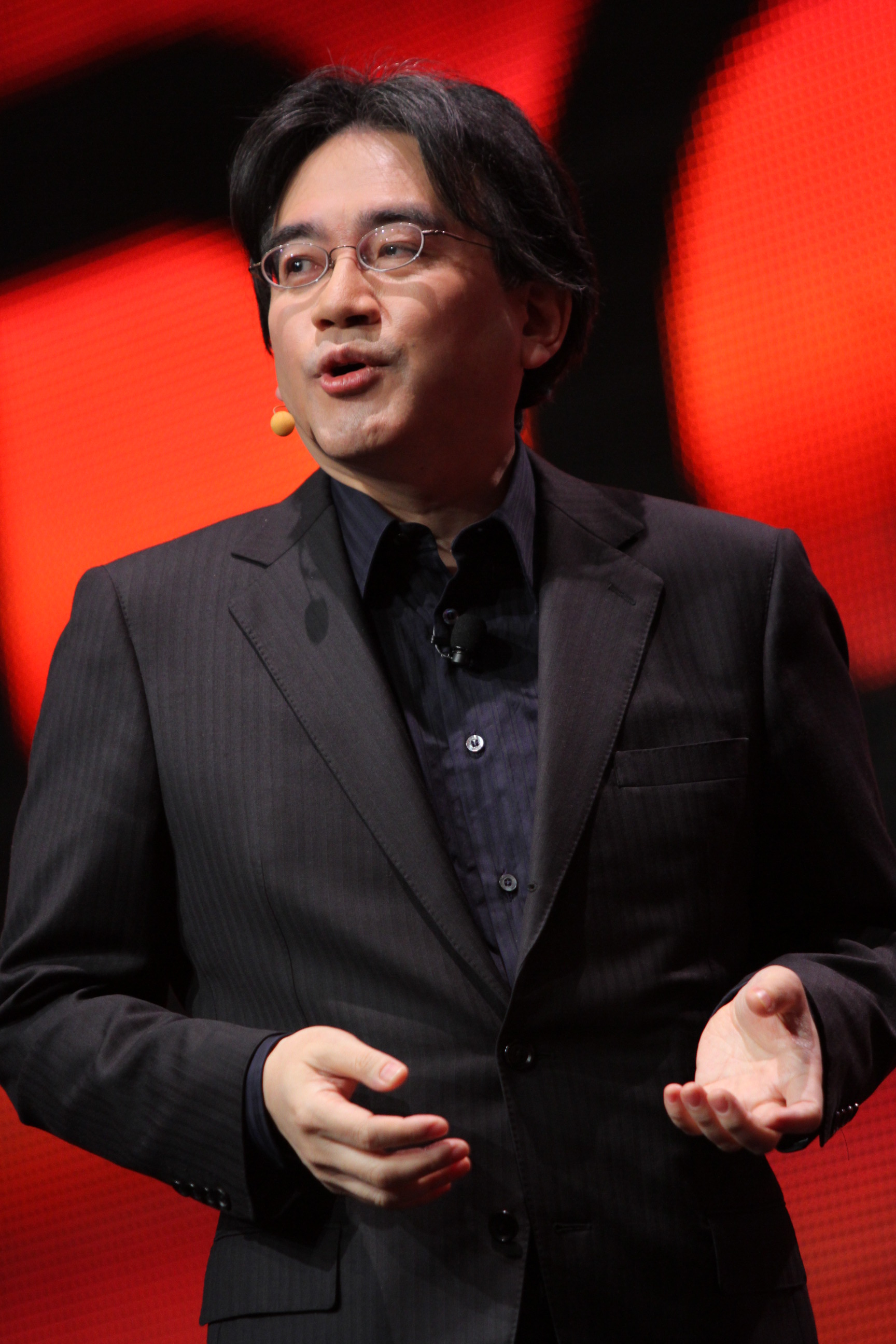
Satoru Iwata
Satoru Iwata was a Japanese businessman, video game programmer and producer. Beginning in 2002, Iwata served as the fourth president of Nintendo, as well as the chief executive officer (CEO) of Nintendo of America from 2013 until his death in 2015. Iwata was a major contributor in broadening the appeal of video games by focusing on novel and entertaining games rather than top-of-the-line hardware.

2002· Designers & Composers
Shigeru Miyamoto
Shigeru Miyamoto is a Japanese video game designer, producer, game director and filmmaker at Nintendo, where he has served as one of its representative directors as an executive since 2002. Widely regarded as one of the most accomplished and influential designers in video games, he is the creator of some of the most acclaimed and best-selling game franchises of all time, including Mario, The Legend of Zelda, Donkey Kong, Star Fox and Pikmin. More than 1 billion copies of games featuring franchises created by Miyamoto have been sold.
2002· Mario Universe
Super Mario Sunshine
Super Mario Sunshine is a 2002 platform game developed and published by Nintendo for the GameCube. It is the second 3D game in the Super Mario series, following Super Mario 64 (1996). The game was directed by Yoshiaki Koizumi and Kenta Usui, produced by series creators Shigeru Miyamoto and Takashi Tezuka, written by Makoto Wada, and scored by Koji Kondo and Shinobu Tanaka.
2002· The Legend of Zelda
The Legend of Zelda: The Wind Waker
The Legend of Zelda: The Wind Waker is a 2002 action-adventure game developed and published by Nintendo for the GameCube. An installment in The Legend of Zelda series, it was released in Japan on December 13, 2002, in North America on March 23, 2003, and in Europe on May 2, 2003.
2002· Iconic Pokémon
List of generation III Pokémon
The third generation (generation III) of the Pokémon franchise features 386 fictional species of creatures and 135 Pokémon introduced to the core video game series in the 2002 Game Boy Advance games Pokémon Ruby and Sapphire, and later in the 2004 game Pokémon Emerald. These games were accompanied by the television series Pokémon Advanced, which aired from November 21, 2002, until August 28, 2003, in Japan.
2002· Other Franchises
Metroid Prime
Metroid Prime is a 2002 action-adventure game developed by Retro Studios and published by Nintendo for the GameCube. It is the fifth main Metroid game, and the first to use 3D computer graphics and a first-person perspective. It was released in North America in November 2002 and in Japan and Europe the following year. Along with the Game Boy Advance game Metroid Fusion, Prime marked the return of the Metroid series after an eight-year hiatus following Super Metroid (1994).
2002· Studios & Subsidiaries
Next Level Games
Next Level Games, Inc. is a Canadian video game developer owned by Nintendo since 2021 and based in Vancouver. Founded in August 2002 by former members of EA Black Box who worked on games such as Sega Soccer Slam and NHL Hitz titles, Next Level Games specializes in creating console video games. The company's first project was NHL Hitz Pro, which was published by Midway Games in 2003 and followed up from EA Black Box's prior entries in the NHL Hitz series. The company is best known for its work with Nintendo, developing titles including the Mario Strikers games and Punch-Out!! for the Wii, Luigi's Mansion: Dark Moon and Metroid Prime: Federation Force for the Nintendo 3DS, and Luigi's Mansion 3 for the Nintendo Switch.
2003· Designers & Composers
Mahito Yokota
Mahito Yokota (横田 真人, Yokota Mahito) is a Japanese music composer and orchestrator who works for the video game development company Nintendo. He is most known for his collaborations with Koji Kondo in the Super Mario Galaxy series, along with Super Mario 3D World. Yokota served as an audio director at Koei prior to joining Nintendo in 2003.
2003· Other Franchises
WarioWare
WarioWare, known in Japan as Made in Wario , is a series of games featuring the Nintendo character Wario. The series was established in 2003 with the release of Mega Microgames! for the Game Boy Advance. While the first two games were developed by Nintendo R&D1, subsequent games have been co-developed by Intelligent Systems.

2004· Consoles
Game Boy Advance
The Game Boy Advance (GBA) is a 32-bit handheld game console, manufactured by Nintendo, which was released in Japan on March 21, 2001, and to international markets that June. It was later released in mainland China in 2004, under the name iQue Game Boy Advance. Compared to the Game Boy Color it succeeded, the console offered a significantly more powerful ARM7 processor and improved graphics, while retaining backward compatibility with games initially developed for its predecessor.
2005· Designers & Composers
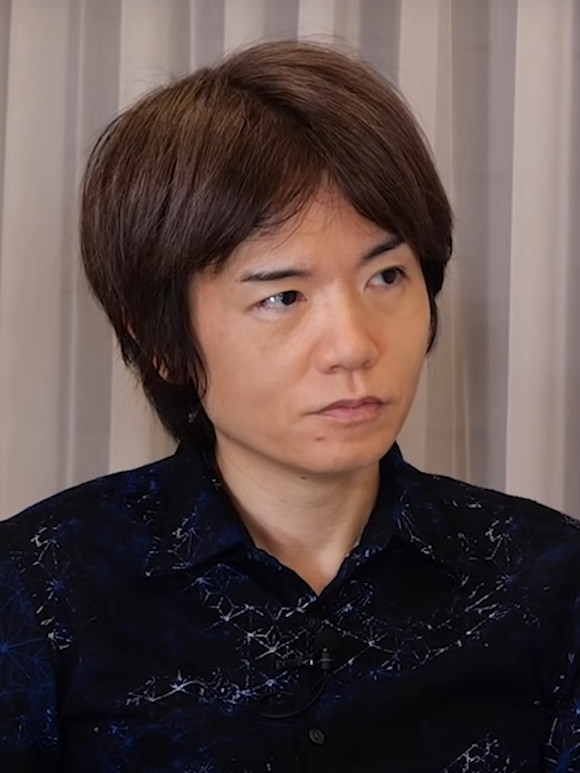
Masahiro Sakurai
Masahiro Sakurai is a Japanese video game director and game designer best known as the creator of the Kirby and Super Smash Bros. series. Apart from his work on those series, he also led the design of Meteos in 2005 and directed Kid Icarus: Uprising in 2012.

2006· Nintendo the Company
Reggie Fils-Aimé
Reginald Fils-Aimé is an American businessman best known for being the president and chief operating officer of Nintendo of America, the North American branch of the Japanese video game company Nintendo, from 2006 to 2019. Prior to his promotion to president and COO, Fils-Aimé was executive vice president of sales and marketing.

2006· Consoles
Nintendo DS
The Nintendo DS is a foldable handheld game console developed by Nintendo and released worldwide in 2004 and 2005. The "DS" in the name is an initialism for "Dual Screen", reflecting the system's most distinctive feature: two LCD screens working in tandem, with the lower screen functioning as a touchscreen. Both screens are housed in a clamshell design similar to that of the Game Boy Advance SP and some models of the Game & Watch series. The DS was among the first portable consoles to support wireless connectivity for local multiplayer over short distances, as well as online play through the now-defunct Nintendo Wi-Fi Connection service. Its primary competitor during the seventh generation of video game consoles was Sony's PlayStation Portable.
Initially marketed as an experimental "third pillar" in Nintendo's console lineup—complementing the handheld Game Boy Advance family and the home console GameCube—the DS's backward compatibility with Game Boy Advance titles and strong sales led it to be widely regarded as the successor to the Game Boy line. A slimmer model, Nintendo DS Lite, which features brighter screens and improved battery life, was released in 2006.
The DS and DS Lite were followed by the Nintendo DSi, a revision released on November 1, 2008. The DSi added dual digital cameras, larger screens, more memory, a faster processor, and internal flash memory, and it was later offered in a larger DSi XL model. It also introduced digital distribution of games, but lost com
2006· Consoles
Wii
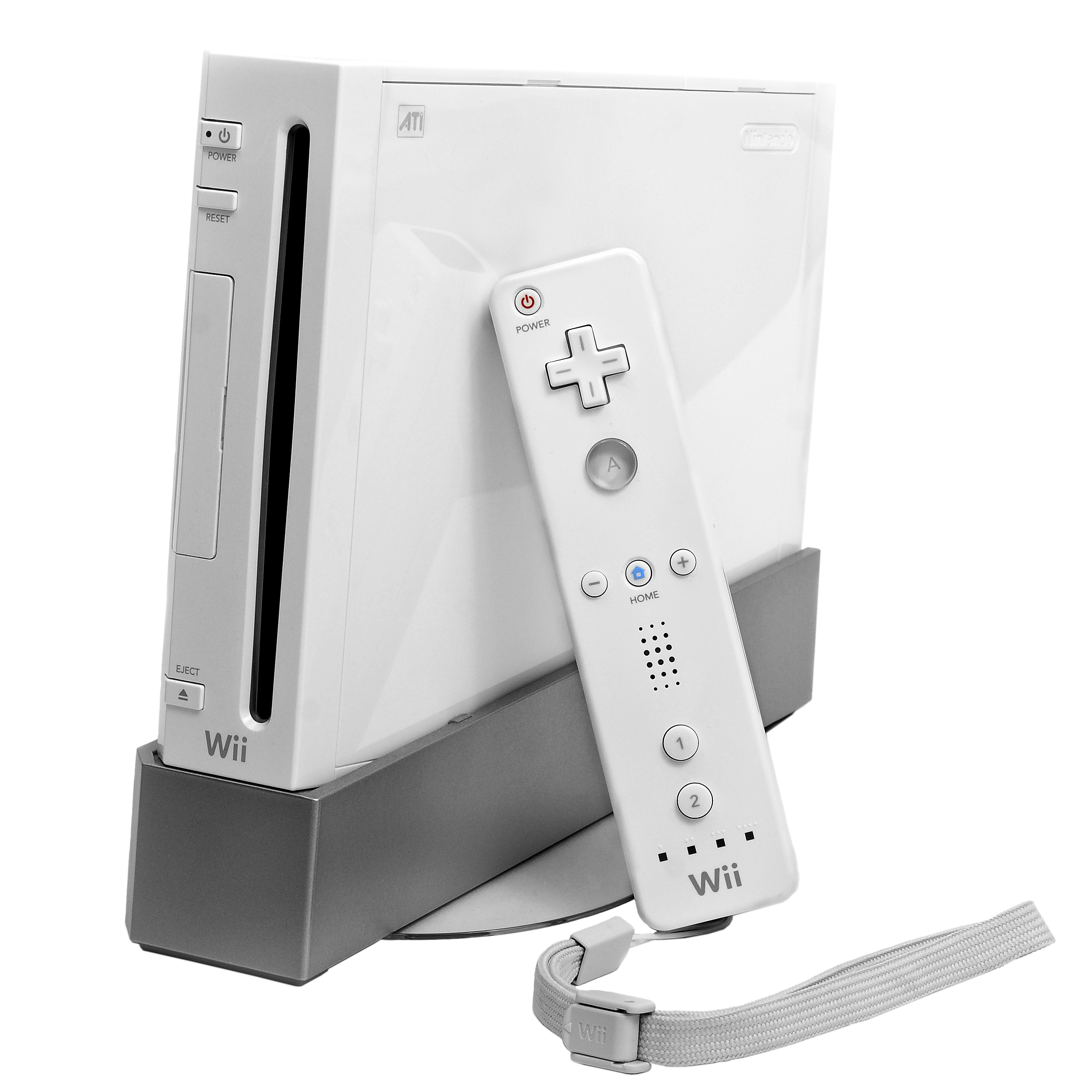
The Wii ( WEE) is a home video game console developed and marketed by Nintendo. It was released on November 19, 2006, in North America, and in December 2006 for most other regions of the world. It is Nintendo's fifth major home game console, following the GameCube, and is a seventh-generation console alongside Microsoft's Xbox 360 and Sony's PlayStation 3.
The Nintendo president, Satoru Iwata, focused on appealing to a broader audience through innovative gameplay, rather than competing with Microsoft and Sony on raw computational power. Shigeru Miyamoto and Genyo Takeda led development, which was initially codenamed Revolution. The Wii emphasized new forms of interaction, particularly through its wireless controller, the Wii Remote, which featured motion-tracking controls and could recognize gestures and function as a pointing device. The Wii was Nintendo's first console with native Internet connectivity, enabling online gaming and digital distribution via the Wii Shop Channel. It also supported wireless connectivity with the handheld Nintendo DS console for select games. Early models were backward-compatible with GameCube games and accessories. Nintendo later released cheaper versions: the RVL-101, without GameCube compatibility, and the Wii Mini, which removed features such as online connectivity and SD card storage.
Because of Nintendo's reduced focus on computational power, the Wii and its games were less expensive to produce than those of its competitors. It was extremel
2006· The Legend of Zelda
The Legend of Zelda: Twilight Princess
The Legend of Zelda: Twilight Princess is a 2006 action-adventure game developed and published by Nintendo for the GameCube and Wii. Originally planned for release exclusively on the GameCube in November 2005, Nintendo delayed the release to refine the game, add more content, and port it to the Wii. The Wii version was a launch game in North America in November 2006, and in Japan, Europe, and Australia the following month. The GameCube version was released in December 2006 as the final first-party game for the console.
2006· Pokémon Games
Pokémon Diamond and Pearl
Pokémon Diamond Version and Pokémon Pearl Version are role-playing video games developed by Game Freak and published by The Pokémon Company and Nintendo for the Nintendo DS in 2006. They are the first installments in the fourth generation of the Pokémon video game series. They were first released in Japan on September 28, 2006, and released in North America, Australia, and Europe in 2007. Pokémon Platinum, a third version, was released two years later in each region. Remakes titled Pokémon Brilliant Diamond and Shining Pearl were released for the Nintendo Switch worldwide on November 19, 2021. A prequel, Pokémon Legends: Arceus, was released for the Nintendo Switch on January 28, 2022.
2006· Iconic Pokémon
Arceus
Arceus is a Pokémon species in Nintendo and Game Freak's Pokémon media franchise, first introduced in the 2006 video games Pokémon Diamond and Pearl and designed by Takao Unno. Despite being featured in Diamond and Pearl, it was not available through official means, instead available through promotional events. It was not obtainable in game until the 2021 remakes Pokémon Brilliant Diamond and Shining Pearl. It is a central figure in the game Pokémon Legends: Arceus, where it sends the protagonist back in time to meet all Pokémon. Since Arceus's debut, it has appeared in multiple games including the Pokémon Trading Card Game, as well as various merchandise.
2007· Mario Universe
Super Mario Galaxy
Super Mario Galaxy is a 2007 platform game developed and published by Nintendo for the Wii. It is the third 3D platformer game in the Super Mario series. As Mario, the player embarks on an extraterrestrial mission to rescue Princess Peach and save the universe from his arch-nemesis Bowser, after which the player can play the game as Luigi for a more challenging experience. The levels consist of galaxies filled with minor planets, asteroids, and worlds, with different variations of gravity, the central element of gameplay. The player character is controlled using the Wii Remote and Nunchuk and completes missions, fights bosses, and reaches certain areas to collect Power Stars. Certain levels also use the motion-based Wii Remote functions.
2008· Nintendo the Company
Hiroshi Yamauchi
Hiroshi Yamauchi was the third president of Nintendo, serving in the role from 25 April 1949 to 24 May 2002, and principal owner of the Seattle Mariners from 1992 until his death. Before joining Nintendo, he had strong familial connections; his great-grandfather, Fusajiro Yamauchi, founded the company, and was its first president, and his grandfather, Sekiryo Kaneda, was its second president. During his tenure, Nintendo was transformed from a Japanese manufacturer of hanafuda into a global conglomerate largely focused on manufacturing video game consoles and publishing video games. On the basis of this success, and his ownership of most of Nintendo's shares, he became considerably wealthy. In 2008, he was Japan's wealthiest person, with an estimated net worth of $7.8 billion. Even in 2013, with this figure having declined to $2.1 billion, he was the 13th richest person in Japan and the 491st richest in the world.

2009· Designers & Composers
Yoshiaki Koizumi
Yoshiaki Koizumi is a Japanese video game designer, director, producer, and business executive. He is a senior executive officer at Nintendo and a senior general manager at Nintendo EPD, where he is known for his work within their Mario and The Legend of Zelda series, and as the General Producer of the Nintendo Switch. In 2009, he was chosen by IGN as one of the top 100 game creators of all time. Koizumi is also on the board of directors of Nintendo Pictures.
Era
2010s
22 cards

2010· Consoles
Nintendo 3DS
The Nintendo 3DS is a foldable dual-screen handheld game console developed by Nintendo. Announced in March 2010 and released beginning in early 2011, it succeeds the Nintendo DS and DSi. Building on the basic design of the DS, the 3DS retains the clamshell form factor and backward compatibility with Nintendo DS software, while introducing autostereoscopic 3D visuals that do not require special glasses. As an eighth-generation console, its primary competitor was Sony's PlayStation Vita.
2011· The Legend of Zelda
The Legend of Zelda: Skyward Sword
The Legend of Zelda: Skyward Sword is a 2011 action-adventure game developed and published by Nintendo for the Wii. A mainline entry in The Legend of Zelda series, Skyward Sword is the first game in the Zelda timeline, and details the origins of the Master Sword, a recurring weapon within the series. Series protagonist Link, a resident of a floating town called Skyloft, sets out to rescue his childhood friend Zelda after she is kidnapped and brought to the abandoned lands below the clouds. As Link, players navigate Skyloft and the lands below it, completing quests that advance the story and solving environmental and dungeon-based puzzles.
2011· Beyond the Console
Nintendo Direct
Nintendo Direct is a series of online presentations or live shows produced by Nintendo, where information regarding the company's upcoming content or franchises is presented, such as information about games and consoles. The presentations began in Japan and North America with the first edition on October 21, 2011, before expanding to Europe, Australia, and South Korea.

2012· Consoles
Wii U
The Wii U is a home video game console developed by Nintendo as the successor to the Wii. Released in late 2012, it was the first eighth-generation video game console and competed with Microsoft's Xbox One and Sony's PlayStation 4.
2012· Pokémon Games
Pokémon Black and White
Pokémon Black Version and Pokémon White Version are 2010 role-playing video games developed by Game Freak and published by The Pokémon Company and Nintendo for the Nintendo DS. They are the first installments in the fifth generation of the Pokémon video game series. First released in Japan on 18 September 2010, they were later released in Europe, North America and Australia in March 2011. Sequels to Black and White, Pokémon Black 2 and Pokémon White 2, were released for the Nintendo DS in 2012.
2013· Pokémon Games
Pokémon X and Y
Pokémon X and Pokémon Y are 2013 role-playing video games developed by Game Freak and published by The Pokémon Company and Nintendo for the Nintendo 3DS. They are the first installments in the sixth generation of the main Pokémon game series. First announced in January 2013 by Nintendo president Satoru Iwata through a Nintendo Direct, Pokémon X and Pokémon Y were released worldwide in October 2013, and they were the first Pokémon games to have a simultaneous global release.
2014· Mario Universe
Mario Kart 8
Mario Kart 8 is a 2014 kart racing game developed and published by Nintendo for the Wii U. It retains the gameplay of previous Mario Kart games, with players controlling characters from the Mario series and other Nintendo characters in races around tracks. Tracks are themed around locales from the Super Mario series populated with power-ups that help players gain advantages in races. Different difficulties are selectable prior to a race; harder difficulties make gameplay faster. In the new anti-gravity sequences, players drive on walls and ceilings. Mario Kart 8 contains a variety of single-player and local and online multiplayer game modes, including Grand Prix racing and arena-based battle modes.
2014· Beyond the Console
Amiibo
Amiibo is a toys-to-life platform by Nintendo, which was released in North America, Europe, and Australia in November 2014, followed by Japan a month later. It consists of a wireless communications and storage protocol for connecting figurines to the Wii U, Nintendo 3DS, Nintendo Switch and Nintendo Switch 2 video game consoles. These figurines are similar in form and functionality to that of the Skylanders, Disney Infinity and Lego Dimensions series of toys-to-life platforms. The Amiibo platform was preannounced to potentially accommodate any form of toy, specifically including general plans for future card games. Amiibo use near field communication (NFC) to interact with supported video game software, potentially allowing data to be transferred in and out of games and across multiple platforms.
2015· Nintendo the Company
Tatsumi Kimishima
Tatsumi Kimishima is a Japanese businessman who served as the 5th president of Nintendo from September 2015 to June 2018. He was formerly the president of Nintendo of America from January 2002, succeeding Minoru Arakawa, until Reggie Fils-Aimé took his place in May 2006. In May 2006, he became CEO and chairman of the board of Nintendo of America, and retained this position until June 2013.

2015· Studios & Subsidiaries
Nintendo Entertainment Planning & Development
Nintendo Entertainment Planning & Development Division, abbreviated Nintendo EPD, is the largest division within the Japanese video game company Nintendo. The division focuses on developing and producing video games, mobile apps, and other related entertainment software for the company. Nintendo EPD was established in September 2015 after merging their Entertainment Analysis & Development and Software Planning & Development divisions.
2016· Pokémon Games
Pokémon Snap
Pokémon Snap is a 1999 photography video game developed by HAL Laboratory and published by Nintendo for the Nintendo 64. It was first released in Japan in March 1999 and was later released in July 1999 in North America and in September 2000 for PAL regions. It is a spin-off game in the Pokémon series, being one of the first console-based games for it, and featuring many Pokémon rendered for the first time in real-time 3D. The game was re-released for the Wii's Virtual Console in December 2007, for the Wii U's Virtual Console in 2016, and for the Nintendo Classics service in June 2022.
2016· Pokémon Games
Pokémon Go
Pokémon Go is a 2016 augmented reality (AR) mobile game developed and published by Niantic, in partnership with Nintendo and The Pokémon Company, for iOS and Android devices. The game uses GPS to locate, capture, train, and battle Pokémon. It is free-to-play, featuring a freemium model that includes local advertising and offers in-app purchases for additional in-game items. Pokémon Go launched with approximately 150 Pokémon species, with new species regularly introduced.
2016· Pokémon Games
Pokémon Sun and Moon
Pokémon Sun and Pokémon Moon are 2016 role-playing video games developed by Game Freak and published by The Pokémon Company and Nintendo for the Nintendo 3DS. They are the first installments in the seventh generation of the Pokémon video game series. First announced in February 2016, Sun and Moon were released worldwide on 18 November 2016, commemorating the franchise's 20th anniversary. A pair of enhanced versions, Pokémon Ultra Sun and Pokémon Ultra Moon, were released for the same consoles on 17 November 2017.
2017· Nintendo the Company
Genyo Takeda
Genyo Takeda is a retired Japanese game designer and executive who worked for the video game company Nintendo. Takeda was formerly the general manager of Nintendo's Integrated Research & Development division, and was the co-representative director and "Technology Fellow" of the company until his retirement in 2017.

2017· Consoles
Nintendo Switch
The Nintendo Switch is a video game console developed by Nintendo and released worldwide in most regions on March 3, 2017. Released in the middle of the eighth generation of home consoles, the Switch succeeded the Wii U and competed with Sony's PlayStation 4 and Microsoft's Xbox One; it also competes with the ninth-generation consoles, the PlayStation 5 and Xbox Series X/S.
2017· Mario Universe
Super Mario Odyssey
Super Mario Odyssey is a 2017 platform game developed and published by Nintendo for the Nintendo Switch. An installment in the Super Mario series, it follows Mario and his new ally Cappy—a sentient hat—as they journey across various kingdoms to save Princess Peach from Mario's nemesis Bowser's plans of forced marriage. In contrast to the linear gameplay of prior entries, the game returns to the primarily open-ended, 3D platform gameplay featured in Super Mario 64 and Super Mario Sunshine.
2017· The Legend of Zelda
The Legend of Zelda: Breath of the Wild
The Legend of Zelda: Breath of the Wild is a 2017 action-adventure game developed by Nintendo EPD for the Wii U and Nintendo Switch. Set near the end of the Zelda timeline, it follows Link as he sets out to save Princess Zelda and prevent Calamity Ganon from destroying the world. The player explores the open world of Hyrule, collects items, and completes objectives such as puzzles and side quests. Breath of the Wild's world is unstructured and encourages exploration and experimentation; the story can be completed in a nonlinear fashion.
2018· Nintendo the Company
Shuntaro Furukawa
Shuntaro Furukawa is a Japanese executive who is the president of the video game company Nintendo. He succeeded Tatsumi Kimishima as the company's sixth president in June 2018.
2018· Other Franchises
Super Smash Bros. Ultimate
Super Smash Bros. Ultimate is a 2018 crossover fighting game developed by Bandai Namco Studios and Sora Ltd. and published by Nintendo for the Nintendo Switch. It is the fifth installment in the Super Smash Bros.
2018· Beyond the Console
Nintendo Switch Online
Nintendo Switch Online (NSO) is an online subscription service operated by Nintendo for its video game consoles, the Nintendo Switch and Nintendo Switch 2. The service is Nintendo's third-generation online service after Nintendo Wi-Fi Connection and the Nintendo Network. The subscription service officially launched on September 18, 2018; an expanded tier of the service, Nintendo Switch Online + Expansion Pack, was released on October 25, 2021.

2019· Nintendo the Company
Doug Bowser
Doug Spencer Bowser is an American businessman, and former president and chief operating officer of Nintendo of America, the North American branch of the Japanese video game company Nintendo, from 2019 to 2025.
2019· Beyond the Console
Detective Pikachu (film)
Pokémon Detective Pikachu is a 2019 live-action animated fantasy comedy film and the first live-action film based on the Pokémon franchise. It is loosely based on the 2016 video game Detective Pikachu. Directed by Rob Letterman, who co-wrote it with Dan Hernandez, Benji Samit, and Derek Connolly, the film stars Ryan Reynolds as the voice and motion capture of Pikachu, with Justice Smith, Kathryn Newton, Suki Waterhouse, Omar Chaparro, Chris Geere, Ken Watanabe and Bill Nighy in live-action roles. The plot follows Detective Pikachu and his partner Tim Goodman as they attempt to solve the mysterious disappearance of Tim's father, Harry. Filming took place from January to May 2018 in Colorado, England, and Scotland.
Era
2020s
8 cards
2020· Pokémon Games
Pokémon Sword and Shield
Pokémon Sword and Pokémon Shield are 2019 role-playing video games developed by Game Freak and published by The Pokémon Company and Nintendo for the Nintendo Switch console. They are the first instalments in the 8th generation of the Pokémon video game series. First teased at E3 2017 and announced in February 2019, the games were released on 15 November 2019. The games were accompanied by a downloadable content (DLC) expansion pass consisting of Part 1—The Isle of Armor (released in June 2020) and Part 2—The Crown Tundra (October 2020); its launch marked the first ever DLC released as part of the Pokémon video game series instead of an improved version.

2022· Pokémon Creators
Junichi Masuda
Junichi Masuda is a Japanese video game composer, director, designer, producer, singer, programmer and trombonist, best known for his work in the Pokémon franchise. He was a member of Game Freak where he was an employee and executive at the company since 1989 after Satoshi Tajiri and Ken Sugimori founded it, starting as a music composer. In 2022, Masuda was appointed to be Chief Creative Fellow at The Pokémon Company.
2022· Pokémon Games
Pokémon Legends: Arceus
Pokémon Legends: Arceus is a 2022 action role-playing game developed by Game Freak and published by Nintendo and The Pokémon Company for the Nintendo Switch. It is part of the eighth generation of the Pokémon video game series and serves as a prequel to the fourth-generation titles Pokémon Diamond and Pearl (2006). The game was first announced as part of the Pokémon 25th Anniversary event in February 2021, and was released worldwide on 28 January 2022.
2022· Pokémon Games
Pokémon Scarlet and Violet
Pokémon Scarlet and Pokémon Violet are 2022 role-playing video games developed by Game Freak and published by Nintendo and The Pokémon Company for the Nintendo Switch. They are the first installments in the ninth generation of the Pokémon video game series. They were announced in February 2022 and released on 18 November 2022. The games later received a downloadable content (DLC) expansion pass storyline, The Hidden Treasure of Area Zero. The first part, The Teal Mask, was released on 13 September 2023, and the second part, The Indigo Disk, was released on 14 December 2023. A post-game expansion, Mochi Mayhem, considered the epilogue to the DLC and the games themselves, was released on 11 January 2024.
2023· Mario Universe
Super Mario Bros. Wonder
Super Mario Bros. Wonder is a 2023 platform game developed and published by Nintendo for the Nintendo Switch. It is the first side-scrolling Super Mario game since New Super Mario Bros. U (2012). The player controls Mario, Luigi, and their friends as they attempt to stop Bowser, who plots to take over a new land known as the Flower Kingdom after using the magical Wonder Flower to fuse himself with the kingdom's castle.
2023· The Legend of Zelda
The Legend of Zelda: Tears of the Kingdom
The Legend of Zelda: Tears of the Kingdom is a 2023 action-adventure game developed by Nintendo EPD for the Nintendo Switch. The player controls Link as he searches for Princess Zelda and fights to prevent Ganondorf from destroying Hyrule. Tears of the Kingdom retains the open-world gameplay and setting of its predecessor, Breath of the Wild (2017), but features new environments, including islands floating in the sky and a vast underground area called the Depths. It introduces construction elements, allowing the player to create devices that aid in combat or exploration.
2023· Beyond the Console
The Super Mario Bros. Movie
The Super Mario Bros. Movie is a 2023 American animated adventure comedy film based on Nintendo's Mario video game franchise. Directed by Aaron Horvath and Michael Jelenic and written by Matthew Fogel, the film stars an ensemble voice cast led by Chris Pratt, Anya Taylor-Joy, Charlie Day, Jack Black, Keegan-Michael Key, Seth Rogen, and Fred Armisen. It was produced by Illumination and Nintendo.

2025· Consoles
Nintendo Switch 2
The Nintendo Switch 2 is a video game console developed by Nintendo and released in most regions on June 5, 2025. Like the original Nintendo Switch, it can be used as a handheld, as a tablet, or connected via the dock to an external display. The Joy-Con 2 controllers can be used while magnetically attached or detached from the console. Compared to the original Switch, the Switch 2 has a larger liquid-crystal display (LCD), more internal storage, and updated graphics, controllers, and social features. It supports 1080p resolution and a 120 Hz refresh rate in handheld or tabletop mode, and 4K resolution with a 60 Hz refresh rate when docked, as well as HDR support on both the tablet and compatible external displays.