Site view
Timeline
Every dated card across The Jazz Archive, arranged chronologically. Dates are inferred from each card's summary.
Era
1890s
2 cards

1897· Founders & Early Giants
Sidney Bechet
Sidney Joseph Bechet (May 14, 1897 – May 14, 1959) was an American jazz saxophonist, clarinetist, and composer. He was one of the first important soloists in jazz, and first recorded several months before trumpeter Louis Armstrong. His erratic temper hampered his music career, and not until the late 1940s did he earn wide acclaim. Bechet spent much of his later life in France.

1899· Pioneers
Duke Ellington
Edward Kennedy "Duke" Ellington (April 29, 1899 – May 24, 1974) was an American jazz pianist, composer, and leader of his eponymous jazz orchestra from 1924 through the rest of his life. Music critic Ralph J. Gleason called him "America's most important composer".
Born and raised in Washington, D.C., Ellington was based in New York City from the mid-1920s and gained a national profile through his orchestra's appearances at the Cotton Club in Harlem. A master at writing miniatures for the three-minute 78 rpm recording format, Ellington wrote or collaborated on more than one thousand compositions; his extensive body of work is the largest recorded personal jazz legacy, and many of his pieces have become standards.
Era
1900s
3 cards
1903· Founders & Early Giants
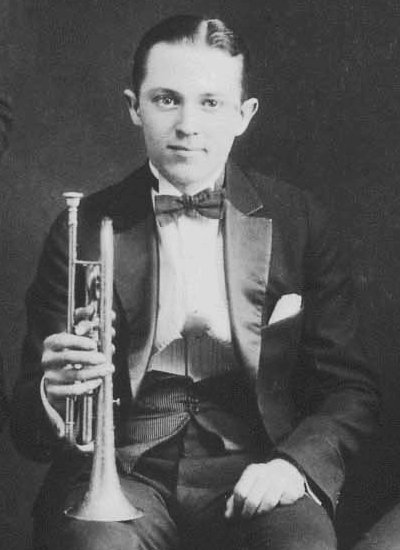
Bix Beiderbecke
Leon Bismark "Bix" Beiderbecke ( BY-dər-bek; March 10, 1903 – August 6, 1931) was an American jazz cornetist, pianist and composer. Beiderbecke was one of the most influential jazz soloists of the 1920s, a cornet player noted for an inventive lyrical approach and purity of tone, with such clarity of sound that one contemporary famously described it like "shooting bullets at a bell”.
His solos on seminal recordings such as "Singin' the Blues" and "I'm Coming, Virginia" (both 1927) demonstrate a gift for extended improvisation that heralded the jazz ballad style, in which jazz solos are an integral part of the composition. Moreover, his use of extended chords and an ability to improvise freely along harmonic as well as melodic lines are echoed in post-WWII developments in jazz.

1904· Founders & Early Giants
Coleman Hawkins
Coleman Randolph Hawkins (November 21, 1904 – May 19, 1969), nicknamed "Hawk" and sometimes "Bean", was an American jazz tenor saxophonist. One of the first prominent jazz musicians on his instrument, as Joachim E. Berendt explained: "There were some tenor players before him, but the instrument was not an acknowledged jazz horn." Hawkins biographer John Chilton described the prevalent styles of tenor saxophone solos prior to Hawkins as "mooing" and "rubbery belches". Hawkins denied being first and noted his contemporaries Happy Caldwell, Stump Evans, and Prince Robinson, although he was the first to tailor his method of improvisation to the saxophone rather than imitate the techniques of the clarinet. Hawkins's virtuosic, arpeggiated approach to improvisation, with his characteristic rich, emotional, and vibrato-laden tonal style, was the main influence on a generation of tenor players that included Chu Berry, Charlie Barnet, Tex Beneke, Ben Webster, Vido Musso, Herschel Evans, Buddy Tate, and Don Byas, and through them the later tenormen, Arnett Cobb, Illinois Jacquet, Flip Phillips, Ike Quebec, Al Sears, Paul Gonsalves, and Lucky Thompson.

1909· Founders & Early Giants
Art Tatum
Arthur Tatum Jr. (, October 13, 1909 – November 5, 1956) was an American jazz pianist who is widely regarded as one of the greatest ever. From early in his career, fellow musicians acclaimed Tatum's technical ability as extraordinary. Tatum also extended jazz piano's vocabulary and boundaries far beyond his initial stride influences, and established new ground through innovative use of reharmonization, voicing, and bitonality.
Era
1910s
6 cards
1914· Landmark Albums
Sketches of Spain
Sketches of Spain is a studio album by American jazz musician Miles Davis, released on July 18, 1960, by Columbia Records. Recording took place between November 1959 and March 1960 at Columbia's 30th Street Studio in New York City. An extended version of the second movement of Joaquín Rodrigo's Concierto de Aranjuez (1939) is included, as well as a piece called "Will o' the Wisp", from Manuel de Falla's ballet El amor brujo (1914–1915). Sketches of Spain is regarded as an exemplary recording of third stream, a musical fusion of jazz, European classical, and styles from world music.

1915· Founders & Early Giants
Jelly Roll Morton
Ferdinand Joseph LaMothe, known professionally as Jelly Roll Morton, was an American blues and jazz pianist, bandleader, and composer of Louisiana Creole descent. Morton was jazz's first arranger, proving that a genre rooted in improvisation could retain its essential characteristics when notated. His composition "Jelly Roll Blues", published in 1915, was one of the first published jazz compositions. He also claimed to have invented the genre.

1917· Pioneers
Thelonious Monk
Thelonious Sphere Monk ( October 10, 1917 – February 17, 1982) was an American jazz pianist and composer. He had a unique improvisational style and made numerous contributions to the standard jazz repertoire, including "'Round Midnight", "Blue Monk", "Straight, No Chaser", "Ruby, My Dear", "In Walked Bud", and "Well, You Needn't". As of 2009, Monk was the second-most-recorded jazz composer in history, after Duke Ellington.
Monk's compositions and improvisations feature dissonances and angular melodies, often using flat ninths, flat fifths, unexpected chromatic notes, low bass notes and stride, and fast whole tone runs.

1917· Pioneers
Ella Fitzgerald
Ella Jane Fitzgerald (April 25, 1917 – June 15, 1996) was an American improvisational vocal musician, singer, songwriter and composer, sometimes referred to as the "First Lady of Song", "Queen of Jazz", and "Lady Ella". She was noted for her purity of tone, impeccable diction, phrasing, timing, intonation, and a "horn-like" improvisational ability, particularly in her scat singing.
After a tumultuous adolescence, Fitzgerald found stability in musical success with the Chick Webb Orchestra, performing across the country but most often associated with the Savoy Ballroom in Harlem. Her rendition of the nursery rhyme "A-Tisket, A-Tasket" helped boost both her and Webb to national fame.

1917· Pioneers
Dizzy Gillespie
John Birks "Dizzy" Gillespie ( ghih-LES-pee; October 21, 1917 – January 6, 1993) was an American jazz trumpeter, bandleader, composer, educator and singer. He was a trumpet virtuoso and improviser, building on the virtuosic style of Roy Eldridge but adding layers of harmonic and rhythmic complexity previously unheard in jazz. His combination of musicianship, showmanship, and wit made him a leading popularizer of early bebop styles. His beret and horn-rimmed spectacles, scat singing, bent horn, pouched cheeks, and light-hearted personality have made him an enduring icon.
1919· Cool, Hard Bop & Modal
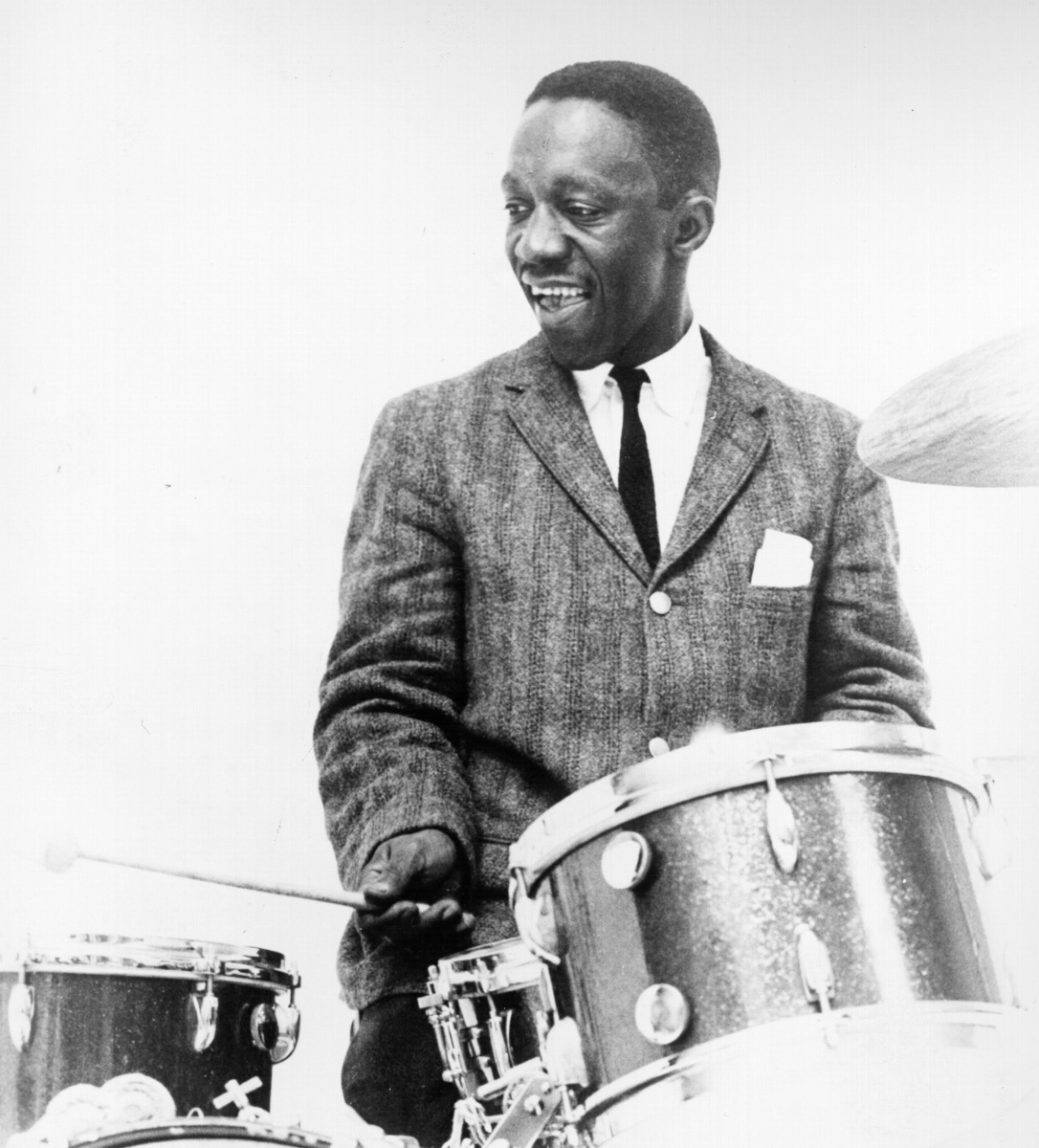
Art Blakey
Arthur Blakey (October 11, 1919 – October 16, 1990) was an American jazz drummer and bandleader. He was also known as Abdullah Ibn Buhaina after he converted to Islam for a short time in the late 1940s.
Blakey made a name for himself in the 1940s in the big bands of Fletcher Henderson and Billy Eckstine. He then worked with bebop musicians Thelonious Monk, Charlie Parker, and Dizzy Gillespie.
Era
1920s
10 cards

1920· Pioneers
Charlie Parker
Charles Parker Jr. (August 29, 1920 – March 12, 1955), nicknamed "Bird" or "Yardbird", was an American jazz saxophonist, bandleader, and composer. Parker was a highly influential soloist and leading figure in the development of bebop, a form of jazz characterized by fast tempos, virtuosic technique, and advanced harmonies. He was a virtuoso and introduced revolutionary rhythmic and harmonic ideas into jazz, including rapid passing chords, new variants of altered chords, and chord substitutions.

1923· Bebop Revolution
Dexter Gordon
Dexter Gordon (February 27, 1923 – April 25, 1990) was an American jazz tenor saxophonist, composer, and bandleader. He was among the most influential early bebop musicians. Gordon's height was 6 feet 6 inches (198 cm), so he was also known as "Long Tall Dexter" and "Sophisticated Giant". His studio and performance career spanned more than 40 years.

1923· Bebop Revolution
Fats Navarro
Theodore "Fats" Navarro (September 24, 1923 – July 7, 1950) was an American jazz trumpet player and a pioneer of the bebop style of jazz improvisation in the 1940s. A native of Key West, Florida, he toured with big bands before achieving fame as a bebop trumpeter in New York. Following a series of studio sessions with leading bebop figures including Tadd Dameron, Bud Powell, and Kenny Clarke, he became ill with tuberculosis and died at the age of 26. Despite the short duration of his career, he had a strong stylistic influence on trumpet players who rose to fame in later decades, including Miles Davis, Clifford Brown and Lee Morgan.
1923· Labels & Venues
Cotton Club
The Cotton Club was a 20th-century nightclub in New York City. It was located on 142nd Street and Lenox Avenue from 1923 to 1936, then briefly in the midtown Theater District until 1940. The club operated during the United States' era of Prohibition and Jim Crow era racial segregation. Black people initially could not patronize the Cotton Club, but the venue featured many of the most popular black entertainers of the era, including musicians Fletcher Henderson, Duke Ellington, Jimmie Lunceford, Chick Webb, Louis Armstrong, Count Basie, Fats Waller, Willie Bryant; vocalists Adelaide Hall, Ethel Waters, Cab Calloway, Bessie Smith, Lillie Delk Christian, Aida Ward, Avon Long, the Dandridge Sisters, the Will Vodery choir, The Mills Brothers, Nina Mae McKinney, Billie Holiday, Midge Williams, Lena Horne, and dancers such as Katherine Dunham, Bill Robinson, The Nicholas Brothers, Charles 'Honi' Coles, Leonard Reed, Stepin Fetchit, the Berry Brothers, The Four Step Brothers, Jeni Le Gon and Earl Snakehips Tucker.
1924· Bebop Revolution
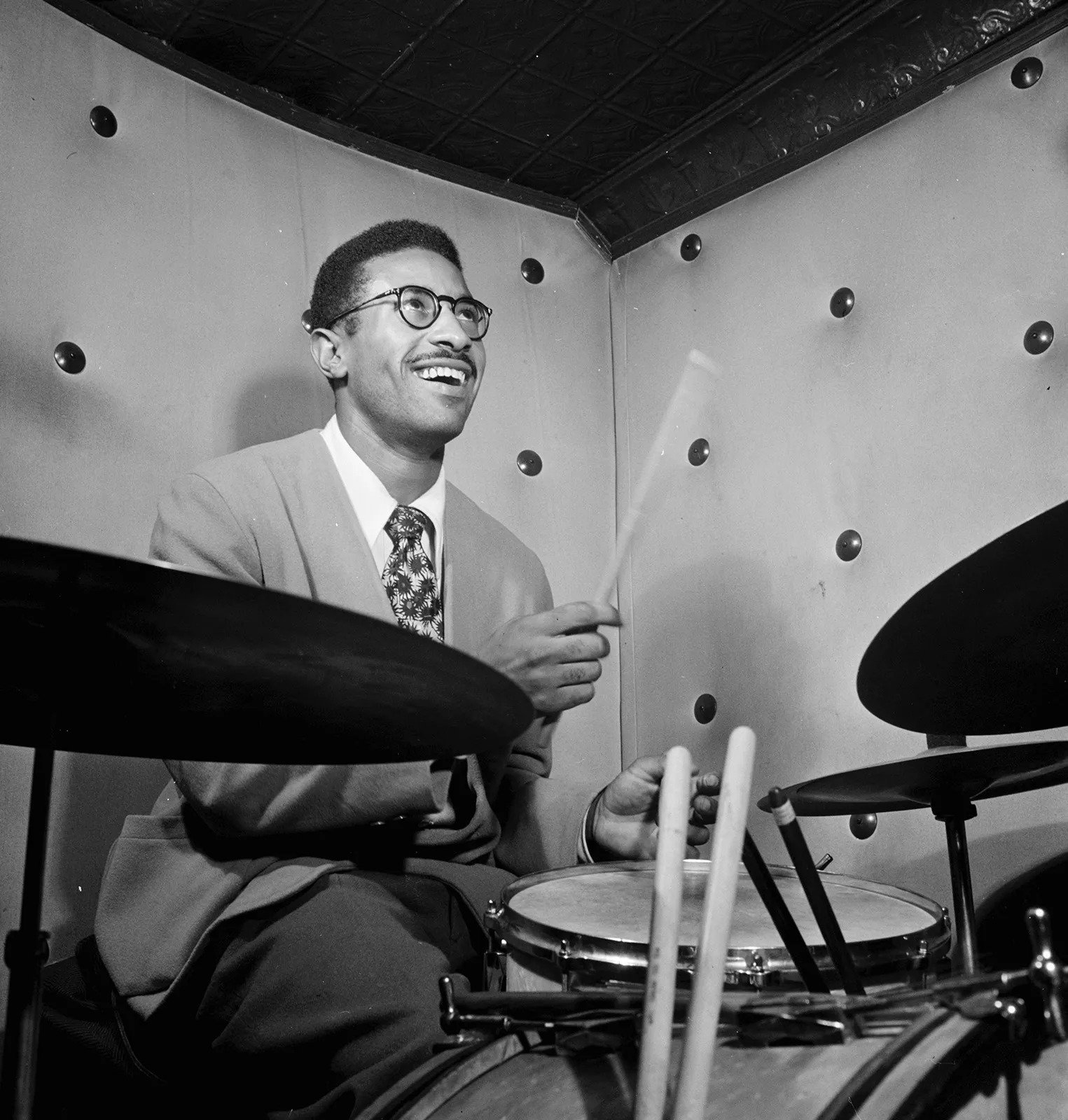
Max Roach
Maxwell Lemuel Roach (January 10, 1924 – August 16, 2007) was an American jazz drummer and composer. A pioneer of bebop, he worked in many other styles of music, and is generally considered one of the most important drummers in history. He worked with many famous jazz musicians, including Clifford Brown, Coleman Hawkins, Dizzy Gillespie, Charlie Parker, Miles Davis, Duke Ellington, Thelonious Monk, Abbey Lincoln, Dinah Washington, Charles Mingus, Billy Eckstine, Stan Getz, Sonny Rollins, Eric Dolphy, Benny Carter, and Booker Little. He also played with his daughter Maxine Roach, a Grammy-nominated violist.
1927· Cool, Hard Bop & Modal
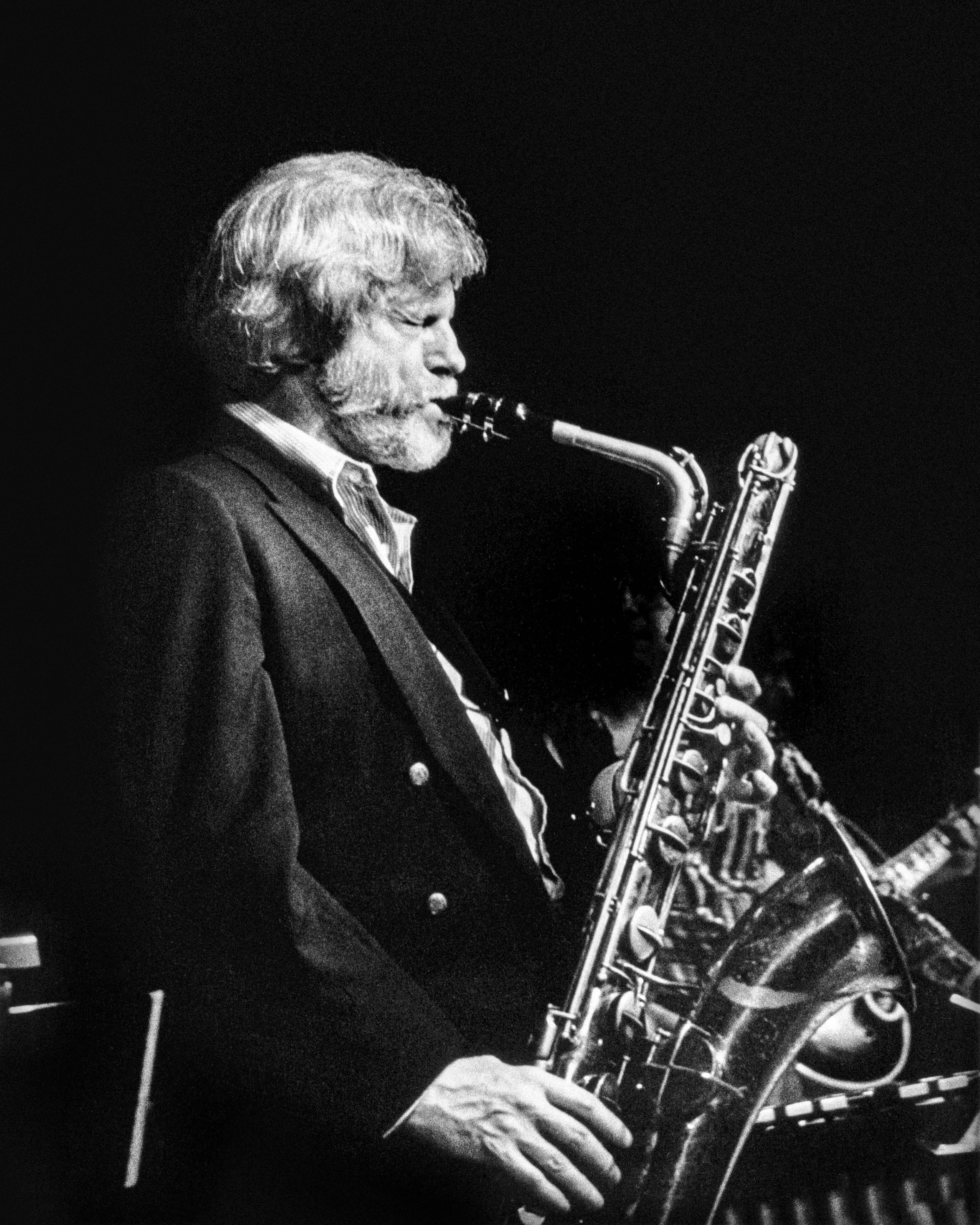
Gerry Mulligan
Gerald Joseph Mulligan (April 6, 1927 – January 20, 1996), also known as Jeru, was an American jazz saxophonist, clarinetist, pianist, composer and arranger. Though primarily known as one of the leading jazz baritone saxophonists—playing the instrument with a light and airy tone in the era of cool jazz—Mulligan was also a significant arranger working with Claude Thornhill, Miles Davis, Stan Kenton, and others. His piano-less quartet of the early 1950s with trumpeter Chet Baker is still regarded as one of the best cool jazz ensembles. Mulligan was also a skilled pianist and played several other reed instruments.

1928· Cool, Hard Bop & Modal
Cannonball Adderley
Julian Edwin "Cannonball" Adderley (September 15, 1928 – August 8, 1975) was an American jazz alto saxophonist of the hard bop era of the 1950s and 1960s.
Adderley is perhaps best remembered by the general public for the 1966 soul jazz single "Mercy, Mercy, Mercy", which was written for him by his keyboardist Joe Zawinul and became a major crossover hit on the pop and R&B charts. A cover version by the Buckinghams, who added lyrics, also reached No. 5 on the charts.
1928· Free & Avant-Garde
Eric Dolphy
Eric Allan Dolphy Jr. (June 20, 1928 – June 29, 1964) was an American jazz multi-instrumentalist, composer, and bandleader. Primarily an alto saxophonist, bass clarinetist, and flautist, Dolphy was one of several multi-instrumentalists to gain prominence during the same era. His use of the bass clarinet helped to establish the unconventional instrument within jazz.

1929· Cool, Hard Bop & Modal
Chet Baker
Chesney Henry Baker Jr. (December 23, 1929 – May 13, 1988) was an American jazz trumpeter and vocalist. He is known for major innovations in cool jazz that led him to be nicknamed the "Prince of Cool".
Baker earned much attention and critical praise through the 1950s, particularly for albums featuring his vocals: Chet Baker Sings (1954) and It Could Happen to You (1958).

1929· Free & Avant-Garde
Cecil Taylor
Cecil Percival Taylor (March 25, 1929 – April 5, 2018) was an American pianist and poet.
Taylor was classically trained and was one of the pioneers of free jazz. His music is characterized by an energetic, physical approach, resulting in complex improvisation often involving tone clusters and intricate polyrhythms. His technique has been compared to percussion.
Era
1930s
5 cards
1932· Fusion & Beyond
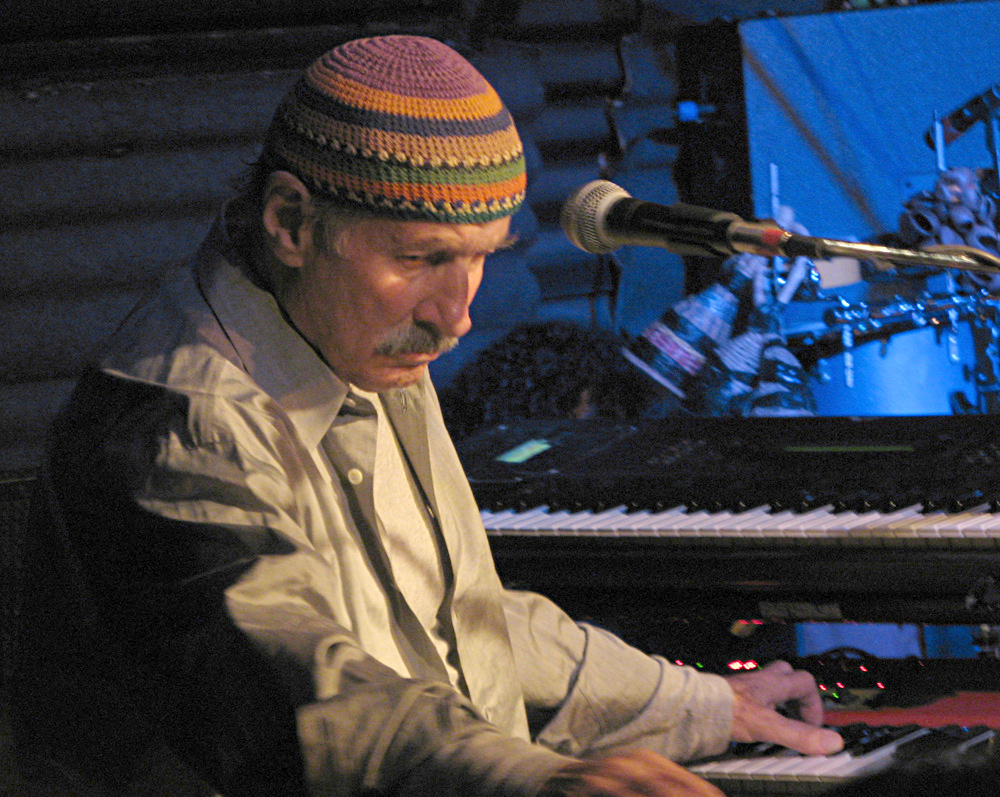
Joe Zawinul
Josef Erich Zawinul ( ZOV-in-əl; 7 July 1932 – 11 September 2007) was an Austrian jazz and jazz fusion keyboardist and composer. First coming to prominence with saxophonist Cannonball Adderley, Zawinul went on to play with Miles Davis and to become one of the creators of jazz fusion, a musical genre that combined jazz with rock. He co-founded the groups Weather Report and The Zawinul Syndicate. He pioneered the use of electric piano and synthesizer, and was named "Best Electric Keyboardist" twenty-eight times by the readers of DownBeat magazine.

1935· Founders & Early Giants
Count Basie
William James "Count" Basie (; August 21, 1904 – April 26, 1984) was an American jazz pianist, organist, bandleader, and composer. In 1935, he formed the Count Basie Orchestra, and in 1936 took them to Chicago for a long engagement and their first recording. He led the group for almost 50 years, creating innovations like the use of two "split" tenor saxophones, emphasizing the rhythm section, riffing with a big band, using arrangers to broaden their sound, his minimalist piano style, and others.
Many musicians came to prominence under his direction, including the tenor saxophonists Lester Young and Herschel Evans, the guitarist Freddie Green, trumpeters Buck Clayton and Harry "Sweets" Edison, plunger trombonist Al Grey, and singers Jimmy Rushing, Helen Humes, Dennis Rowland, Thelma Carpenter, and Joe Williams.

1936· Free & Avant-Garde
Albert Ayler
Albert Ayler (; July 13, 1936 – November 25, 1970) was an American avant-garde jazz saxophonist and composer.
After early experience playing rhythm and blues and bebop, Ayler began recording music during the free jazz era of the 1960s. However, some critics argue that while Ayler's style is undeniably original and unorthodox, it does not adhere to the generally accepted critical understanding of free jazz. In fact, Ayler's style is difficult to categorize, and it evoked incredibly strong and disparate reactions from critics and fans alike.

1938· Cool, Hard Bop & Modal
McCoy Tyner
Alfred McCoy Tyner (December 11, 1938 – March 6, 2020) was an American jazz pianist and composer known for his work with the John Coltrane Quartet from 1960 to 1965 and his long solo career afterward. He was an NEA Jazz Master and a five-time Grammy Award winner. Tyner has been widely imitated and is one of the most recognizable and influential jazz pianists of all time.

1939· Labels & Venues
Blue Note Records
Blue Note Records is an American jazz record label now owned by Universal Music Group and operated under Capitol Music Group. Established in 1939 by German-Jewish emigrants Alfred Lion and Max Margulis, it derived its name from the blue notes of jazz and the blues. Originally dedicated to recording traditional jazz and small group swing, the label began to switch its attention to modern jazz around 1947. From there, Blue Note grew to become one of the most prolific, influential and respected jazz labels of the mid-20th century, noted for its role in facilitating the development of hard bop, post-bop and avant-garde jazz, as well as for its iconic modernist art direction.
Era
1940s
3 cards

1945· Free & Avant-Garde
Anthony Braxton
Anthony Braxton (born June 4, 1945) is an American experimental composer, educator, music theorist, improviser, and multi-instrumentalist who is best known for playing saxophones, particularly the alto sax. He grew up on the South Side of Chicago and was a key early member of the Association for the Advancement of Creative Musicians. He received great acclaim for his 1969 double-LP record For Alto, the first full-length album of solo saxophone music.
A prolific composer with a vast body of cross-genre work, the MacArthur Fellow and NEA Jazz Master has released hundreds of recordings and compositions.
1945· Fusion & Beyond
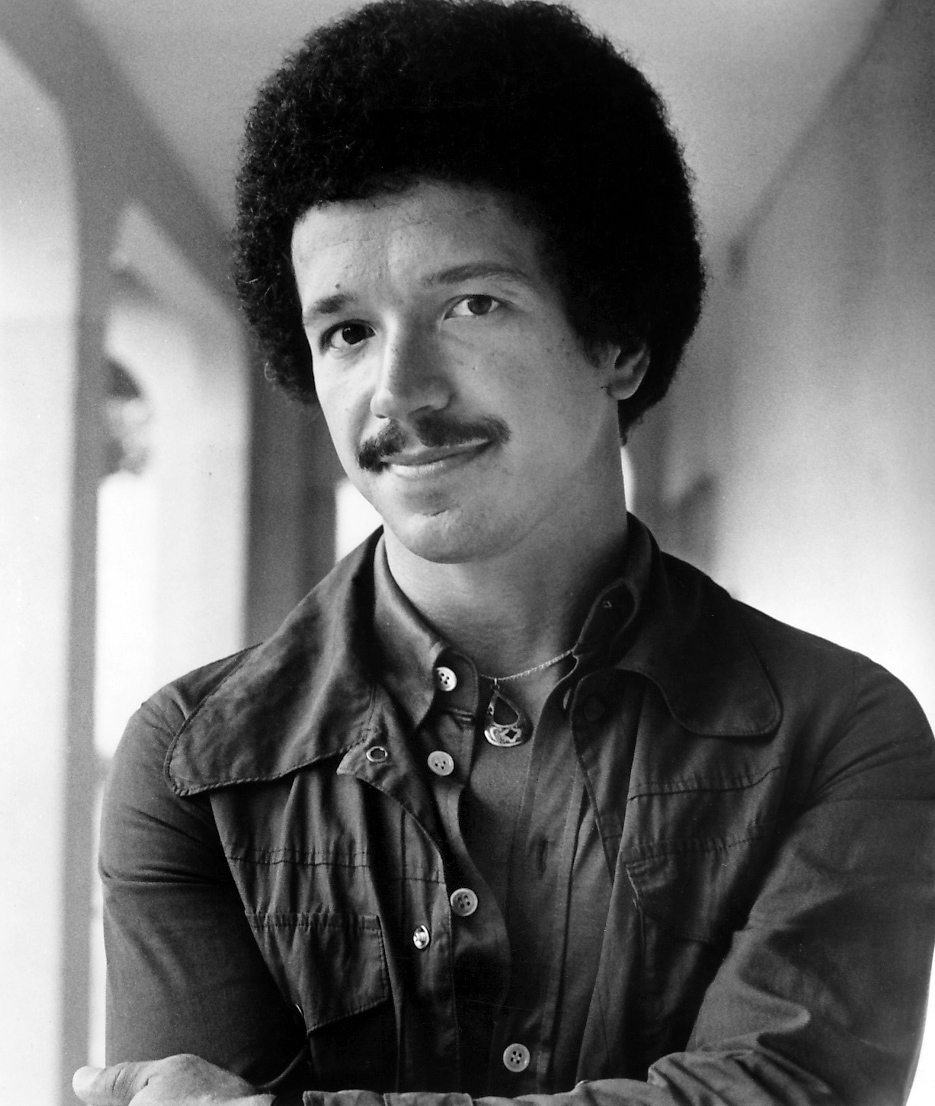
Keith Jarrett
Keith Jarrett (born May 8, 1945) is an American pianist and composer. Jarrett started his career with Art Blakey and later moved on to play with Charles Lloyd and Miles Davis. Since the early 1970s, he has also been a group leader and solo performer in jazz, jazz fusion, and classical music. His improvisations draw from the traditions of jazz and other genres, including Western classical music, gospel, blues, and ethnic folk music.

1949· Labels & Venues
Prestige Records
Prestige Records is a jazz record company and label founded in 1949 by Bob Weinstock in New York City which issued recordings in the mainstream, bop, and cool jazz idioms. The company recorded hundreds of albums by many of the leading jazz musicians of the day, sometimes issuing them on subsidiary labels. The company's began releasing jazz records in 78 and 45 RPM formats in 1950. The Prestige label includes the 13000 and 25000 cat# series.
Era
1950s
13 cards

1950· Cool, Hard Bop & Modal
Horace Silver
Horace Ward Martin Tavares Silver (September 2, 1928 – June 18, 2014) was an American jazz pianist, composer, and arranger, particularly in the hard bop style that he helped pioneer in the 1950s.
After playing tenor saxophone and piano at school in Connecticut, Silver got his break on piano when his trio was recruited by Stan Getz in 1950. Silver soon moved to New York City, where he developed a reputation as a composer and for his bluesy playing. Frequent sideman recordings in the mid-1950s helped further, but it was his work with the Jazz Messengers, co-led by Art Blakey, that brought both his writing and playing the most attention.
1951· Fusion & Beyond
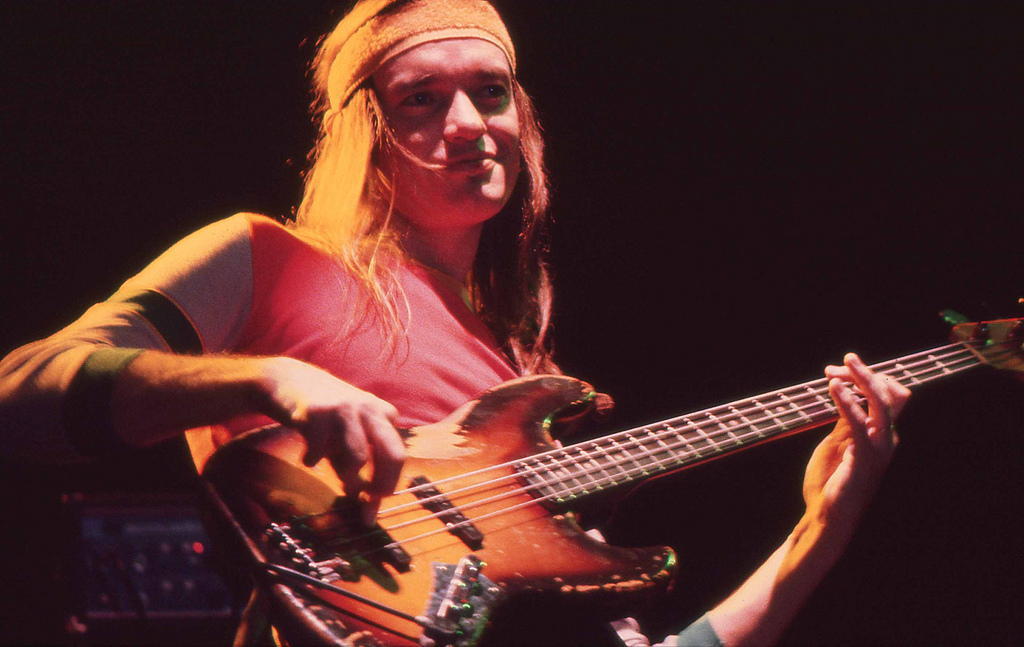
Jaco Pastorius
John Francis Anthony Pastorius III, also known as Jaco Pastorius ( JAH-koh pass-TOR-ee-əss; December 1, 1951 – September 21, 1987), was an American jazz bassist, composer, and producer. Widely regarded as one of the greatest and most influential bassists of all time, Pastorius recorded albums as a solo artist, band leader, and as a member of the jazz fusion group Weather Report from 1976 to 1981. He also collaborated with numerous artists, including Herbie Hancock, Pat Metheny and Joni Mitchell.
His bass style was influenced by funk and employed the use of fretless bass, lyrical solos, bass chords and innovative use of harmonics.

1953· Eras
Cool jazz
Cool jazz is a style and genre of modern jazz music inspired by bebop and big band that arose in the United States after World War II. It is characterized by relaxed tempos and a lighter tone than that used in the fast and complex bebop style. Cool jazz often employs formal arrangements and incorporates elements of classical music. Broadly, the genre refers to a number of post-war jazz styles employing a more subdued approach than that of contemporaneous jazz idioms. As Paul Tanner, Maurice Gerow, and David Megill suggest, "the tonal sonorities of these conservative players could be compared to pastel colors, while the solos of [Dizzy] Gillespie and his followers could be compared to fiery red colors."
The term cool started being applied to this music around 1953, when Capitol Records released the album Classics in Jazz: Cool and Quiet.

1954· Cool, Hard Bop & Modal
Clifford Brown
Clifford Benjamin Brown (October 30, 1930 – June 26, 1956) was an American jazz trumpeter, pianist, and composer. He died at the age of 25 in a car crash, leaving behind four years' worth of recordings. His compositions "Sandu", "Joy Spring", and "Daahoud" have become jazz standards. Brown won the DownBeat magazine Critics' Poll for New Star of the Year in 1954; he was inducted into the DownBeat Jazz Hall of Fame in 1972.

1955· Modern
Bill Evans
William John Evans (August 16, 1929 – September 15, 1980) was an American jazz pianist and composer who worked primarily as the leader of his trio. His extensive use of impressionist harmony, block chords, innovative chord voicings, and trademark rhythmically independent "singing" melodic lines continue to influence jazz pianists today.
Born in Plainfield, New Jersey, Evans studied classical music at Southeastern Louisiana College and the Mannes School of Music, in New York City, where he majored in composition and received an artist diploma. In 1955, he moved to New York City, where he worked with bandleader and theorist George Russell.
1956· Landmark Albums
Saxophone Colossus
Saxophone Colossus is the sixth studio album by American jazz saxophonist Sonny Rollins. Perhaps Rollins's best-known album, it is often considered his breakthrough record. It was recorded monophonically on June 22, 1956, with producer Bob Weinstock and engineer Rudy Van Gelder at the latter's studio in Hackensack, New Jersey. Rollins led a quartet on the album that included pianist Tommy Flanagan, bassist Doug Watkins, and drummer Max Roach. Rollins was a member of the Clifford Brown/Max Roach Quintet at the time of the recording, and the recording took place four days before his bandmates Brown and Richie Powell died in a car accident on the way to a band engagement in Chicago. Roach appeared on several more of Rollins' solo albums, up to the 1958 Freedom Suite album.

1956· Labels & Venues
Verve Records
Verve Records (Verve Recs) is an American record label owned by Universal Music Group (UMG). Founded in 1956 by Norman Granz, the label is home to the world's largest jazz catalogue, which includes recordings by Ella Fitzgerald, Cal Tjader, Nina Simone, Stan Getz, Bill Evans, Billie Holiday, Oscar Peterson, Jon Batiste, and Diana Krall, among other notable artists, as well as a diverse mix of recordings that fall outside the jazz category, with albums from such disparate artists as the Velvet Underground, Kurt Vile, Arooj Aftab, Frank Zappa and the Mothers of Invention, and many more. It absorbed the catalogues of Granz's earlier label, Clef Records, founded in 1946; Norgran Records, founded in 1953; and material which was previously licensed to Mercury Records.
The label has continued to be the home to an eclectic mix of modern artists, including Kurt Vile, Everything But the Girl, Samara Joy and Arooj Aftab.
1957· Landmark Albums
Birth of the Cool
Birth of the Cool is a compilation album by the American jazz trumpeter and bandleader Miles Davis. It was released in February or March 1957 on Capitol Records. It compiles eleven tracks recorded by Davis's nonet for the label over the course of three sessions during 1949 and 1950.

1957· Labels & Venues
Village Vanguard
The Village Vanguard is a jazz club at Seventh Avenue South in Greenwich Village, New York City. The club was opened on February 22, 1935, by Max Gordon. Originally, the club presented folk music and beat poetry, but it became primarily a jazz music venue in 1957. It has hosted many highly renowned jazz musicians since then, and today is the oldest operating jazz club in New York City.
1959· Albums
Mingus Ah Um
Mingus Ah Um is a studio album by the American jazz musician Charles Mingus. It was recorded in May 1959 and released that October through Columbia Records. It was Mingus' first album recorded for Columbia.
1959· Albums
Kind of Blue
Kind of Blue is a studio album by American jazz musician Miles Davis, released on August 17, 1959, by Columbia Records. For this album, Davis led a sextet featuring saxophonists John Coltrane and Julian "Cannonball" Adderley, pianist Bill Evans, bassist Paul Chambers, and drummer Jimmy Cobb, with new band pianist Wynton Kelly replacing Evans on "Freddie Freeloader". The album was recorded at Columbia's 30th Street Studio in New York City in two sessions on March 2 and April 22, 1959.
1959· Landmark Albums
Time Out (album)
Time Out is a studio album by the American jazz group the Dave Brubeck Quartet, released in 1959 by Columbia Records. Recorded at Columbia’s 30th Street Studio in New York City, the album is noted for its pioneering use of unconventional time signatures for jazz, including 98, 64, and 54. Musically, it represents a subtle fusion of cool and West Coast influences.
1959· Landmark Albums
The Shape of Jazz to Come
The Shape of Jazz to Come is the third studio album by American jazz musician Ornette Coleman. Released on Atlantic Records in November 1959, it was his debut on the label and his first album featuring the quartet of himself, trumpeter Don Cherry, bassist Charlie Haden, and drummer Billy Higgins. The recording session for the album took place on May 22, 1959, at Radio Recorders in Hollywood. Although Coleman initially wished for the album to be titled Focus on Sanity after its fourth track, producer Nesuhi Ertegun suggested the final title, feeling that it would give consumers "an idea about the uniqueness of the LP."
Era
1960s
10 cards

1960· Free & Avant-Garde
Ornette Coleman
Randolph Denard Ornette Coleman was an American jazz saxophonist, trumpeter, violinist, and composer. He is best known as a principal founder of the free jazz genre, a term derived from his 1960 album Free Jazz: A Collective Improvisation. His pioneering works often abandoned the harmony-based composition, tonality, chord changes, and fixed rhythm found in earlier jazz idioms; instead, Coleman emphasized an experimental approach to improvisation rooted in ensemble playing and blues phrasing. Thom Jurek of AllMusic called him "one of the most beloved and polarizing figures in jazz history", noting that while "now celebrated as a fearless innovator and a genius, he was initially regarded by peers and critics as rebellious, disruptive, and even a fraud."
1960· Eras
Free jazz
Free jazz is a style of avant-garde jazz or an experimental approach to jazz improvisation that developed in the late 1950s and early 1960s, when musicians attempted to change or break down jazz conventions, such as regular tempos, tones, and chord changes. Musicians during this period believed that the bebop and modal jazz that had been played before them was too limiting, and became preoccupied with creating something new. The term "free jazz" was drawn from the 1960 Ornette Coleman recording Free Jazz: A Collective Improvisation. Europeans tend to favor the term "free improvisation". Others have used "modern jazz", "creative music", and "art music".
1960· Labels & Venues
Impulse! Records
Impulse! Records is an American jazz record label established by Creed Taylor in 1960. John Coltrane was among Impulse!'s earliest signings. Thanks to consistent sales and positive critiques of his recordings, the label came to be known as "the house that Trane built".
1964· Albums
A Love Supreme
A Love Supreme is an album by the American jazz saxophonist and composer John Coltrane. It was recorded in one session on December 9, 1964, at Van Gelder Studio in Englewood Cliffs, New Jersey, with a quartet featuring pianist McCoy Tyner, bassist Jimmy Garrison, and drummer Elvin Jones.
1964· Landmark Albums
Out to Lunch!
Out to Lunch! is a 1964 album by the American jazz multi-instrumentalist Eric Dolphy. His only recording on Blue Note Records as a leader, it was issued posthumously as BLP 4163 and BST 84163. Featuring Dolphy in a quintet with trumpeter Freddie Hubbard, vibraphonist Bobby Hutcherson, bassist Richard Davis, and drummer Tony Williams, it is considered by critics as one of the finest albums issued on Blue Note and one of the high points of 1960s avant-garde jazz.

1965· Pioneers
Louis Armstrong
Louis Daniel Armstrong (August 4, 1901 – July 6, 1971), nicknamed "Satchmo", "Satch", and "Pops", was an American jazz and blues trumpeter and vocalist. Among the most influential figures in jazz, his career spanned five decades and several eras in the history of the genre. Armstrong received numerous accolades including the Grammy Award for Best Male Vocal Performance for Hello, Dolly! in 1965, as well as a posthumous win for the Grammy Lifetime Achievement Award in 1972.
1965· Labels & Venues
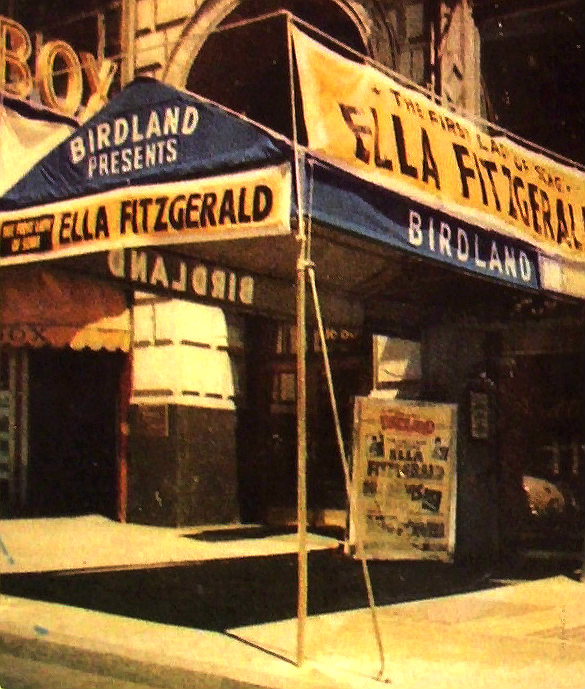
Birdland (New York jazz club)
Birdland is a jazz club started in New York City on December 15, 1949. The original Birdland, which was located at 1678 Broadway, just north of West 52nd Street in Manhattan, was closed in 1965 due to increased rents, but it re-opened for one night in 1979. A revival began in 1986 with the opening of the second nightclub by the same name that is now located in Manhattan's Theater District, not far from the original nightclub's location. The current location is in the same building as the previous headquarters of The New York Observer.

1966· Free & Avant-Garde
Alice Coltrane
Alice Lucille Coltrane, also known as Swamini Turiyasangitananda or simply Turiya, was an American jazz musician, composer, bandleader, and Hindu spiritual leader. An accomplished pianist and one of the few harpists in the history of jazz, Coltrane recorded many albums as a bandleader, beginning in the late 1960s and early 1970s for Impulse! and other record labels. One of the foremost proponents of spiritual jazz, her eclectic music proved influential both within and outside the world of jazz. She was married to the jazz saxophonist and composer John Coltrane, with whom she performed in 1966–1967.
1969· Landmark Albums
Bitches Brew
Bitches Brew is a studio album by the American jazz trumpeter, composer, and bandleader Miles Davis. It was recorded from August 19 to 21, 1969, at Columbia's Studio B in New York City and released on March 30, 1970, by Columbia Records. It marked Davis's continuing experimentation with electric instruments that he had featured on his previous record, the critically acclaimed In a Silent Way (1969). With these instruments, such as the electric piano and guitar, Davis departed from traditional jazz rhythms in favor of loose, rock-influenced arrangements based on improvisation. The final tracks were edited and pieced together by producer Teo Macero.

1969· Labels & Venues
ECM Records
ECM (Edition of Contemporary Music) is an independent record label founded by Karl Egger, Manfred Eicher and Manfred Scheffner in Munich in 1969. While ECM is best known for jazz music, the label has released a variety of recordings, and ECM's artists often refuse to acknowledge boundaries between genres. ECM's motto is "the most beautiful sound next to silence", taken from a 1971 review of ECM releases in Coda, a Canadian jazz magazine.
ECM has been distributed in the U.S. by Warner Bros.
Era
1970s
6 cards
1970· Fusion & Beyond
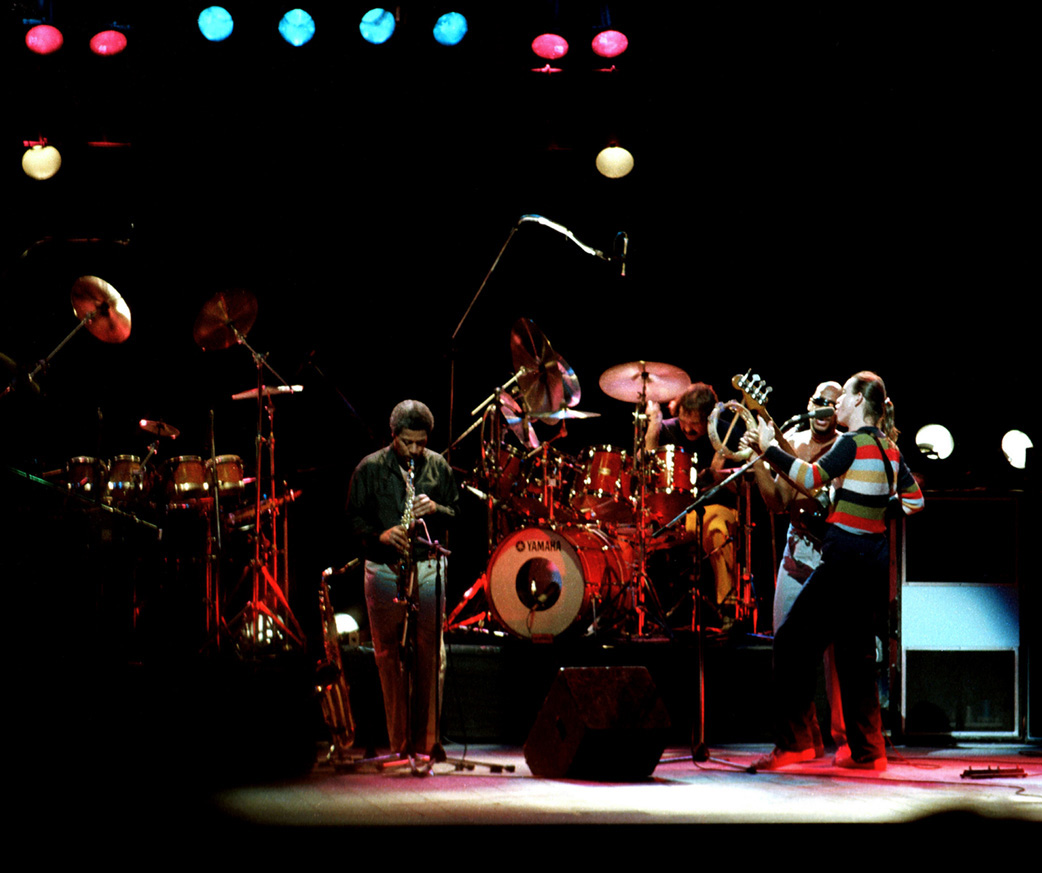
Weather Report
Weather Report was an American jazz fusion band active from 1970 to 1986. The band was founded in 1970 by Austrian keyboardist Joe Zawinul, American saxophonist Wayne Shorter, Czech bassist Miroslav Vitouš, American drummer Alphonse Mouzon and American percussionists Don Alias and Barbara Burton. The band was initially co-led by Zawinul and Shorter but as the 1970s progressed, Zawinul became the primary composer and creative director of the group. Other prominent members throughout the band's history included bassists Jaco Pastorius, Alphonso Johnson and Victor Bailey, drummers Chester Thompson, Peter Erskine and Omar Hakim, and percussionists Airto Moreira and Alex Acuña. A quintet of Zawinul and Shorter plus a bassist, a drummer, and a percussionist was the standard formation for Weather Report.
1971· Fusion & Beyond
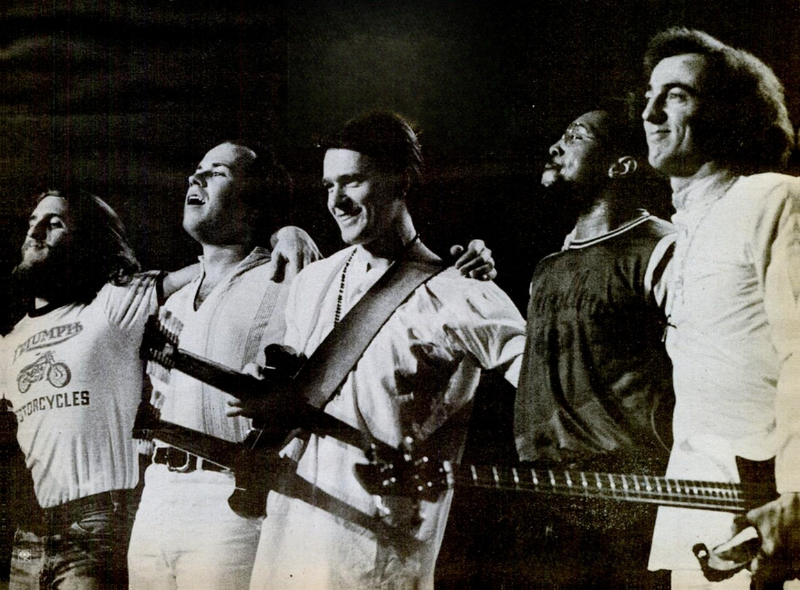
Mahavishnu Orchestra
The Mahavishnu Orchestra was a jazz fusion band formed in New York City in 1971, led by English guitarist John McLaughlin. The group underwent several line-up changes throughout its history across its two periods of activity, from 1971 to 1976 and from 1984 to 1987. With its first line-up consisting of McLaughlin, Billy Cobham, Jan Hammer, Jerry Goodman, and Rick Laird, the band received its initial acclaim for its complex, intense music consisting of a blend of Indian classical music, jazz, and psychedelic rock as well as its dynamic live performances between 1971 and 1973. Many members of the band have gone on to acclaimed careers of their own in the jazz and jazz fusion genres.

1972· Fusion & Beyond
Return to Forever
Return to Forever is an American jazz fusion band that was founded by pianist Chick Corea in 1972. The band has had many members, with the only consistent bandmate of Corea's being bassist Stanley Clarke. Along with Weather Report, The Headhunters, and Mahavishnu Orchestra, Return to Forever is often cited as one of the core groups of the jazz-fusion movement of the 1970s. Several musicians, including Clarke, Flora Purim, Airto Moreira and Al Di Meola, came to prominence through their performances on Return to Forever albums.
1973· Landmark Albums
Head Hunters
Head Hunters is the twelfth studio album by American pianist, keyboardist and composer Herbie Hancock, released October 26, 1973, on Columbia Records. Recording sessions for the album took place in the evening at Wally Heider Studios and Different Fur Trading Co. in San Francisco, California. Hancock is featured with woodwind player Bennie Maupin from his previous "Mwandishi" sextet and three new collaborators – bassist Paul Jackson, percussionist Bill Summers, and drummer Harvey Mason. The latter group of collaborators, which would go on to be known as the Headhunters, also played on Hancock's subsequent studio album Thrust (1974). All of the musicians play multiple instruments on the album.
1977· Fusion & Beyond
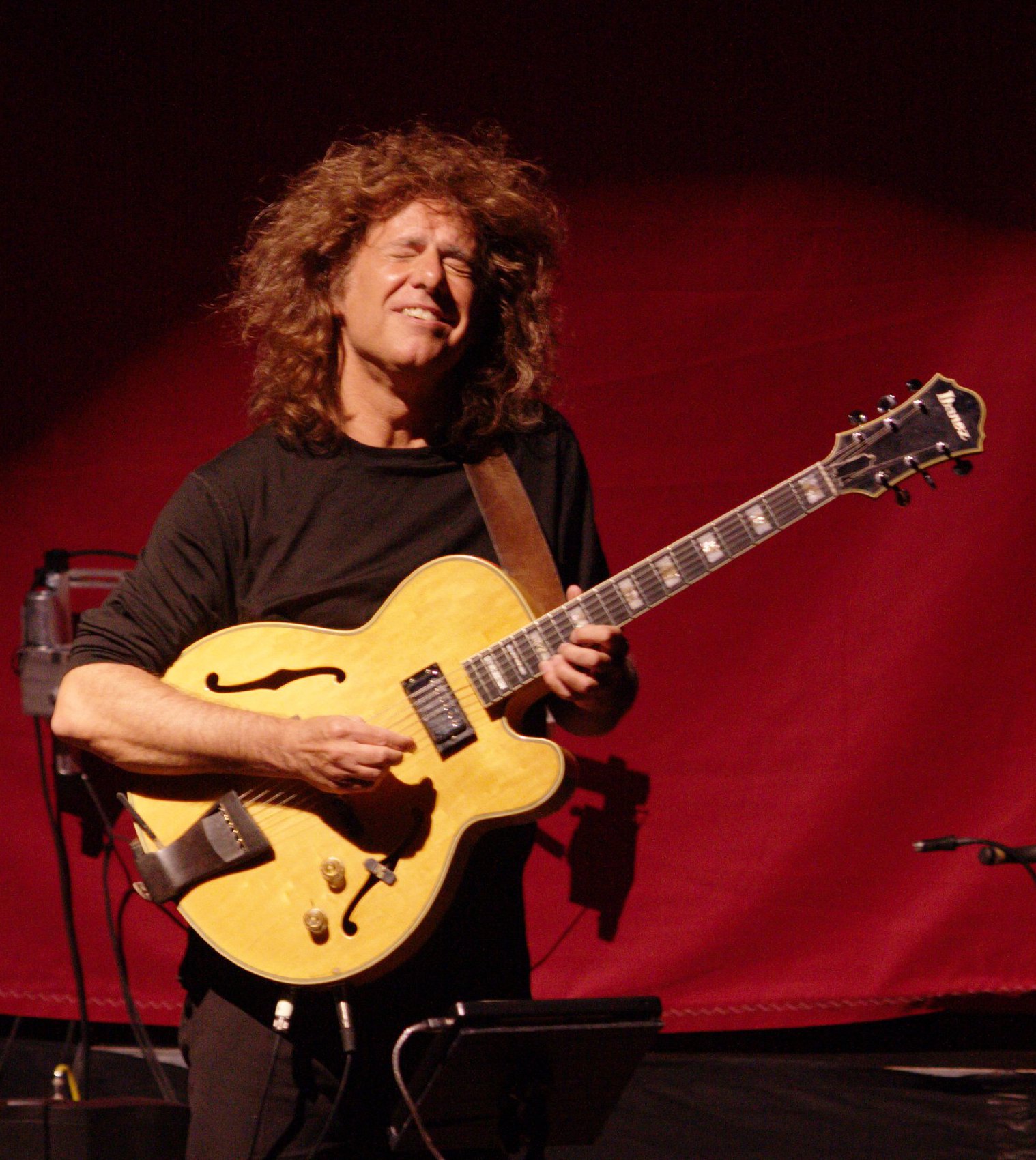
Pat Metheny
Patrick Bruce Metheny ( məth-EE-nee; born August 12, 1954) is an American jazz guitarist and composer.
He was the leader of the Pat Metheny Group (1977–2010) and continues to work in various small-combo, duet, and solo settings, as well as other side projects. His style incorporates elements of progressive and contemporary jazz, Latin jazz, and jazz fusion. He has three gold albums and 20 Grammy Awards, and is the only person to have won Grammys in 10 categories.

1978· Fusion & Beyond
Robert Glasper
Robert Andre Glasper (born April 5, 1978) is an American pianist, record producer, songwriter, and musical arranger. His music embodies numerous musical genres, primarily centered around jazz. Glasper has won five Grammy Awards from 11 nominations.
Glasper's breakout album, Black Radio (2012), peaked at number 15 on the Billboard 200 chart and won Best R&B Album at 55th Annual Grammy Awards.
Era
1980s
2 cards

1982· Bebop Revolution
Sonny Stitt
Sonny Stitt (born Edward Hammond Boatner Jr.; February 2, 1924 – July 22, 1982) was an American jazz saxophonist of the bebop/hard bop idiom. Known for his warm tone, he was one of the best-documented saxophonists of his era, recording over 100 albums. He was nicknamed the "Lone Wolf" by jazz critic Dan Morgenstern because of his tendency to rarely work with the same musicians for long despite his relentless touring and devotion to the craft. Stitt was sometimes regarded as a Charlie Parker mimic early in his career, but gradually developed his own sound and style, particularly when performing on the tenor saxophone and even occasionally baritone saxophone.
1989· Founders & Early Giants
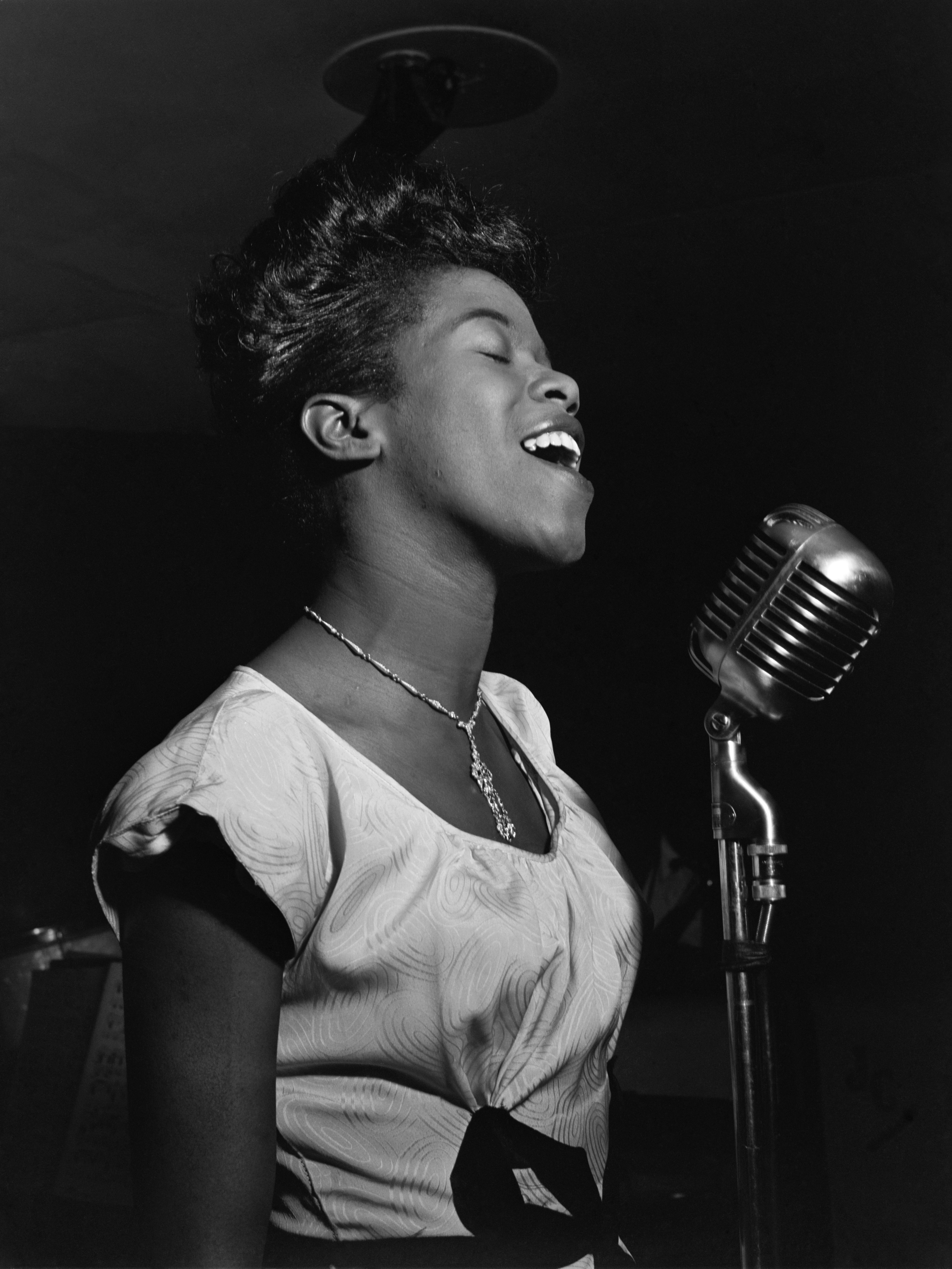
Sarah Vaughan
Sarah Lois Vaughan (, March 27, 1924 – April 3, 1990) was an American jazz singer and pianist. Nicknamed "Sassy", "The Divine One", and the "Queen of Bebop", she won two Grammy Awards, including the Lifetime Achievement Award, and was nominated for a total of nine Grammy Awards. She was given an NEA Jazz Masters Award in 1989. Critic Scott Yanow wrote that she had "one of the most wondrous voices of the 20th century".
Era
1990s
4 cards
1991· Cool, Hard Bop & Modal
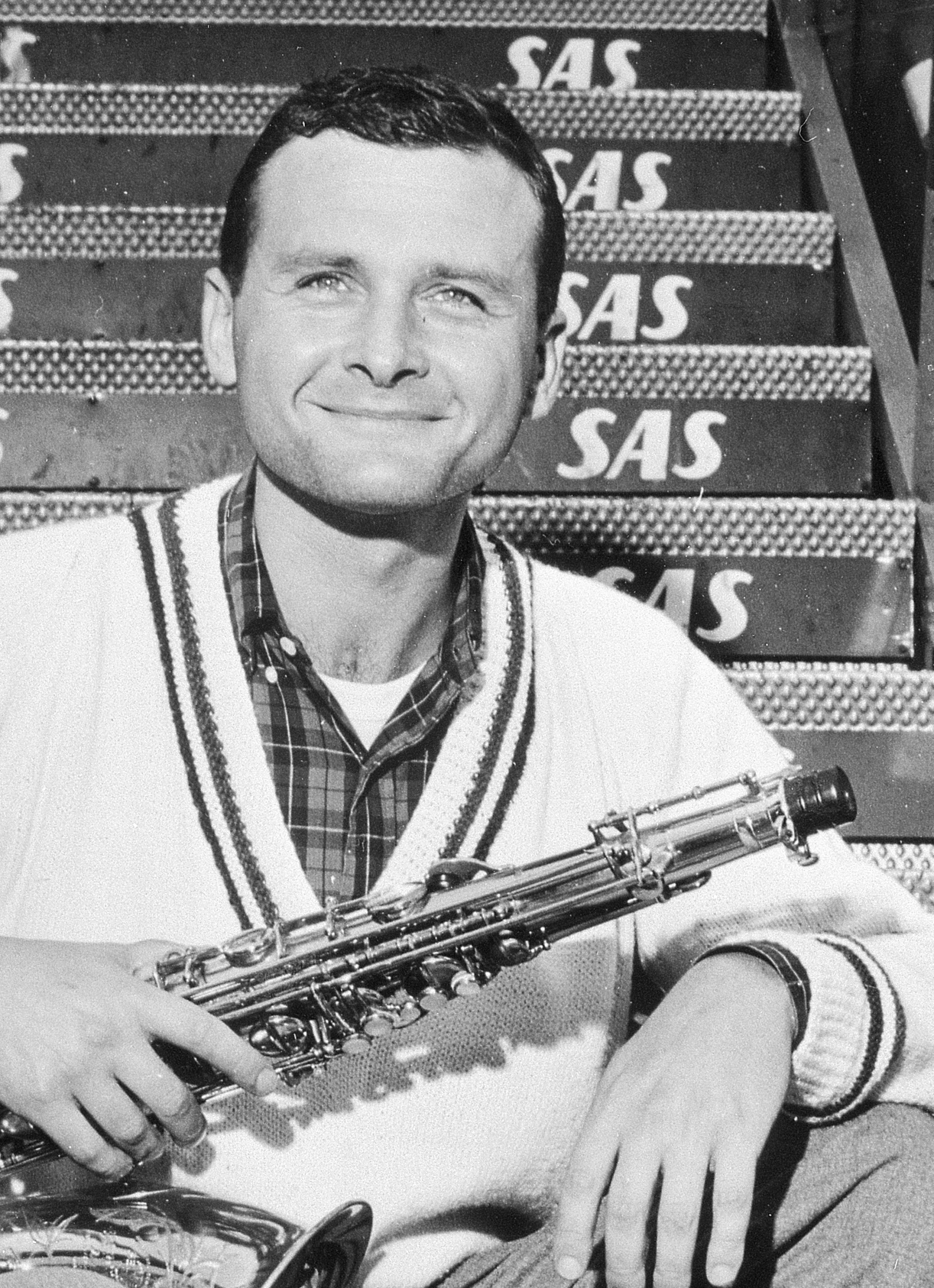
Stan Getz
Stan Getz (born Stanley Gayetski; February 2, 1927 – June 6, 1991) was an American jazz saxophonist. Playing primarily the tenor saxophone, Getz was known as "The Sound" because of his warm, lyrical tone, with his prime influence being the wispy, mellow timbre of his idol, Lester Young. Coming to prominence in the late 1940s with Woody Herman's big band, Getz is described by critic Scott Yanow as "one of the all-time great tenor saxophonists". Getz performed in bebop and cool jazz groups.
1993· Free & Avant-Garde
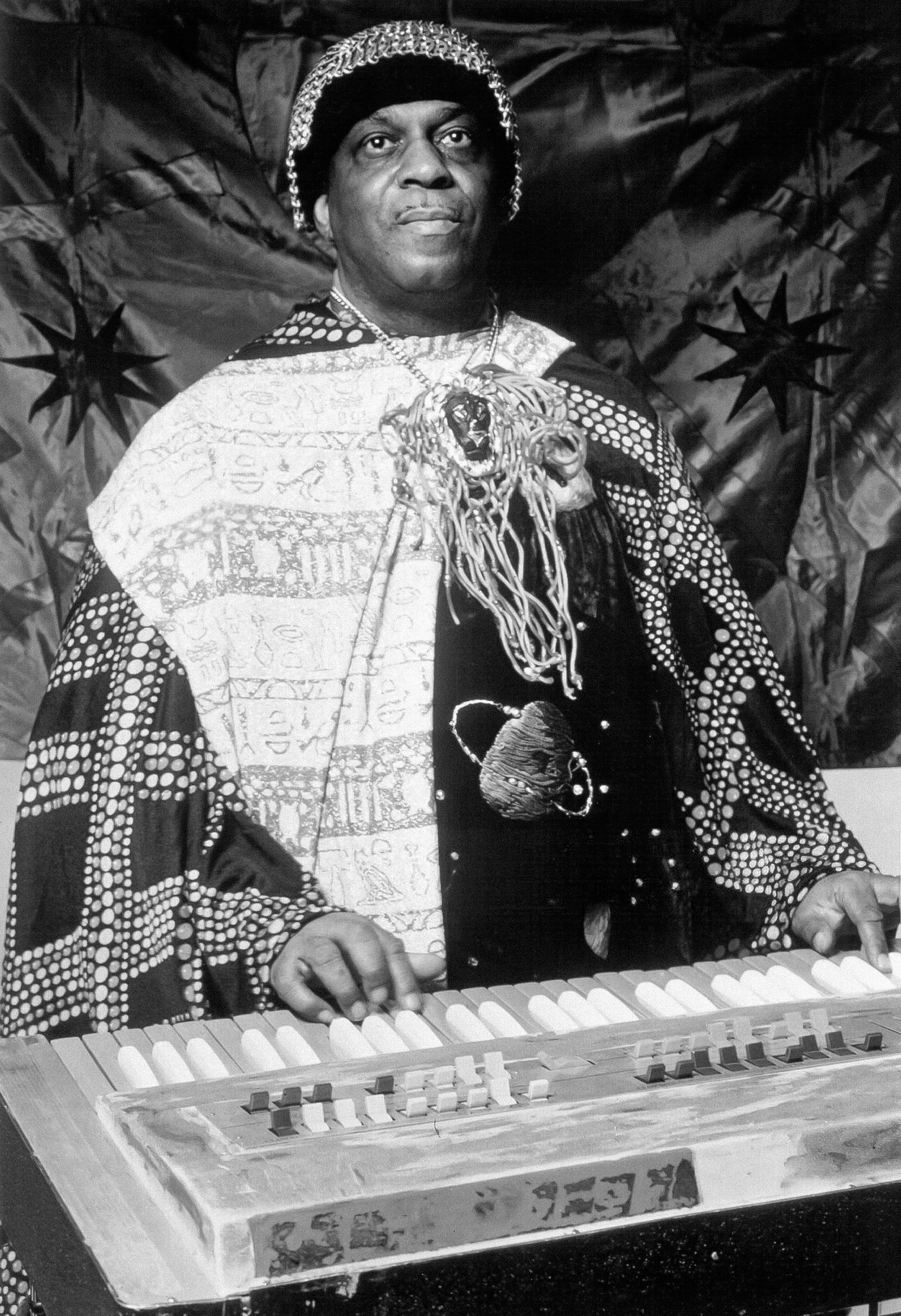
Sun Ra
Le Sony'r Ra (born Herman Poole Blount, May 22, 1914 – May 30, 1993), better known as Sun Ra, was an American jazz composer, bandleader, piano and synthesizer player, and poet known for his experimental music, "cosmic" philosophy, prolific output, and theatrical performances. For much of his career, Ra led The Arkestra, an ensemble with an ever-changing name and flexible line-up.
Born and raised in Alabama, Blount became involved in the Chicago jazz scene during the late 1940s. He soon abandoned his birth name, taking the name Le Sony'r Ra, shortened to Sun Ra (after Ra, the Egyptian god of the Sun).

1995· Cool, Hard Bop & Modal
Elvin Jones
Elvin Ray Jones was an American jazz drummer of the post-bop era. Most famously a member of John Coltrane's quartet, with whom he recorded from late 1960 to late 1965, Jones appeared on such albums as My Favorite Things, A Love Supreme, Ascension and Live at Birdland. After 1966, Jones led his own trio, and later larger groups under the name The Elvin Jones Jazz Machine. His brothers Hank and Thad were also celebrated jazz musicians with whom he occasionally recorded. Elvin was inducted into the Modern Drummer Hall of Fame in 1995. In his The History of Jazz, jazz historian and critic Ted Gioia calls Jones "one of the most influential drummers in the history of jazz". He was also ranked at Number 23 on Rolling Stone magazine's "100 Greatest Drummers of All Time".
1997· Fusion & Beyond
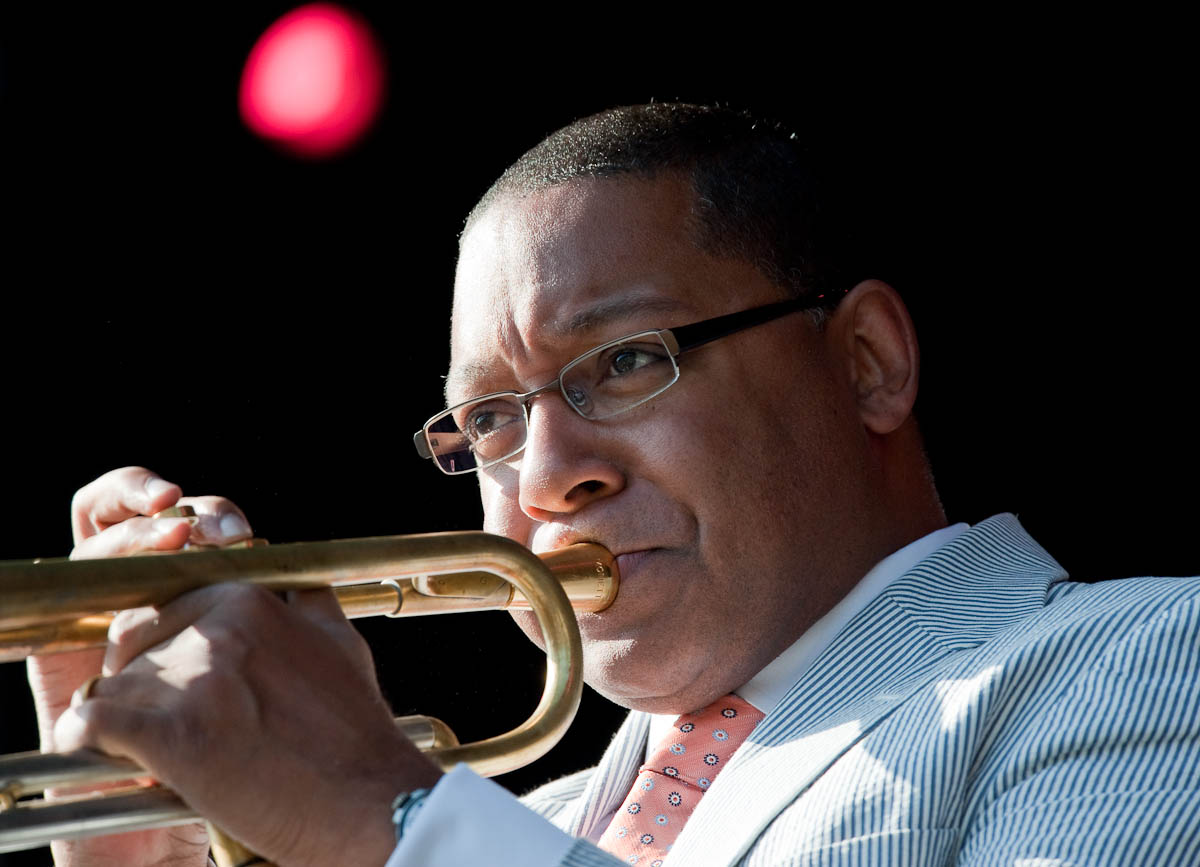
Wynton Marsalis
Wynton Learson Marsalis is an American trumpeter, composer, and music instructor, who is currently the artistic director of Jazz at Lincoln Center. He has been active in promoting classical and jazz music, often to young audiences. Marsalis has won nine Grammy Awards, and his 1997 oratorio Blood on the Fields was the first jazz composition to win the Pulitzer Prize for Music. Marsalis is the only musician to have won a Grammy Award in both jazz and classical categories in the same year.
Era
2000s
3 cards

2004· Landmark Albums
Giant Steps
Giant Steps is a studio album by the jazz musician John Coltrane. It was released in February 1960 through Atlantic Records. This was Coltrane's first album as leader for the label, with which he had signed a new contract the previous year. The record is regarded as one of the most influential jazz albums of all time. Many of its tracks have become practice templates for jazz saxophonists. In 2004, it was one of fifty recordings chosen that year by the Library of Congress to be added to the National Recording Registry. It attained gold record status in 2018, having sold 500,000 copies.

2005· Fusion & Beyond
Brad Mehldau
Bradford Alexander Mehldau (; born August 23, 1970) is an American jazz pianist, composer, and arranger.
Mehldau studied music at The New School, touring and recording while still a student. He was a member of saxophonist Joshua Redman's quartet in the mid-1990s, and has led his own trio since the early 1990s. His first long-term trio featured bassist Larry Grenadier and drummer Jorge Rossy; in 2005 Jeff Ballard replaced Rossy.

2008· Labels & Venues
Columbia Records
Columbia Records is an American record label owned by Sony Music Entertainment, a division of Sony Music Group, an American subsidiary of the Japanese conglomerate Sony Group Corporation. Founded on January 15, 1889, Columbia is the oldest surviving brand name in the recorded sound business, and the second major company to produce records after Edison Phonograph Company. It is one of Sony Music's four flagship record labels, along with Epic Records, former longtime rival RCA Records, and Arista Records. RCA and Arista were originally owned by BMG until Sony's acquisition at the end of their merger in 2008.