Site view
Timeline
Every dated card across The Dinosaurs Archive, arranged chronologically. Dates are inferred from each card's summary.


Era
1870s
4 cards

1877· Iconic Genera
Apatosaurus
Apatosaurus is a genus of herbivorous sauropod dinosaur that lived in North America during the Late Jurassic period. Othniel Charles Marsh described and named the first-known species, Apatosaurus ajax, in 1877, and a second species, Apatosaurus louisae, was discovered and named by William H. Holland in 1916. Apatosaurus lived about 152 to 151 million years ago (mya), during the late Kimmeridgian to early Tithonian age, and are now known from fossils in the Morrison Formation of modern-day Colorado, Oklahoma, New Mexico, Wyoming, and Utah in the United States. Apatosaurus had an average length of 21–23 m (69–75 ft), and an average mass of 16.4–22.4 t. A few specimens indicate a maximum length of 11–30% greater than average and a mass of approximately 33 t.

1877· Iconic Genera
Diplodocus
Diplodocus is an extinct genus of diplodocid sauropod dinosaurs known from the Late Jurassic of North America. The first fossils of Diplodocus were discovered in 1877 by S. W. Williston. The generic name, coined by Othniel Charles Marsh in 1878, is a Neo-Latin term derived from Greek διπλός (diplos) "double" and δοκός (dokos) "beam", in reference to the double-beamed chevron bones located in the underside of the tail, which were then considered unique.

1877· Iconic Genera
Allosaurus
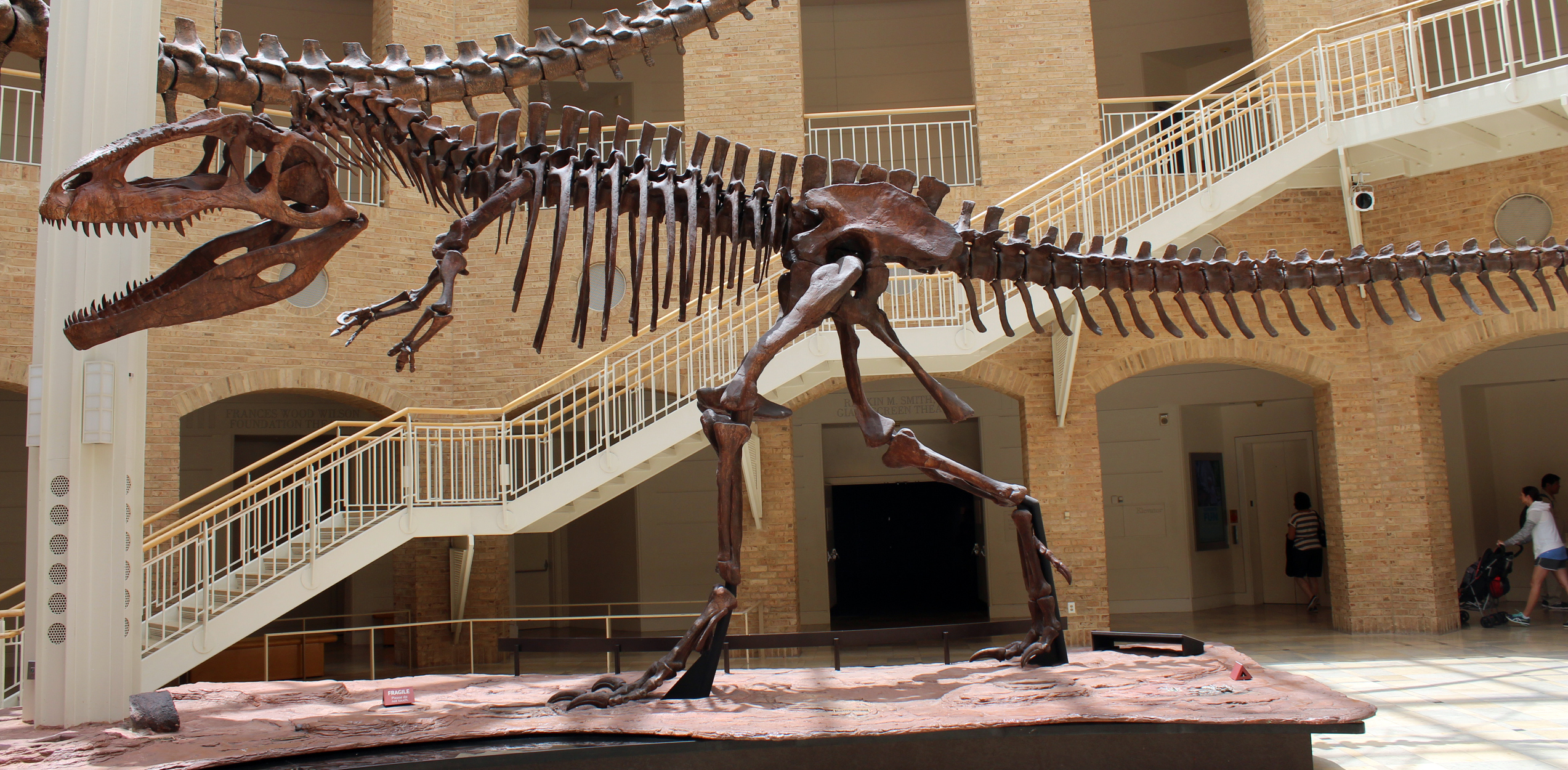
Allosaurus is a genus of theropod dinosaur that lived 155 to 143 million years ago during the late Jurassic period. The first fossil remains that could definitively be ascribed to this genus were described in 1877 by Othniel C. Marsh. The name "Allosaurus" means "different lizard", alluding to its lightweight vertebrae, which Marsh believed were unique. The genus has a very complicated taxonomy and includes at least three valid species, the best known of which is A. fragilis. The bulk of Allosaurus remains come from North America's Morrison Formation, with material also known from the Alcobaça, Bombarral, and Lourinhã formations in Portugal. It was known for over half of the 20th century as Antrodemus, but a study of the abundant remains from the Cleveland-Lloyd Dinosaur Quarry returned the name "Allosaurus" to prominence. As one of the first well-known theropod dinosaurs, it has long attracted attention outside of paleontological circles.

1878· Not Dinosaurs (but close)
Dimetrodon
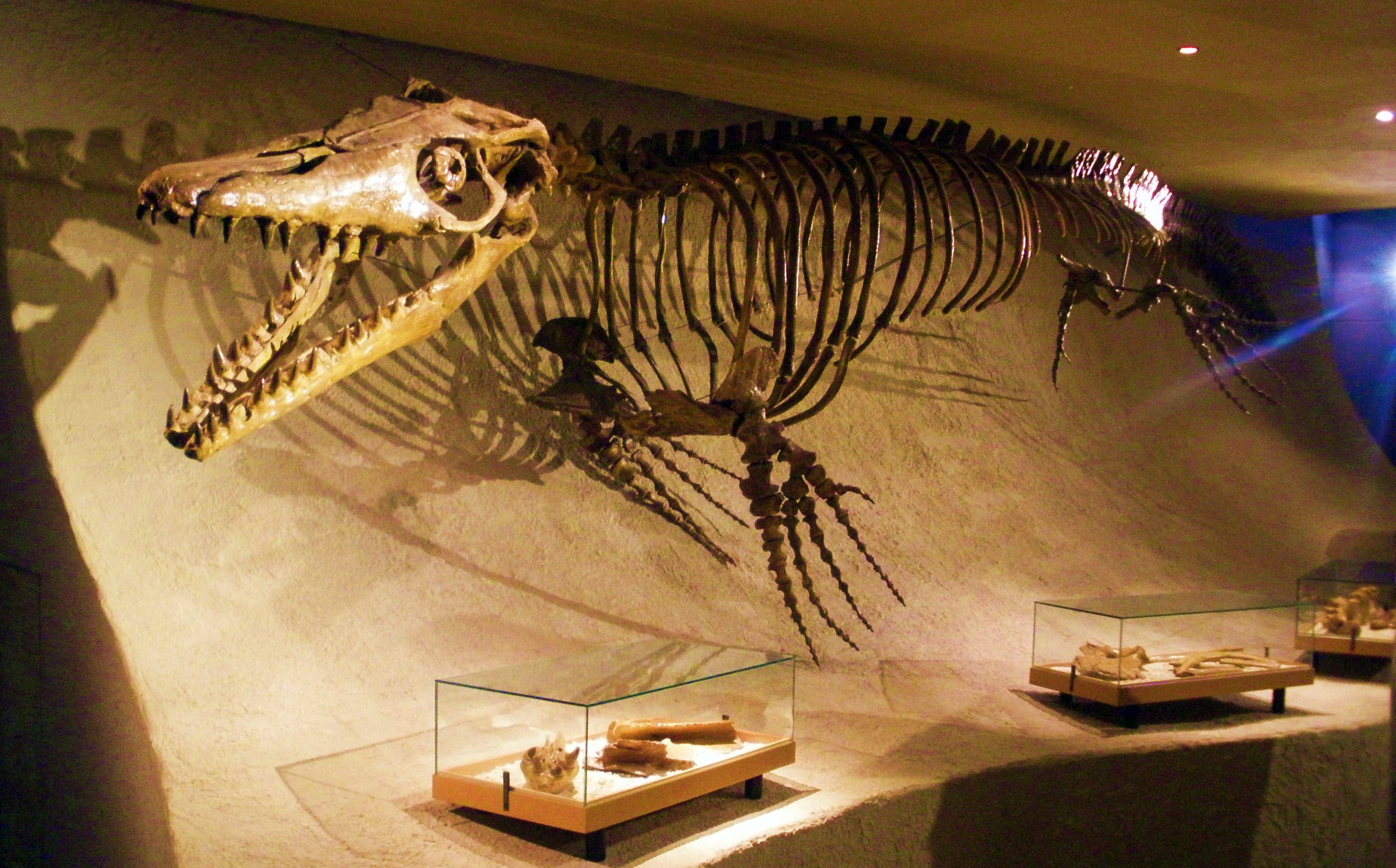
Dimetrodon is an extinct genus of sphenacodontid synapsid that lived during the Cisuralian to early Guadalupian epoch of the Permian period, around 294.1–271 million years ago. With most species measuring 1.7–4.6 m (5.6–15.1 ft) long and weighing 28–250 kg (62–551 lb), the most prominent feature of Dimetrodon is the large neural spine sail on its back formed by elongated spines extending from the vertebrae. It was an obligate quadruped and had a tall, curved skull with large teeth of different sizes set along the jaws. Most fossils have been found in the Southwestern United States, the majority of these coming from a geological deposit called the Red Beds of Texas and Oklahoma. More recently, its fossils have also been found in Germany and over a dozen species have been named since the genus was first erected in 1878.
Era
1900s
2 cards

1903· Iconic Genera
Brachiosaurus
Brachiosaurus is a genus of sauropod dinosaur that lived in North America during the Late Jurassic, about 155.6 to 145.5 million years ago. It was first described by American paleontologist Elmer S. Riggs in 1903 from fossils found in the Colorado River valley in western Colorado, United States. Riggs named the dinosaur Brachiosaurus altithorax; the generic name is Greek for "arm lizard", in reference to its proportionately long arms, and the specific name means "deep chest". Brachiosaurus is estimated to have been between 18 and 22 meters long; body mass estimates of the subadult holotype specimen range from 28.3 to 46.9 metric tons. It had a disproportionately long neck, small skull, and large overall size, all of which are typical for sauropods. Atypically, Brachiosaurus had longer forelimbs than hindlimbs, which resulted in a steeply inclined trunk, and a proportionally shorter tail.

1908· Iconic Genera
Ankylosaurus
Ankylosaurus is a genus of armored dinosaur. Its fossils have been found in geological formations dating to the very end of the Cretaceous Period, about 70-66 million years ago, in western North America, making it among the last of the non-avian dinosaurs. It was named by Barnum Brown in 1908; it is monotypic, containing only A. magniventris. The generic name means "fused" or "bent lizard", and the specific name means "great belly". A handful of specimens have been excavated to date, but a complete skeleton has not been discovered. Though other members of Ankylosauria are represented by more extensive fossil material, Ankylosaurus is often considered the archetypal member of its group, despite having some unusual features.

Era
1920s
3 cards

1922· Iconic Genera
Parasaurolophus
Parasaurolophus is a genus of hadrosaurid "duck-billed" dinosaur that lived in what is now western North America and possibly Asia during the Late Cretaceous period, about 76.5–73 million years ago. It was a large herbivore that could reach over 9 metres (30 ft) long and weigh over 5 metric tons, and were able to move as a biped and a quadruped. Three species are universally recognized: P. walkeri, P. tubicen, and the short-crested P. cyrtocristatus. Additionally, a fourth species, P. jiayinensis, has been proposed, although it is more commonly placed in the separate genus Charonosaurus. Remains are known from Alberta, New Mexico, and Utah, as well as possibly Heilongjiang if Charonosaurus is in fact part of the genus. The genus was first described in 1922 by William Parks from a skull and partial skeleton found in Alberta.

1923· Iconic Genera
Oviraptor
Oviraptor is a genus of oviraptorid dinosaur that lived in Asia during the Late Cretaceous period. The first remains were collected from the Djadokhta Formation of Mongolia in 1923 during a paleontological expedition led by Roy Chapman Andrews, and in the following year the genus and type species Oviraptor philoceratops were named by Henry Fairfield Osborn. The genus name refers to the initial thought of egg-stealing habits, and the specific name was intended to reinforce this view indicating a preference over ceratopsian eggs. Despite the fact that numerous specimens have been referred to the genus, Oviraptor is only known from a single partial skeleton regarded as the holotype, as well as a nest of about fifteen eggs and several small fragments from a juvenile.

1924· Iconic Genera
Velociraptor
Velociraptor is a genus of small dromaeosaurid dinosaurs that lived in Asia during the Late Cretaceous epoch, about 75 million to 71 million years ago (Mya). Two species are currently recognized, although others have been assigned in the past. The type species is V. mongoliensis, named and described in 1924. Fossils of this species have been discovered in the Djadochta Formation, Mongolia. A second species, V. osmolskae, was named in 2008 for skull material from the Bayan Mandahu Formation, China. A possible record is known from the Nemegt Formation.

Era
1970s
4 cards

1971· Not Dinosaurs (but close)
Quetzalcoatlus
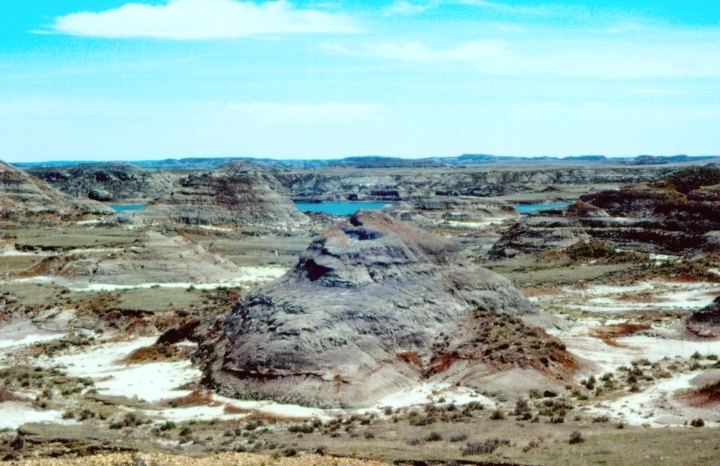
Quetzalcoatlus is a genus of azhdarchid pterosaur that lived during the Maastrichtian age of the Late Cretaceous in North America. The type specimen, recovered in 1971 from the Javelina Formation of Texas, United States, consists of several wing fragments and was described as Quetzalcoatlus northropi in 1975 by Douglas Lawson. The generic name refers to the Aztec serpent god of the sky, Quetzalcōātl, while the specific name honors Jack Northrop, designer of a tailless fixed-wing aircraft. The remains of a second species were found between 1972 and 1974, also by Lawson, around 40 km (25 mi) from the Q. northropi locality. In 2021, these remains were assigned to the name Quetzalcoatlus lawsoni by Brian Andres and (posthumously) Wann Langston Jr., as part of a series of publications on the genus.
1972· Iconic Genera
Gallimimus
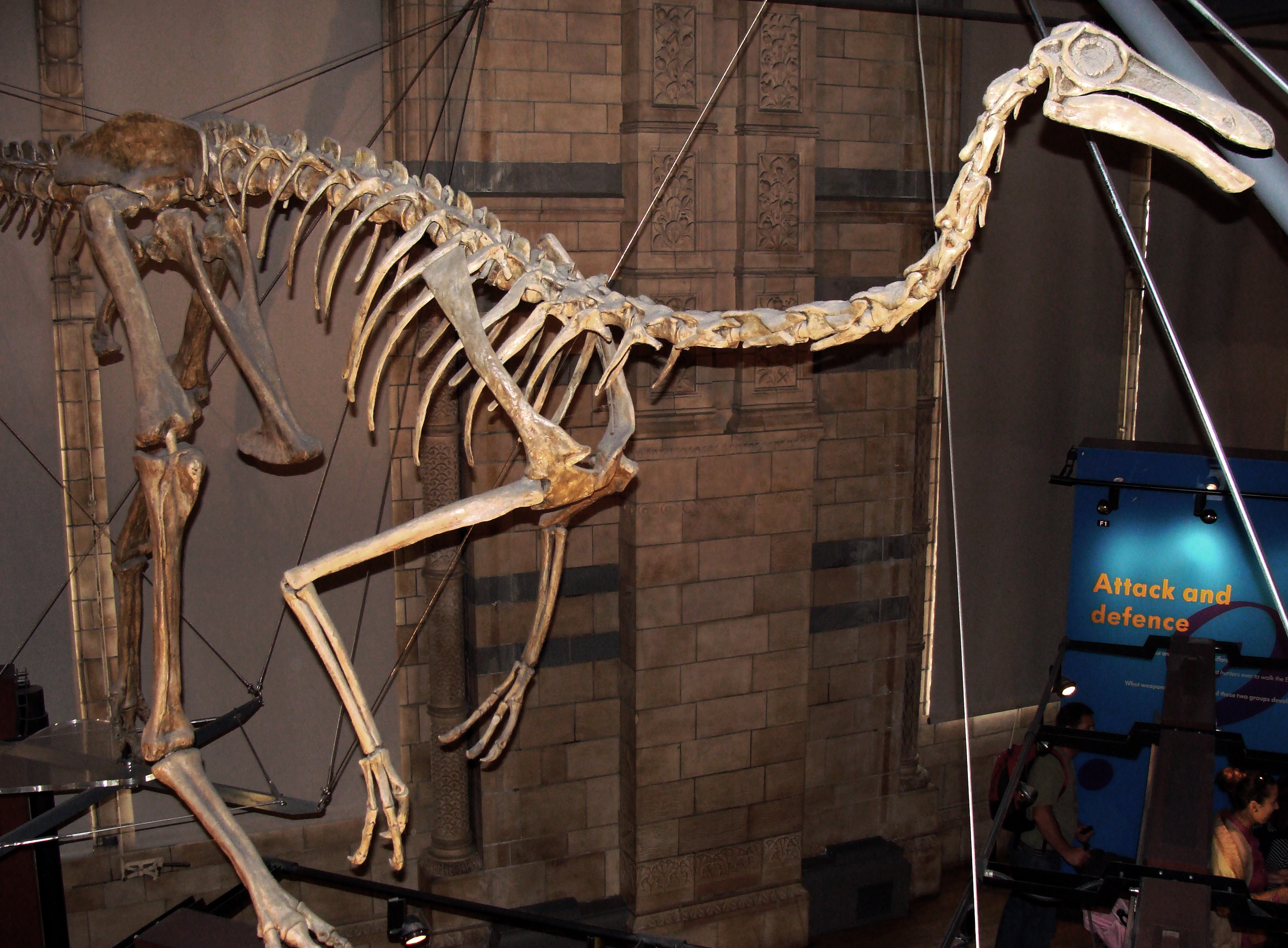
Gallimimus is a genus of theropod dinosaur that lived in what is now Mongolia during the Late Cretaceous period. Several fossils in various stages of growth were discovered by Polish-Mongolian expeditions in the Gobi Desert of Mongolia during the 1960s; a large skeleton discovered in this region was made the holotype specimen of the new genus and species Gallimimus bullatus in 1972. The generic name means "chicken mimic", referring to the similarities between its neck vertebrae and those of the Galliformes. The specific name is derived from bulla, a golden capsule worn by Roman youth, in reference to a bulbous structure at the base of the skull of Gallimimus. At the time it was named, the fossils of Gallimimus represented the most complete and best preserved ornithomimid material yet discovered, and the genus remains one of the best known members of the group.

1975· Paleontologists
Robert T. Bakker
Robert Thomas Bakker is an American paleontologist who helped reshape modern theories about dinosaurs, particularly by adding support to the theory that some dinosaurs were endothermic (warm-blooded). Along with his mentor John Ostrom, Bakker was responsible for initiating the ongoing "dinosaur renaissance" in paleontological studies, beginning with Bakker's article "Dinosaur Renaissance" in the April 1975 issue of Scientific American. His specialty is the ecological context and behavior of dinosaurs.

1979· Paleontologists
Jack Horner (paleontologist)
John Robert Horner is an American paleontologist best known for his research on non-avian dinosaurs. Horner has made a career as a researcher and teacher, having worked at various scientific institutions regardless of an initial lack of a university-level degree. In 1979, Horner described the duck-billed dinosaur Maiasaura alongside fellow paleontologist Bob Makela, based off juvenile remains — at that time unheard of in the western hemisphere — found at a site in Montana. This discovery provided the first clear evidence that some non-avian dinosaurs cared for their young.