
Site view
Timeline
Every dated card across Civil Rights Movement, arranged chronologically. Dates are inferred from each card's summary.
Era
1950s
2 cards

1955· Leaders
Rosa Parks
Rosa Louise McCauley Parks was an American civil rights activist. She is best known for her 1955 refusal to move from her seat on a bus in Montgomery, Alabama, in defiance of Jim Crow racial segregation laws, which sparked the Montgomery bus boycott. She is sometimes known as the "mother of the civil rights movement".

1955· Events & Laws
Montgomery bus boycott
The Montgomery bus boycott was a political and social protest campaign against the policy of racial segregation on the public transit system of Montgomery, Alabama. It was a foundational event in the civil rights movement in the United States. The campaign lasted from December 5, 1955 – the Monday after Rosa Parks, an African-American woman, was arrested for her refusal to surrender her seat to a white person – to December 20, 1956, when the federal ruling Browder v. Gayle, a United States Supreme Court decision that declared the Alabama and Montgomery laws that segregated buses were unconstitutional, took effect.
Era
1960s
7 cards

1963· Leaders
Bayard Rustin
Bayard Rustin was an American political activist and prominent leader in social movements for civil rights, socialism, nonviolence, and gay rights. Rustin was the principal organizer of the March on Washington for Jobs and Freedom in 1963.

1963· Events & Laws
March on Washington
The March on Washington for Jobs and Freedom was held in Washington, D.C., on August 28, 1963. The purpose of the march was to advocate for the civil and economic rights of African Americans. At the march, several popular singers of the time, including Mahalia Jackson and Marian Anderson, performed and many of the movement's leaders gave speeches. The most notable speech came from the final speaker, Martin Luther King Jr., standing in front of the Lincoln Memorial, as he delivered his historic "I Have a Dream" speech in which he called for an end to legalized racism and racial segregation.
1964· Events & Laws
Civil Rights Act of 1964
The Civil Rights Act of 1964 is a landmark civil rights and labor law in the United States that outlaws discrimination based on race, color, religion, sex, and national origin. It prohibits unequal application of voter registration requirements, racial segregation in schools and public accommodations, and employment discrimination. The act is considered one of the most significant legislative achievements in American history.

1965· Events & Laws
Selma to Montgomery marches
The Selma to Montgomery marches were three protest marches, held in 1965, along the 54-mile (87 km) highway from Selma, Alabama, to the state capital of Montgomery. The marches were organized by nonviolent activists to demonstrate the desire of African-American citizens to exercise their constitutional right to vote, in defiance of segregationist repression; they were part of a broader voting rights movement underway in Selma and throughout the American South. By highlighting racial injustice, they contributed to passage that year of the Voting Rights Act, a landmark federal achievement of the civil rights movement.
1965· Events & Laws
Voting Rights Act of 1965
The Voting Rights Act of 1965 is a landmark U.S. federal statute that prohibits racial discrimination in voting. It was signed into law by President Lyndon B. Johnson during the height of the civil rights movement on August 6, 1965. Congress later amended the Act five times to expand its protections. Designed to enforce voting rights protected by the Fourteenth and Fifteenth Amendments to the United States Constitution, the Act sought to secure the right to vote for racial minorities throughout the country, especially in the South. According to the U.S. Department of Justice, the Act is consid

1967· Leaders
Thurgood Marshall
Thoroughgood "Thurgood" Marshall was an American lawyer who served as an associate justice of the Supreme Court of the United States from 1967 until 1991. He was the Supreme Court's first African-American justice. Before his judicial service, he was an attorney who fought for civil rights, leading the NAACP Legal Defense and Educational Fund. Marshall was a prominent figure in the movement to end racial segregation in American public schools. He won 29 of the 32 civil rights cases he argued before the Supreme Court, culminating in the Court's landmark 1954 decision in Brown v. Board of Education, which rejected the separate but equal doctrine and held segregation in public education to be unconstitutional. President Lyndon B. Johnson appointed Marshall to the Supreme Court in 1967. A staunch liberal, he frequently dissented as the Court became increasingly conservative.
1968· Leaders
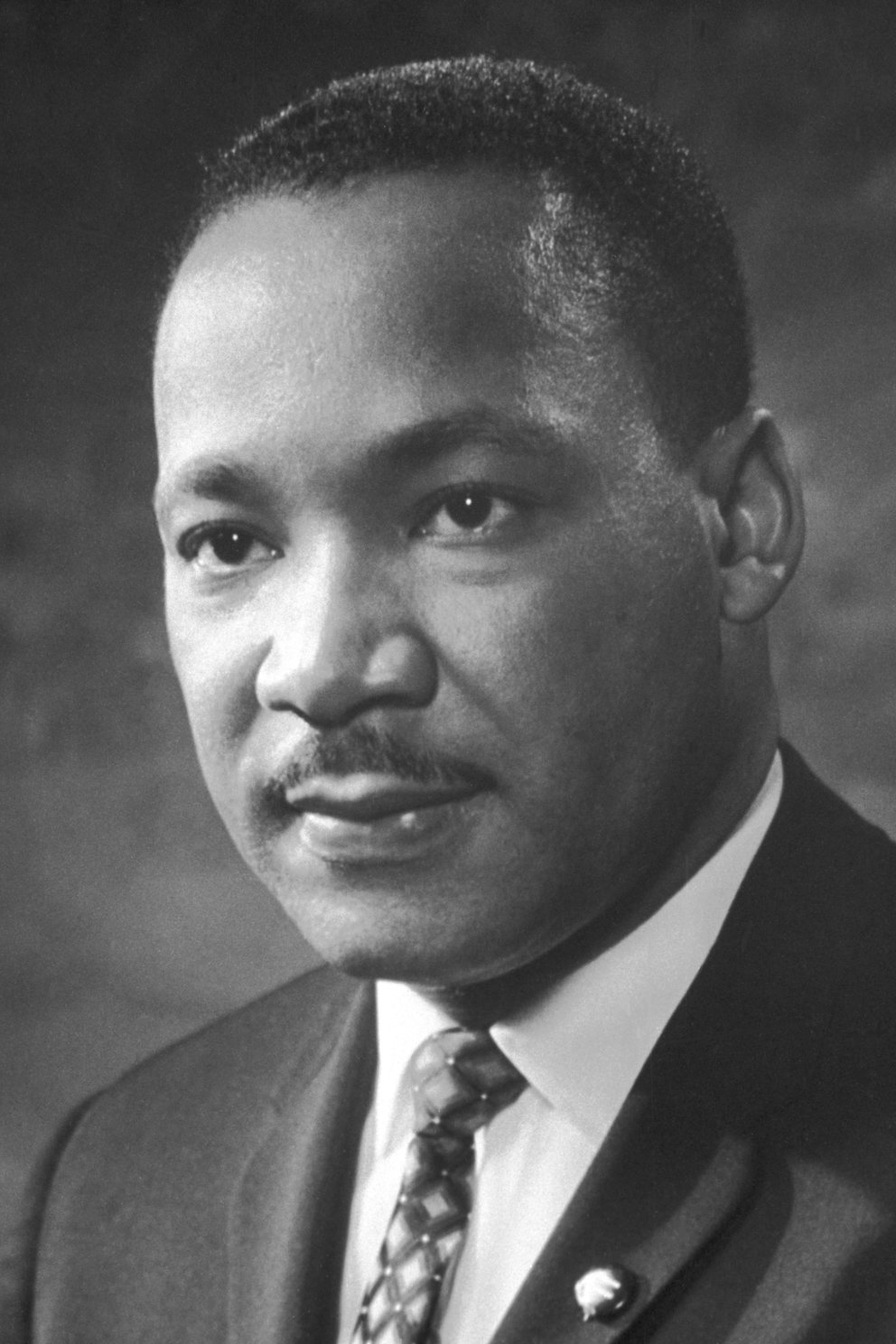
Martin Luther King Jr.
Martin Luther King Jr. was an American civil rights activist and Baptist minister who was a prominent leader of the civil rights movement from 1955 until his assassination in 1968. He advanced civil rights for people of color in the United States through the use of nonviolent resistance and civil disobedience against Jim Crow laws and other forms of legalized discrimination, which most commonly affected African Americans.
