
Site view
Timeline
Every dated card across The Cinema Archive II, arranged chronologically. Dates are inferred from each card's summary.

Era
1920s
2 cards

1920· European Masters
Federico Fellini
Federico Fellini (Italian: [fedeˈriːko felˈliːni]; 20 January 1920 – 31 October 1993) was an Italian film director and screenwriter known for his distinctive style that blends fantasy and baroque images with earthiness. Recognized as one of the greatest and most influential filmmakers of all time, his films rank highly in critical polls such as that of Cahiers du Cinéma and Sight & Sound, which lists his 1963 8½ as the 10th-greatest film of all time.
Fellini's best-known films include I Vitelloni (1953), La Strada (1954), Nights of Cabiria (1957), La Dolce Vita (1960), 8½ (1963), Juliet of the Spirits (1965), Fellini Satyricon (1969), Roma (1972), Amarcord (1973), and Fellini's Casanova (1976).
Fellini was nominated for 17 Academy Awards over the course of his career, winning four, all in the Best Foreign Language Film category (a record).

1923· Japanese Masters
Kenji Mizoguchi
Kenji Mizoguchi was a Japanese filmmaker who directed roughly one hundred films during his career between 1923 and 1956. His most acclaimed works include The Story of the Last Chrysanthemums (1939), The Life of Oharu (1952), Ugetsu (1953), and Sansho the Bailiff (1954), with the latter three all being awarded at the Venice International Film Festival. A recurring theme of his films was the oppression of women in historical and contemporary Japan. Together with Akira Kurosawa and Yasujirō Ozu, Mizoguchi is seen as a representative of the "golden age" of Japanese cinema.
Era
1930s
3 cards

1930· European Masters
Jean-Luc Godard
(1930–2022) Jean-Luc Godard was a French and Swiss film director, screenwriter, and film critic. He rose to prominence as a pioneer of the French New Wave film movement of the 1960s, alongside such filmmakers as François Truffaut, Agnès Varda, Éric Rohmer and Jacques Demy. He was arguably the most influential French filmmaker of the post-war era. According to AllMovie, his work "revolutionized the motion picture form" through its experimentation with narrative, continuity, sound, and camerawork.

1932· European Masters
François Truffaut
François Roland Truffaut (UK: TROO-foh, TRUU-, US: troo-FOH; French: [fʁɑ̃swa ʁɔlɑ̃ tʁyfo]; 6 February 1932 – 21 October 1984) was a French filmmaker, actor, and critic. He is widely regarded as one of the founders of the French New Wave. Truffaut came under the tutelage of film critic Andre Bazin as a young man and was hired to write for Bazin's Cahiers du Cinéma, where he became a proponent of the auteur theory, which posits that a film's director is its true author.
The 400 Blows (1959), starring Jean-Pierre Léaud as Truffaut's alter ego Antoine Doinel, was a defining film of the New Wave.
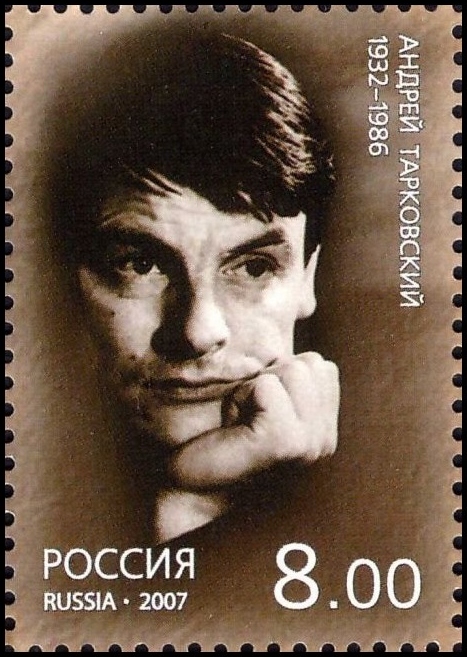
1932· European Masters
Andrei Tarkovsky
Andrei Arsenyevich Tarkovsky (Russian: Андрей Арсеньевич Тарковский, pronounced [ɐnˈdrʲej ɐrˈsʲenʲjɪvʲɪtɕ tɐrˈkofskʲɪj] ; 4 April 1932 – 29 December 1986) was a Soviet film director and screenwriter of Russian origin. He is widely considered one of the greatest directors in cinema history. His films explore spiritual and metaphysical themes and are known for their slow pacing and long takes, dreamlike visual imagery and preoccupation with nature and memory.
Tarkovsky studied film at the All-Union State Institute of Cinematography under filmmaker Mikhail Romm and subsequently directed his first five features in the Soviet Union: Ivan's Childhood (1962), Andrei Rublev (1966), Solaris (1972), Mirror (1975), and Stalker (1979).
Era
1940s
2 cards

1949· Japanese Masters
Yasujirō Ozu
Yasujirō Ozu was a Japanese filmmaker. He began his career during the era of silent films, and his last films were made in colour in the early 1960s. Ozu first made a number of short comedies, before turning to more serious themes in the 1930s.
The most prominent themes of Ozu's work are family and marriage, and especially the relationships between generations. His most widely beloved films include Late Spring (1949), Tokyo Story (1953) and An Autumn Afternoon (1962).

1949· Modern World
Pedro Almodóvar
(1949–present) Pedro Almodóvar Caballero is a Spanish film director, screenwriter and author. His films are distinguished by melodrama, irreverent humour, bold colour, glossy décor, quotations from popular culture, and complex narratives. Desire, LGBTQ issues, passion, family, motherhood, and identity are among Almodóvar's most frequently explored subjects. As one of the most internationally successful Spanish filmmakers, Almodóvar and his films have developed a cult following.


Era
1990s
2 cards

1995· American Auteurs
Steven Spielberg
Steven Allan Spielberg is an American filmmaker. A major figure of the New Hollywood era and pioneer of the modern blockbuster, Spielberg is widely regarded as one of the greatest and most influential filmmakers in the history of cinema and is the highest-grossing film director of all time. Among other accolades, he has received three Academy Awards, four Golden Globe Awards, four BAFTA Awards, twelve Emmy Awards, a Tony Award, and a Grammy Award, as well as the AFI Life Achievement Award in 1995, an honorary knighthood in 2001, the Kennedy Center Honor in 2006, the Cecil B. DeMille Award in 2009, the Presidential Medal of Freedom in 2015, and the National Medal of Arts in 2023. According to Forbes, he is one of the world's wealthiest celebrities, with a net worth of at least $5.3 billion. He is one of 22 people to achieve EGOT status.

1997· American Auteurs
Martin Scorsese
Martin Charles Scorsese is an American filmmaker. One of the major figures of the New Hollywood era, he is widely considered one of the greatest and most influential directors in the history of cinema. He has received numerous accolades including an Academy Award, four BAFTA Awards, three Emmy Awards, a Grammy Award, and three Golden Globe Awards. Scorsese has also been honored with the AFI Life Achievement Award in 1997, the Film Society of Lincoln Center tribute in 1998, the Kennedy Center Honor in 2007, the Cecil B. DeMille Award in 2010, and the BAFTA Fellowship in 2012. Five of his films have been inducted into the National Film Registry by the Library of Congress as "culturally, historically or aesthetically significant".
Era
2010s
3 cards

2010· American Auteurs
Francis Ford Coppola
Francis Ford Coppola ( KOH-pə-lə; born April 7, 1939) is an American filmmaker. One of the leading figures of the New Hollywood, Coppola is widely regarded as one of the greatest and most influential filmmakers in the history of cinema. His accolades include five Academy Awards, a BAFTA Award, three Golden Globe Awards, and two Palmes d'Or, in addition to nominations for two Emmy Awards and a Grammy Award. Coppola was also honored with the Irving G. Thalberg Memorial Award in 2010, the Kennedy Center Honors in 2024, and the AFI Life Achievement Award in 2025.

2017· Modern World
Bong Joon Ho
Bong Joon Ho is a South Korean filmmaker. His work is characterized by emphasis on social and class themes, genre-mixing, dark comedy, and sudden tone shifts. He is the recipient of numerous accolades including three Academy Awards, two British Academy Film Awards, and five Asian Film Awards, as well as nominations for two Golden Globe Awards. In 2017, he was included on Metacritic's list of the 25 best film directors of the 21st century, and in 2020, he was listed as one of the 100 most influential people in the world by Time and among the Bloomberg 50.

2019· Modern World
Agnès Varda
Agnès Varda (born Arlette Varda; 30 May 1928 – 29 March 2019) was a Belgian-born French filmmaker, artist, and photographer.
Varda's work employed location shooting in an era when the limitations of sound technology made it easier and more common to film indoors, with constructed sets and painted backdrops of landscapes, rather than outdoors, on location. Her use of non-professional actors was also unconventional for 1950s French cinema. Varda's feature film debut was La Pointe Courte (1955), followed by Cléo from 5 to 7 (1962), one of her most notable narrative films, Vagabond (1985), and Kung Fu Master (1988).