
Site view
Timeline
Every dated card across The Beatles Archive, arranged chronologically. Dates are inferred from each card's summary.
Era
1940s
2 cards

1940· Members
Ringo Starr
Sir Richard Starkey (born 7 July 1940), known as Ringo Starr, is an English musician, singer, songwriter and actor who achieved international fame as the drummer for the Beatles. He sometimes sang lead vocals on the group's recordings, usually for one song on each album; these include "Yellow Submarine" and "With a Little Help from My Friends". He also wrote and sang the Beatles songs "Don't Pass Me By" and "Octopus's Garden", and is credited as a co-writer of three others.
Starr was afflicted by life-threatening illnesses during childhood, with periods of prolonged hospitalisation.

1946· Collaborators
Billy Preston
William Everett Preston (September 2, 1946 – June 6, 2006) was an American keyboardist, singer, and songwriter whose work encompassed R&B, rock, soul, funk, and gospel. Preston was a top session keyboardist in the 1960s, backing Little Richard, Sam Cooke, Ray Charles, the Everly Brothers, Reverend James Cleveland, the Beatles, and the Rolling Stones. He gained attention as a solo artist with hit singles "That's the Way God Planned It", the Grammy-winning "Outa-Space", "Will It Go Round in Circles", "Space Race", "Nothing from Nothing", and "With You I'm Born Again". Additionally, Preston co-wrote "You Are So Beautiful", which became a hit for Joe Cocker.
Era
1960s
15 cards

1960· The Band
The Beatles
The Beatles were an English rock band formed in Liverpool in 1960. The band comprised John Lennon, Paul McCartney, George Harrison and Ringo Starr. They are regarded as the most influential band in popular music and were integral to the development of 1960s counterculture and the recognition of popular music as an art form. Rooted in skiffle, beat and 1950s rock 'n' roll, their sound incorporated elements of classical music and traditional pop in innovative ways. They also explored styles ranging from folk and Indian music to psychedelia and hard rock. As pioneers in recording, songwriting and artistic presentation, the Beatles revolutionised many aspects of the music industry and were often publicised as leaders of the era's youth and sociocultural movements.
1963· Studio Albums
Please Please Me
Please Please Me is the debut studio album by English rock band the Beatles. Produced by George Martin, it was released in the United Kingdom on EMI's Parlophone label on 22 March 1963. The album's 14 tracks include cover songs and original material written by the partnership of band members John Lennon and Paul McCartney.
The Beatles had signed with EMI in May 1962 and been assigned to the Parlophone label run by Martin.
1963· Studio Albums
With the Beatles
With the Beatles is the second studio album by the English rock band the Beatles. It was released in the United Kingdom on 22 November 1963 on Parlophone, eight months after the release of the band's debut album, Please Please Me. Produced by George Martin, the album features eight original compositions and six covers. The sessions also yielded the non-album single, "I Want to Hold Your Hand" backed by "This Boy". The cover photograph was taken by the fashion photographer Robert Freeman and has since been mimicked by several music groups. A different cover was used for the Australian release of the album, which the Beatles were displeased with.
1964· Studio Albums
A Hard Day's Night (album)
A Hard Day's Night is the third studio album by the English rock band the Beatles, released on 10 July 1964 by Parlophone, with side one containing songs from the soundtrack to their film of the same name. A Hard Day's Night is the band's first album to contain all-original material, penned by John Lennon and Paul McCartney. The American version of the album was released two weeks earlier, on 26 June 1964 by United Artists Records, with a different track listing including some from George Martin's film score.
1965· Studio Albums
Rubber Soul
Rubber Soul is the sixth studio album by the English rock band the Beatles. It was released on 3 December 1965 in the United Kingdom on EMI's Parlophone label, accompanied by the non-album double A-side single "We Can Work It Out" / "Day Tripper". The original North American release, issued by Capitol Records, contains ten of the fourteen songs and two tracks withheld from the band's Help! (1965) album. Rubber Soul was described as an important artistic achievement by the band, meeting a highly favourable critical response and topping sales charts in Britain and the United States for several weeks.
1966· Studio Albums
Revolver (Beatles album)
Revolver is the seventh studio album by the English rock band the Beatles. It was released on 5 August 1966, accompanied by the double A-side single "Eleanor Rigby" and "Yellow Submarine". The album was the Beatles' final recording project before their retirement as live performers and marked the group's most overt use of studio technology to date, building on the advances of their late 1965 release Rubber Soul. It has since become regarded as one of the greatest and most innovative albums in the history of popular music, with recognition centred on its range of musical styles, diverse sounds and lyrical content.

1967· Studio Albums
Sgt. Pepper's Lonely Hearts Club Band
Sgt. Pepper's Lonely Hearts Club Band is the eighth studio album by the English rock band the Beatles. Released in the UK on 26 May 1967, Sgt. Pepper is regarded by musicologists as an early concept album that advanced the roles of sound composition, extended form, psychedelic imagery, record sleeves, and the producer in popular music. The album had an immediate cross-generational impact and was associated with numerous touchstones of the era's youth culture, such as fashion, drugs, mysticism, and a sense of optimism and empowerment. Critics lauded the album for its innovations in songwriting, production and graphic design, for bridging a cultural divide between popular music and high art, and for reflecting the interests of contemporary youth and the counterculture.

1967· Collaborators
George Martin
Sir George Henry Martin was an English record producer, arranger, composer, conductor, and musician. He was commonly referred to as the "fifth Beatle" due to his extensive involvement in each of the Beatles' original albums. Martin's formal musical expertise and interest in novel recording practices facilitated the group's rudimentary musical education and desire for new musical sounds to record. Most of their orchestral and string arrangements were written by Martin, and he played piano or keyboards on a number of their records. Their collaborations resulted in popular, highly acclaimed records with innovative sounds, such as the 1967 album Sgt. Pepper's Lonely Hearts Club Band.

1967· Collaborators
Brian Epstein
Brian Samuel Epstein ( EP-styne; 19 September 1934 – 27 August 1967) was an English music entrepreneur who managed the Beatles from 1961 until his death in 1967.
Epstein was born into a family of successful retailers in Liverpool, who put him in charge of their music shop, where he displayed a gift for talent-spotting. He first met the Beatles in 1961 at a lunchtime concert at Liverpool's Cavern Club. Although he had no experience of artist management, Epstein put them under contract and insisted that they abandon their scruffy image in favour of a new clean-cut style.
1968· Studio Albums
The Beatles (album)
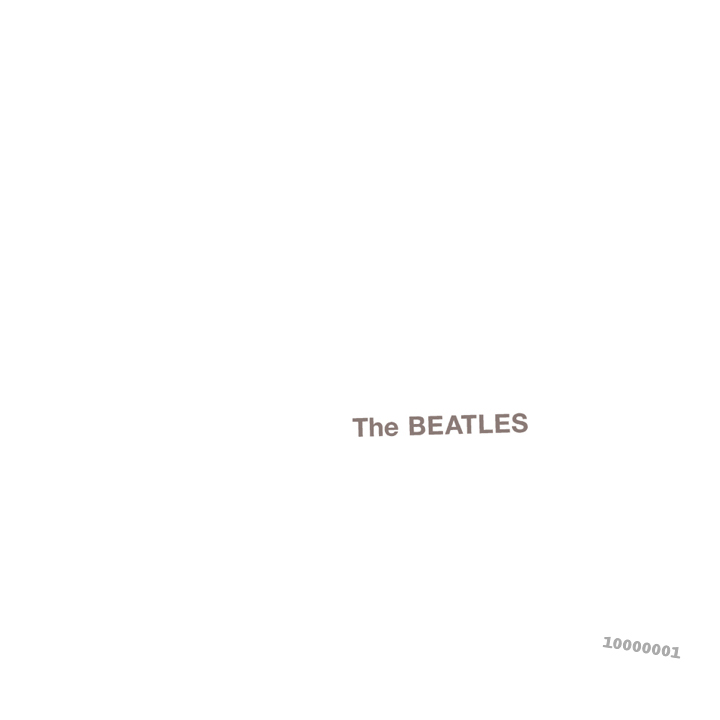
The Beatles is the ninth studio album and only double album by the English rock band the Beatles, released on 22 November 1968. Featuring a plain white sleeve, the cover contains no graphics or text other than the band's name embossed. This was intended as a direct contrast to the vivid cover artwork of the band's previous LP, Sgt. Pepper's Lonely Hearts Club Band (1967). The Beatles is recognized for its fragmentary style and diverse range of genres, including folk, country rock, British blues, ska, music hall, hard rock, and avant-garde. It has since been viewed by some critics as a postmodern work, and is widely regarded as one of the greatest albums of all time. The album was the band's first LP release on their then-recently founded Apple Records after previous albums were released on Parlophone in the United Kingdom and Capitol Records in the United States.
1968· Signature Songs
Hey Jude
"Hey Jude" is a song by the English rock band the Beatles that was released as a non-album single in August 1968. It was written by Paul McCartney and credited to the Lennon–McCartney partnership. The single was the Beatles' first release on their Apple record label and one of the "First Four" singles by Apple's roster of artists, marking the label's public launch. "Hey Jude" was a number-one hit in many countries around the world and became the year's top-selling single in the UK, the US, Australia and Canada. Its nine-week run at number one on the Billboard Hot 100 tied the all-time record in 1968 for the longest run at the top of the US charts, a record it held for nine years. It has sold approximately eight million copies and is frequently included on music critics' lists of the greatest songs of all time.

1969· Studio Albums
Abbey Road
Abbey Road is the eleventh studio album by the English rock band the Beatles, released on 26 September 1969 by Apple Records. It is the last album the group recorded; although Let It Be was released later, it had actually been recorded earlier but delayed due to production issues. Abbey Road was mostly recorded in April, July and August 1969, and topped the record charts in both the United States and the United Kingdom. A double A-side single from the album, "Something" / "Come Together", was released in October, which also topped the charts in the US.
1969· Signature Songs
Here Comes the Sun
"Here Comes the Sun" is a song by the English rock band the Beatles from their eleventh studio album Abbey Road (1969). It was written and sung by George Harrison, and is one of his best-known compositions. Harrison wrote the song in early 1969 at the country house of his friend Eric Clapton, where Harrison had chosen to play truant for the day to avoid attending a meeting at the Beatles' Apple Corps organisation. The lyrics reflect his relief at the arrival of spring and the temporary respite he was experiencing from the band's business affairs.
1969· Signature Songs
Come Together
"Come Together" is a song by the English rock band the Beatles, written by John Lennon and credited to Lennon–McCartney. The song is the opening track on the band's 1969 studio album Abbey Road. It was also a double A-side in the United Kingdom with "Something", reaching No. 4 in the UK charts, as well as No.
1969· Signature Songs
Something (Beatles song)
"Something" is a song by the English rock band the Beatles from their 1969 studio album Abbey Road. It was written by George Harrison, the band's lead guitarist. Together with his second contribution to Abbey Road, "Here Comes the Sun", it is widely viewed by music historians as having marked Harrison's ascendancy as a composer to the level of the Beatles' principal songwriters, John Lennon and Paul McCartney. Two weeks after the album's release, the song was issued on a double A-side single, coupled with "Come Together", making it the first Harrison composition to become a Beatles A-side.
Era
1970s
6 cards

1970· Studio Albums
Let It Be (album)
Let It Be is the twelfth and final studio album by the English rock band the Beatles. It was released on 8 May 1970, nearly a month after the official announcement of the group's public break-up, in tandem with the documentary of the same name. Concerned about recent friction within the band, Paul McCartney had conceived the project as an attempt to reinvigorate the group by returning to simpler rock 'n' roll configurations. Its rehearsals started at Twickenham Film Studios on 2 January 1969 as part of a planned television documentary showcasing the Beatles' return to live performance.
1970· Signature Songs
Let It Be (song)
"Let It Be" is a song by the English rock band the Beatles, released on 6 March 1970 as a single, and as the title track of their album Let It Be. It was written and sung by Paul McCartney, and credited to the Lennon–McCartney partnership. The single version of the song, produced by George Martin, features a softer guitar solo and the orchestral section mixed low, compared with the album version, produced by Phil Spector, featuring a more aggressive guitar solo and the orchestral sections mixed higher.
1970· Solo Careers
Band on the Run
Band on the Run is the third studio album by the British rock band Paul McCartney and Wings, released on 30 November 1973 in the United Kingdom and 5 December 1973 in the United States. It was Paul McCartney's fifth album after leaving the Beatles in April 1970 and his final album on Apple Records. A rock and pop rock album, Band on the Run's songs reflect themes of escape and freedom.
The album was mostly recorded at EMI's studio in Lagos, Nigeria, as McCartney wanted to make an album in an exotic location.
1970· Solo Careers
All Things Must Pass
All Things Must Pass is the third studio album by the English rock musician George Harrison. Released as a triple album in November 1970, it was Harrison's first solo work after the break-up of the Beatles in April that year. It includes the hit singles "My Sweet Lord" and "What Is Life", as well as songs such as "Isn't It a Pity" and the title track that had been overlooked for inclusion on releases by the Beatles. The album reflects the influence of Harrison's musical activities with artists such as Bob Dylan, the Band, Delaney & Bonnie and Friends and Billy Preston during 1968–70, and his growth as an artist beyond his supporting role to former bandmates John Lennon and Paul McCartney. All Things Must Pass introduced Harrison's signature slide guitar sound and the spiritual themes present throughout his subsequent solo work. The original vinyl release consisted of two LPs of songs and a third disc of informal jams titled Apple Jam. Several commentators interpret Barry Feinstein's album cover photo, showing Harrison surrounded by four garden gnomes, as a statement on his independence from the Beatles.
1971· Solo Careers
Imagine (John Lennon album)
Imagine is the second solo studio album by the English musician John Lennon, released on 9 September 1971 by Apple Records. Co-produced by Lennon, his wife Yoko Ono and Phil Spector, the album's elaborate sound contrasts the basic, small-group arrangements of his first album, John Lennon/Plastic Ono Band (1970). The opening title track is widely considered to be his signature song.

1976· Studio Albums
Magical Mystery Tour
Magical Mystery Tour is a record by the English rock band the Beatles that was released as a double EP in the United Kingdom and an LP in the United States. It includes the soundtrack to the 1967 television film of the same title. The EP was issued in the UK on 8 December 1967 on the Parlophone label, while the Capitol Records LP release in the US and Canada occurred on 27 November and features an additional five songs that were originally released as singles that year. In 1976, Parlophone released the eleven-track LP in the UK.