Site view
Timeline
Every dated card across The Ancient Rome Archive, arranged chronologically. Dates are inferred from each card's summary.
Era
Before 1 CE
10 cards
753 BC· Founders & the Republic
Roman Kingdom
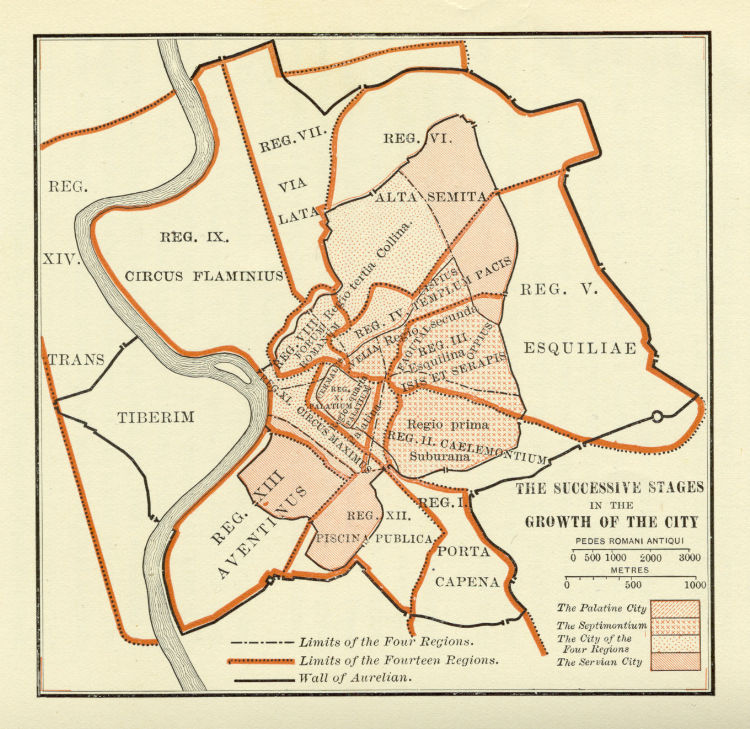
The Roman Kingdom, also known as the Roman monarchy and the regal period of ancient Rome, was the earliest period of Roman history, when the city and its territory were ruled by kings. According to tradition, the Roman Kingdom began with the city's founding c. 753 BC, with settlements around the Palatine Hill along the river Tiber in central Italy, and ended with the overthrow of the kings and the establishment of the Roman Republic c. 509 BC.

753 BC· Founders & the Republic
Romulus and Remus
In Roman mythology, Romulus and Remus are twin brothers whose story tells of the events that led to the founding of the city of Rome and the Roman Kingdom by Romulus, following his fratricide of Remus. The image of a she-wolf suckling the twins in their infancy has been a symbol of the city of Rome and the ancient Romans since at least the 3rd century BC. Although the tale takes place before the founding of Rome in 753 BC, the earliest known written account of the myth is from the late 3rd century BC. Possible historical bases for the story, and interpretations of its local variants, are subjects of ongoing debate.

753 BC· Writers & Thinkers
Livy
Titus Livius, known in English as Livy, was a Roman historian. He wrote a monumental history of Rome and the Roman people, titled Ab Urbe Condita, ''From the Founding of the City'', covering the period from the earliest legends of Rome before the traditional founding in 753 BC through the reign of Augustus in Livy's own lifetime. He was on good terms with members of the Julio-Claudian dynasty and was a friend of Augustus. Livy encouraged Augustus’s young grandnephew, the future emperor Claudius, to take up the writing of history.

312 BC· Monuments & Engineering
Appian Way
The Appian Way is one of the earliest and strategically most important Roman roads of the ancient republic. It connected Rome to Brindisi, in southeast Italy. Its importance is indicated by its common name, recorded by Statius, of Appia longarum... regina viarum. The road is named after Appius Claudius Caecus, the Roman censor who, during the Samnite Wars, began and completed the first section as a military road to the south in 312 BC.

216 BC· Battles & Wars
Battle of Cannae
The Battle of Cannae was a key engagement of the Second Punic War between the Roman Republic and Carthage, fought on 2 August 216 BC near the ancient village of Cannae in Apulia, southeast Italy. The Carthaginians and their allies, led by Hannibal, surrounded and practically annihilated a larger Roman and Italian army under the consuls Lucius Aemilius Paullus and Gaius Terentius Varro. It is regarded as one of the greatest tactical feats in military history and one of the worst defeats in Roman history, and it cemented Hannibal's reputation as one of antiquity's greatest tacticians.

202 BC· Founders & the Republic
Scipio Africanus
Publius Cornelius Scipio Africanus was a Roman general and statesman who was one of the main architects of Rome's victory against Carthage in the Second Punic War. Often regarded as one of the greatest military commanders and strategists of all time, his crowning achievement was the defeat of Hannibal at the Battle of Zama in 202 BC, which earned him the honorific epithet Africanus.
202 BC· Battles & Wars
Battle of Zama
The Battle of Zama was fought in 202 BC in what is now Tunisia between a Roman army commanded by Scipio Africanus and a Carthaginian army commanded by Hannibal. The battle was part of the Second Punic War and resulted in such a severe defeat for the Carthaginians that they capitulated, while Hannibal was forced into exile. The Roman army of approximately 40,000 men was outnumbered by the Carthaginians who fielded either 40,000 or 50,000; the Romans were stronger in cavalry, but the Carthaginians had 80 war elephants.

146 BC· Battles & Wars
Punic Wars
The Punic Wars were a series of wars fought between the Roman Republic and the Carthaginian Empire during the period 264 to 146 BC. Three such wars took place, involving a total of forty-three years of warfare on both land and sea across the western Mediterranean region, and a four-year-long revolt against Carthage.
134 BC· Founders & the Republic
Gaius Marius
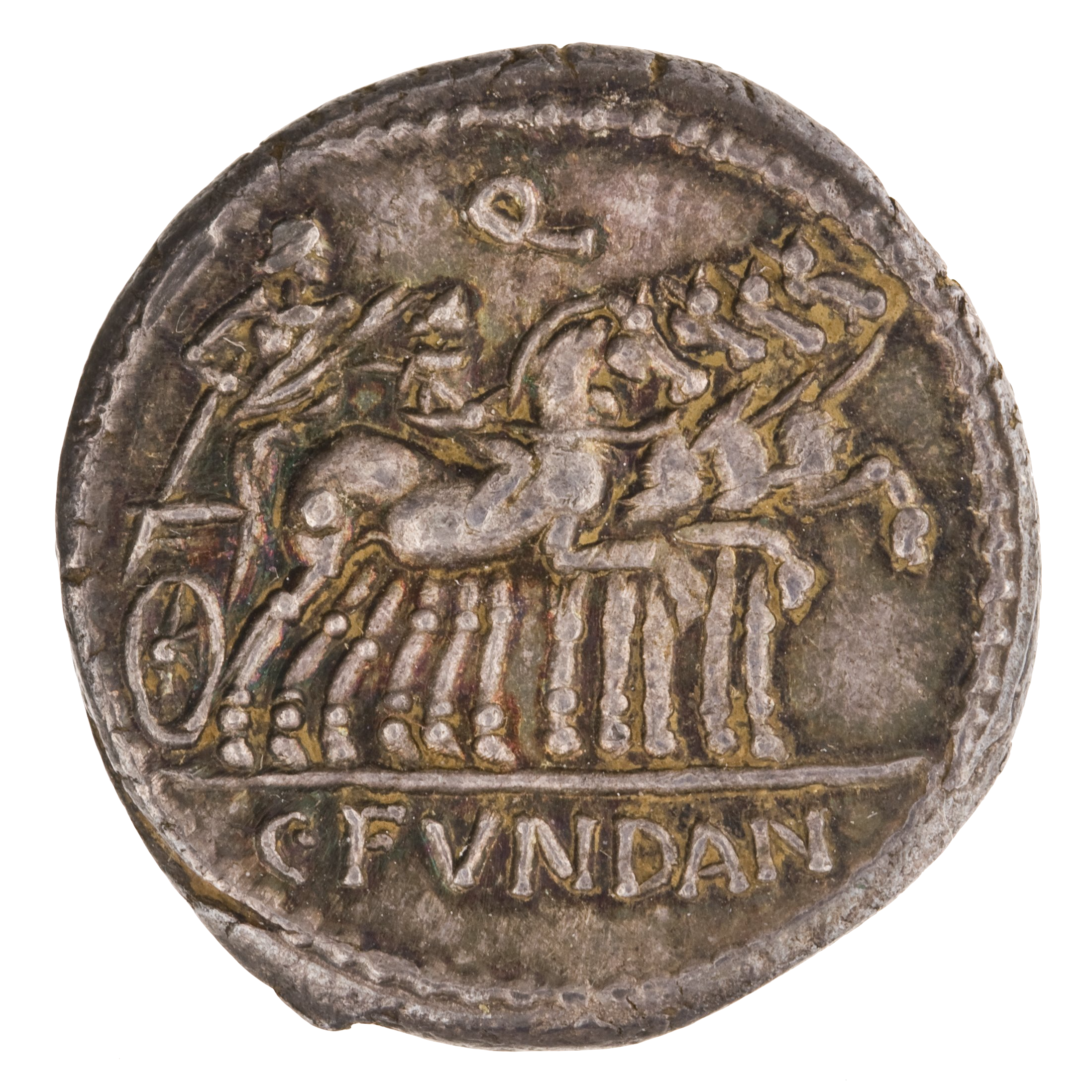
Gaius Marius was a Roman general and statesman. Marius held the office of consul seven times, more than any other Roman in the Republican period. Rising from a family of smallholders in a village called Ceraetae in the district of Arpinum, Marius acquired his initial military experience serving under Scipio Aemilianus at the Siege of Numantia in 134 BC. He won election as tribune of the plebs in 119 BC and passed a law limiting aristocratic interference in elections. Barely elected praetor in 115 BC, he next became the governor of Further Spain where he campaigned against bandits.

122 BC· Founders & the Republic
Gaius Gracchus
Gaius Sempronius Gracchus was a reformist Roman politician and soldier who lived during the 2nd century BC. He is best known for his plebeian tribunates in 123 and 122 BC, during which he proposed a wide set of laws, including laws to establish colonies outside of Italy, engage in further land reform, reform the judicial system and system for provincial assignments, and create a subsidised grain supply for Rome.