Eras

Cards

World War I

World War I

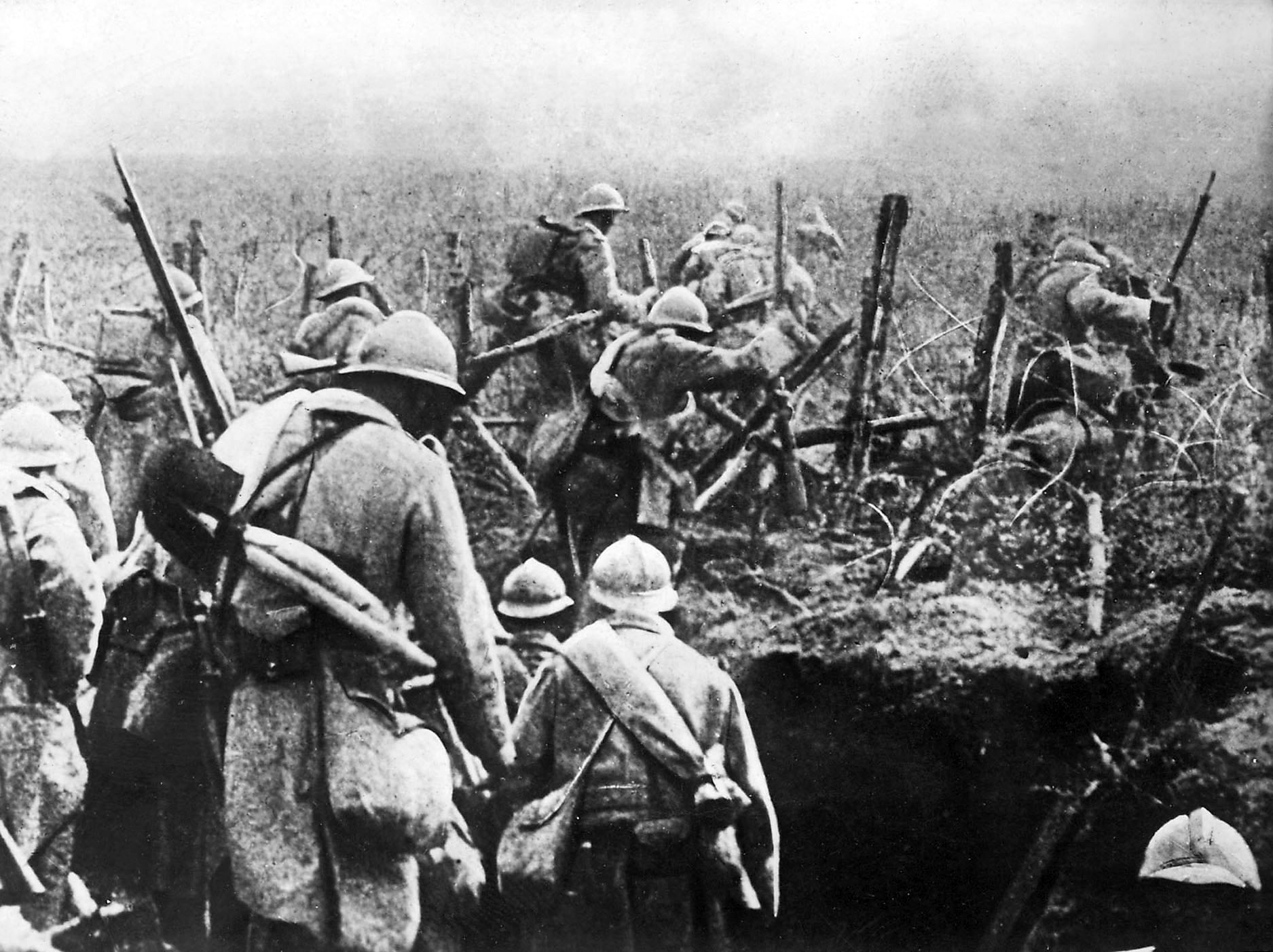
World War I, or the First World War (28 July 1914 – 11 November 1918), also known as the Great War, was a global conflict between two coalitions: the Allies (or Entente) and the Central Powers. Major areas of conflict included Europe and the Middle East, as well as parts of Africa and the Asia-Pacific. The war saw important developments in weaponry including tanks, aircraft, artillery, machine guns, and chemical weapons. One of the deadliest conflicts in history, it resulted in an estimated 15 to 22 million military and civilian casualties and genocide. The movement of large numbers of people was a major factor in the deadly Spanish flu pandemic. The causes of World War I included the rise of the German Empire and decline of the Ottoman Empire, which disturbed the long-standing balance of power in Europe, the exacerbation of imperial rivalries, and an arms race between the great powers. Growing tensions in the Balkans reached a breaking point on 28 June 1914 when Gavrilo Princip, a Bosnian Serb, assassinated Franz Ferdinand, the heir to the Austro-Hungarian throne. Austria-Hungary blamed Serbia, and declared war on 28 July. After Russia mobilised in Serbia's defence, Germany declared war on Russia and France, who had an alliance. The United Kingdom entered the war after Germany invaded Belgium, and the Ottoman Empire joined the Central Powers in November. Germany's strategy in 1914 was to quickly defeat France before transferring its forces to the east, but its advance was ha

World War II

World War II

World War II, or the Second World War (1 September 1939 – 2 September 1945), was a global conflict between two coalitions: the Allies and the Axis powers. Nearly all of the world's countries participated. World War II was the deadliest conflict in history, causing the death of 60 to 75 million people. Millions died as a result of massacres, starvation, disease, and genocides, including the Holocaust. After the Allied victory, Germany, Austria, Japan, and Korea were occupied, and German and Japanese leaders were tried for war crimes. The causes of World War II included unresolved tensions in the aftermath of World War I and the rise of fascism in Europe and militarism in Japan. Key events preceding the war included Japan's invasion of Manchuria in 1931, the Spanish Civil War, the outbreak of the Second Sino-Japanese War in 1937, and Germany's annexations of Austria and the Sudetenland. World War II is generally considered to have begun on 1 September 1939, when Nazi Germany, under Adolf Hitler, invaded Poland, after which the United Kingdom and France declared war on Germany. Poland was also invaded by the Soviet Union in mid-September and was partitioned between Germany and the Soviet Union under the Molotov–Ribbentrop Pact. In 1940, the Soviet Union annexed the Baltic states and parts of Finland and Romania, while Germany conquered Norway, Denmark, Belgium, Luxembourg, and the Netherlands. After the fall of France in June 1940, the war continued mainly between Germany, now a

Quiz

Quiz me on this collection

Sign in to take the quiz — your score is tracked on the Quiz Leaderboard.

Against the dead internet

Bots wrote the feed. Models ate the web. Wikipedia is one of the last human-made commons left — support the real internet.

Donate to Wikipedia →